
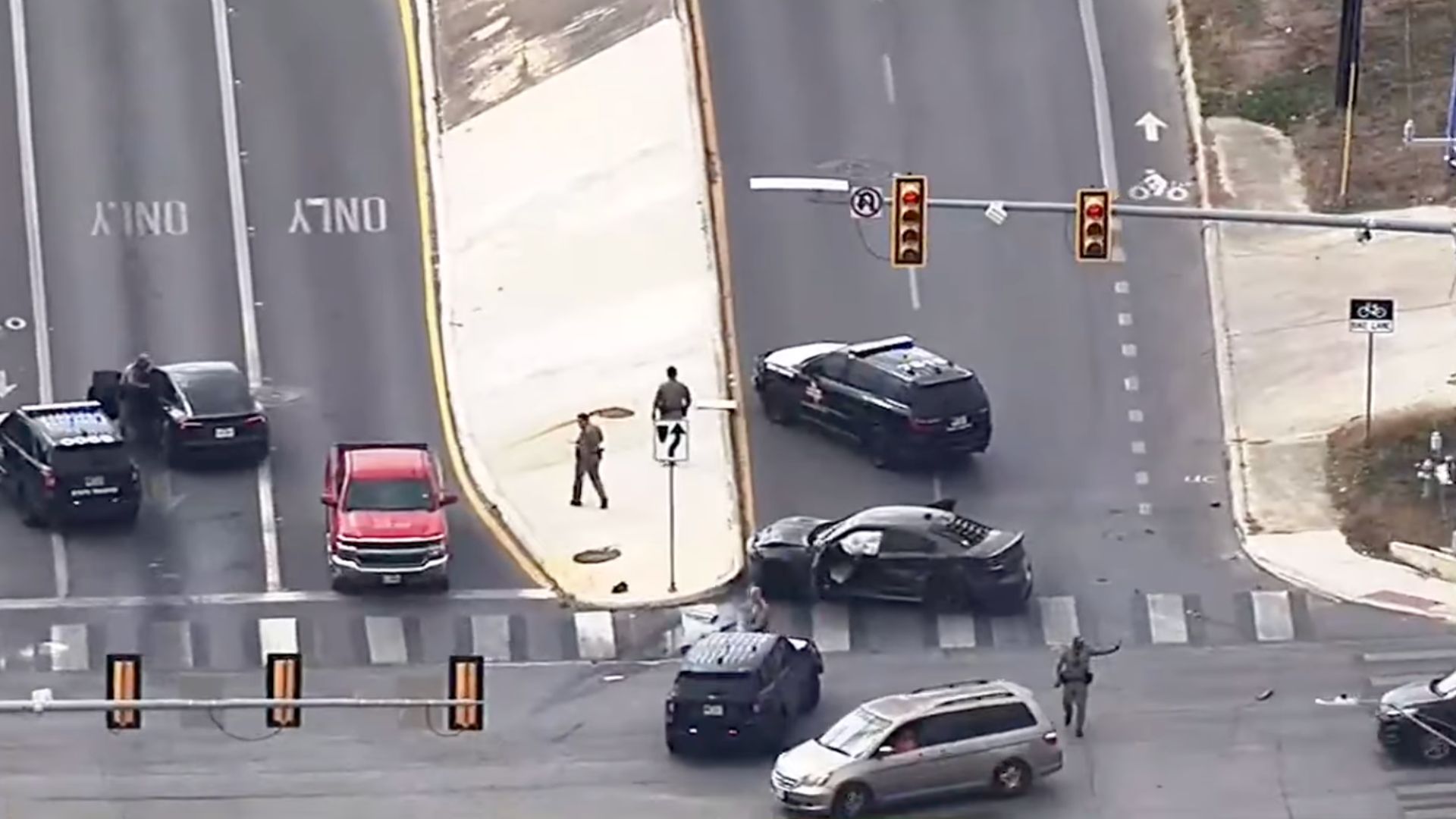
This wasn’t a getaway. It was an attack on the road. A black Dodge Charger turned San Antonio streets into a danger zone after a suspect pushed speeds near 100 mph during a police chase that dragged on for roughly 20 minutes. What followed wasn’t an accident, it was the predictable outcome of treating a 4,000-pound car like a battering ram.
A City Street, Not a Highway
Troopers chased as the Charger blasted through traffic, ignoring every basic rule meant to keep other drivers alive. This wasn’t a highway with wide-open lanes. This was the city, complete with intersections, cross traffic, and people just trying to get home for the evening.
Where It Finally Ended
The chase ended near South Cross and Pecan Valley, where the Charger finally ran out of space and slammed into a Tesla and a Dodge Ram pickup. Two vehicles. Two uninvolved drivers. Zero warning. That’s what happens when a car gets treated like a weapon instead of transportation.
Collateral Damage That Never Signed Up for This
High-speed chases don’t just risk the suspect and police involved. They force innocent people into life-or-death scenarios they never agreed to be part of. The Tesla and the pickup weren’t part of the chase, they were simply collateral damage in someone else’s decision to run.
Why Chargers Keep Showing Up in Pursuits Like This
Dodge Chargers keep showing up in pursuits for a reason. Big power and straight-line speed convince reckless drivers they’re untouchable behind the wheel. The reality is harsher than that confidence suggests. Momentum doesn’t care how confident a driver feels, and public streets were never designed to function as escape routes. This chase didn’t end because someone chose to stop. It ended because impact made that decision unavoidable for them.
Another city street turned into a crash site. Another reminder that when drivers weaponize speed on public roads, the cost gets paid by whoever happens to be in front of them at the wrong moment.