
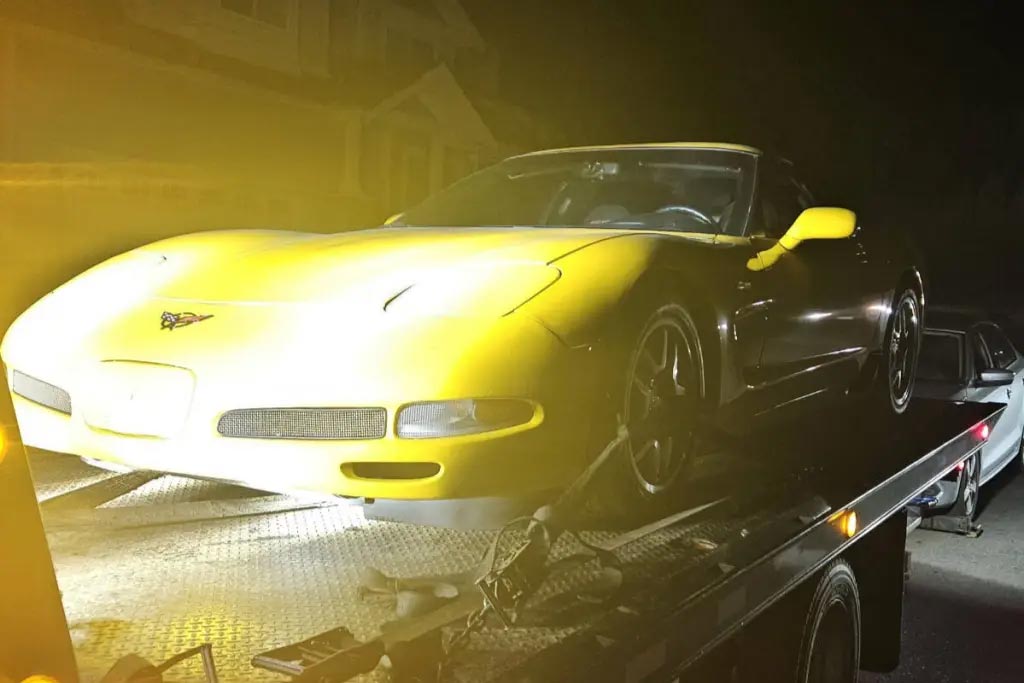
A $483 speeding ticket is one thing. Walking away from a traffic stop owing close to $2,500 once impound fees and insurance hikes are added in is another — and that’s the reality a bright yellow Chevrolet Corvette C5 driver is now facing after getting caught doing 106 mph over British Columbia’s Golden Ears Bridge.
How BC’s Excessive Speeding Law Actually Works
The RCMP clocked the Corvette at 170 km/h in a posted 80 km/h zone while it crossed the bridge connecting communities northeast of Vancouver, then again on Dewdney Trunk Road doing roughly 120 km/h in a 60 km/h zone. Under British Columbia’s traffic code, exceeding the posted limit by 60 km/h or more is automatically classified as excessive speeding — not just a heavier fine, but a trigger for mandatory penalties that kick in regardless of the driver’s record or explanation.
That’s a meaningfully different legal threshold than ordinary speeding tickets in most U.S. states, where impoundment is typically left to an officer’s discretion or reserved for repeat offenders. In BC, hitting that 60 km/h-over threshold takes the decision out of the officer’s hands entirely.
The Real Cost Isn’t the $483 Fine
Authorities confirmed the base fine for excessive speeding sits at $483, but that number is almost beside the point. Once the mandatory seven-day vehicle impound fees and the insurance premium increases assessed through the Insurance Corporation of British Columbia are factored in, officials say a single excessive-speeding stop can run a driver close to $2,500 in total costs. The driver in this case has no path to get the Corvette back early — the hold applies regardless of who owns the vehicle.
Why a Helicopter Was Watching a Bridge in the First Place
The stop itself was made possible by RCMP Air 1, a helicopter unit that let officers track the Corvette from above rather than initiating a ground pursuit at triple-digit speeds. Authorities say the bridge’s long, straight approach and wide lanes make it a recurring speeding hotspot, which is why aerial monitoring is a regular part of enforcement there — it lets officers maintain visual contact across multiple roadways while ground units quietly position for a controlled stop, avoiding the risks of a high-speed chase on a bridge used by thousands of daily commuters.
A Predictable Ending for a C5 on an Open Bridge
The Corvette C5, built from the late 1990s into the early 2000s, still has plenty of headroom to hit triple-digit speeds on an open stretch of road, which is exactly the appeal — and exactly the problem, according to police. The stop ended without incident, but the driver now has to work through BC’s provincial enforcement system while the car sits in impound and the insurance consequences work their way through ICBC’s system in the months ahead.