
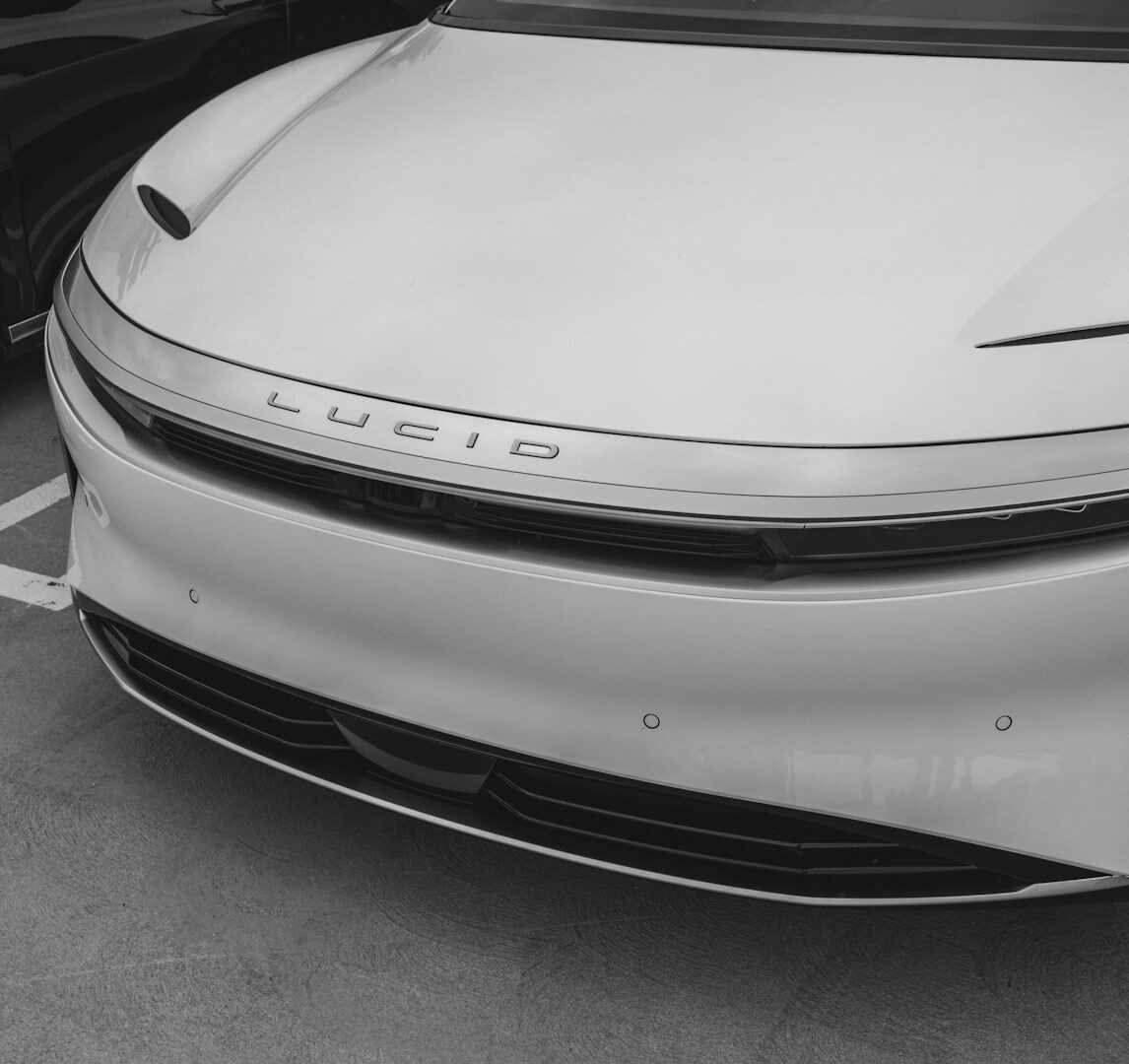
Lucid didn’t trim. It cut to the bone. Another 1,500 people — roughly 18% of the U.S. workforce — just got shown the door, and the story hiding under that number is worse than the number itself.
The Math Is Uglier Than the Headline
Start with the bleed. Lucid’s negative free cash flow has ballooned to a jaw-dropping $3.8 billion. This latest purge is engineered to save $158 million a year, which sounds heroic right up until you set it beside the crater it’s supposed to fill. A company hemorrhaging $3.8 billion doesn’t patch that with one round of pink slips, and everyone circling Casa Grande knows it. The savings are real; they’re also a rounding error.
Cutting a Shift Means Cutting Cars
Then it stops being a spreadsheet problem. New CEO Silvio Napoli scrapped the entire second production shift at the AMP-1 plant in Casa Grande, Arizona — not a tweak, a gut punch to Lucid’s ability to build the Air sedan and the freshly launched Gravity SUV, the two cars supposed to keep the lights on.
The Executives Are Running for the Exits
Up top, it’s just as wobbly. An executive exodus is underway, and the COO seat was erased entirely after Marc Winterhoff walked. Companies that delete the chief operating officer role instead of filling it aren’t reshuffling. They’re rewriting themselves mid-freefall.
Betting the Future on a Budget Crossover
And yet Lucid is still swinging for the fences, promising a sub-$50,000 Cosmos mid-size crossover this summer to punch straight at Tesla. On paper, a cheaper, higher-volume car is exactly the escape hatch that pulls a brand out of its niche luxury corner and into the territory where real money gets made.
In reality, there’s an obvious tension. The same company that just killed a production shift and watched its engineers bolt is now vowing to birth a brand-new mass-market vehicle — a feat that demands precisely the manufacturing muscle and engineering depth Lucid appears to be shedding right when it needs them most.
The Bigger Questions Hanging Over Casa Grande
All of this lands on a company leaning hard on Saudi money to stay upright, and that raises the real long-term question. Can Lucid survive on that backing alone, or will round after round of deep structural cuts scare off the everyday buyers it desperately needs? Buyers notice when a brand looks unstable, and a luxury purchase is exactly the kind of decision people walk away from when they smell trouble.
Then there’s Napoli himself. The new CEO spent 31 years making elevators and escalators before grabbing the wheel at Lucid — either the perfect operations mind for a company that lives or dies on mass production, or exactly the wrong fit at the worst possible moment. Either way, the man hired to steady the ship is the same one dissolving shifts and deleting executives. What that says about Lucid’s real condition is the part nobody in Arizona wants to say out loud.