
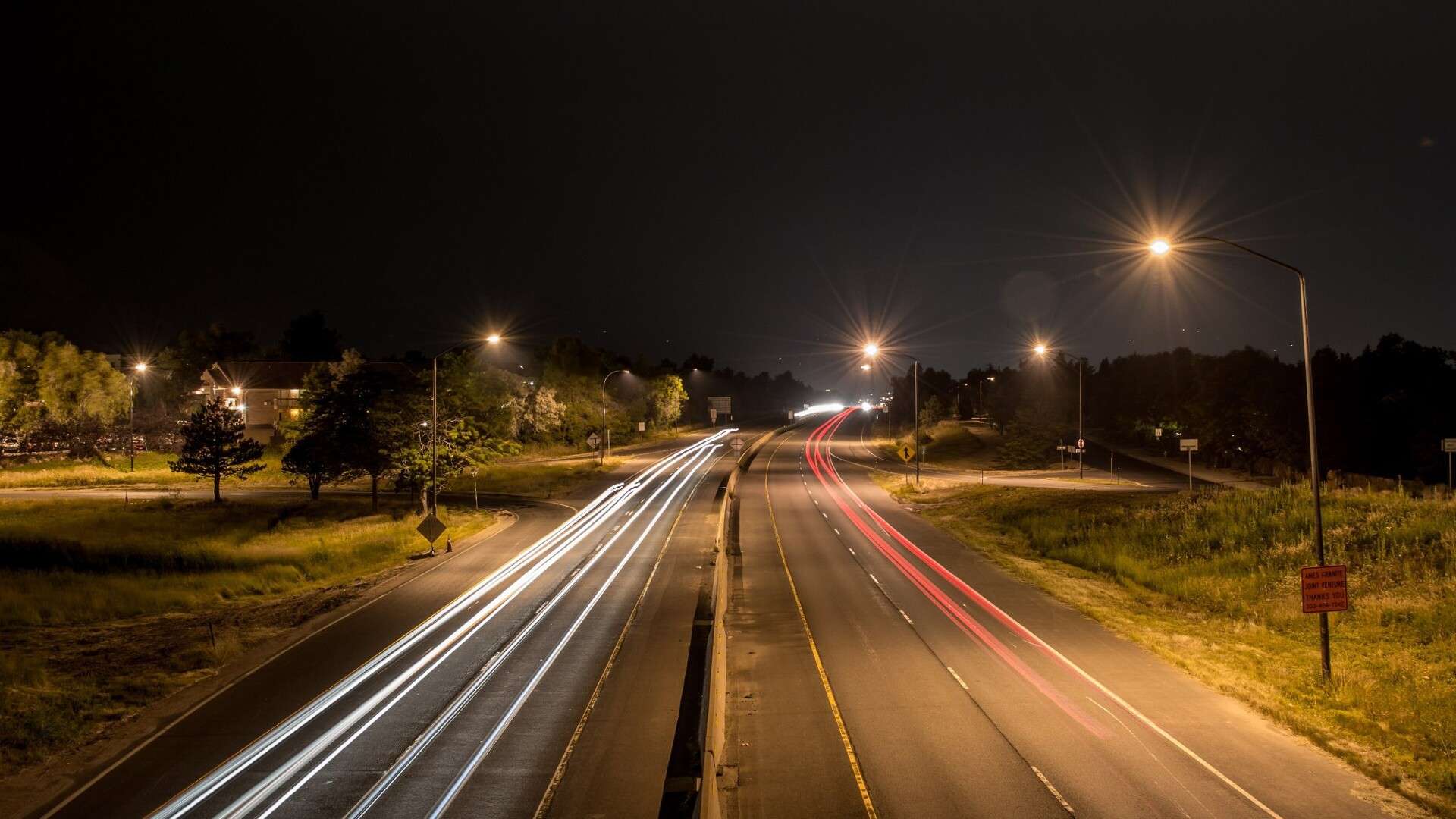
Michael J. Elli had gone more than 35 years without being accused of a moving violation when he drove north on Kiefer Creek Road in Ellisville, Missouri, at about 2:50 p.m. on Nov. 17, 2012, spotted a speed trap and flashed his headlights at the cars coming the other way. An Ellisville officer in a marked patrol car pulled him over and wrote Uniform Citation No. 09-00046459, which described the offense as “warning of RADAR ahead.”
What happened next is laid out in a federal judge’s opinion that recites the facts from Elli’s sworn complaint and calls them undisputed. Ellisville’s police chief, Tom Felgate, told Elli the charge was a moving violation and that points would be assessed if he were found guilty. In municipal court, the judge told him the city’s standard punishment for using headlights to signal a speed trap was a $1,000 fine. When Elli said he wanted to plead not guilty, the judge “became agitated” and asked whether he had ever heard of “obstruction of justice.” The charge was dismissed on Feb. 12, 2013.
Elli sued the city anyway, represented by the ACLU of Missouri, on April 16, 2013. U.S. District Judge Henry Edward Autrey granted a preliminary injunction on Feb. 3, 2014, barring Ellisville from “seizing, citing, or prosecuting any individual” for “communicating by flashing his or her headlamps.” The docket shows the judge made the order permanent on April 7, 2014, while the two sides finalized a settlement.
In California, the question of flashing headlights to warn of police turns on a different kind of statute. The state has no law against warning other drivers about police. It has a headlight-dimming law that dates to the 1959 Vehicle Code, and after dark that law applies to a flash of the high beams no matter what the driver meant by it. A conviction is listed at $247 and a point on the license.
California’s Dimming Law Applies Only After Dark and Within 500 Feet
Vehicle Code Section 24409, last amended in 1965, says that when a driver comes within 500 feet of an oncoming vehicle, the beam must be aimed so the “glaring rays are not projected into the eyes of the oncoming driver.” When following another vehicle within 300 feet, the driver must use low beams. The section’s opening sentence limits all of this to times when a vehicle “is being operated during darkness.”
“Darkness” has a legal definition. Section 280 sets it as the period from half an hour after sunset to half an hour before sunrise, plus any other time when a driver can’t clearly see a person or vehicle 1,000 feet away. A flash at an oncoming car at noon on a clear day falls outside Section 24409. The same flash at 9 p.m., with that car 300 feet away, is the conduct the statute describes, whether the driver was warning about a radar gun, a deer or nothing at all.
The cost comes from the Judicial Council’s 2026 Uniform Bail and Penalty Schedules, which list “Failure to Dim Multiple Beams” with a $35 base fine. State and county penalty assessments, a 20 percent surcharge and court fees bring the total bail to $247. The schedule assigns the violation one DMV point.
One point is where the larger costs start. Under Section 12810.5, the DMV presumes a driver is negligent at four points in 12 months, six in 24 months or eight in 36 months. Under Insurance Code Section 1861.02, the rating factors California insurers must apply are listed “in decreasing order of importance,” and the driving safety record comes first, ahead of annual mileage and years of experience. A court may let a driver attend traffic school under Section 42005, but the statute leaves that to the court.
Daylight flashing has a different gray area. Section 25250 says “Flashing lights are prohibited on vehicles except as otherwise permitted,” and the list of permitted uses in Section 25251 covers turn signals, hazard lights, funeral processions and emergency vehicles. Headlights aren’t on it. The Ellisville ordinance used against Elli applied, by its own title, to “Lamps Other than Headlamps,” and Autrey called it “clearly inapplicable” to Elli’s flash. California’s section has no headlamp carve-out. I could not find a published California appellate decision deciding whether it reaches a driver who flicks the headlights.

Federal Judges Have Protected the Warning but Upheld a Traffic Rule
Autrey’s Missouri opinion applied the Supreme Court’s test from Spence v. Washington: conduct counts as speech when the person intends a particular message and the people watching are likely to understand it. A headlight flash near a speed trap meets both parts. The opinion also took up Missouri’s hindering-prosecution statute, which in some cases makes it a crime to warn someone of impending discovery or apprehension but exempts a warning “given in connection with an effort to bring another into compliance with the law.” Even if Elli’s flash meant slow down, a speed trap is ahead, Autrey wrote, “that conduct is not illegal.”
A 2016 federal ruling from New Mexico shows the limit of that protection. On Jan. 25, 2014, a driver in Rio Rancho flashed her headlights and sounded her horn at an oncoming vehicle she thought had its high beams on. It was a police patrol unit. According to the opinion, the sergeant stopped her, her car also had a cracked rear taillight, and test results put her blood alcohol concentration at almost three times the legal limit. Her license was revoked, and the criminal charges were later dismissed.
She then challenged a city ordinance that bars operating a vehicle’s horn or lights “in such manner as to distract other motorists on the public way.” U.S. District Judge Robert C. Brack agreed that her flash was expressive conduct protected by the First Amendment. He still ruled for the city on July 20, 2016. Because the ordinance doesn’t single out any message, it only had to serve a substantial government interest without unnecessarily burdening speech, and traffic safety cleared that bar. As applied to her, the ordinance “did not unnecessarily interfere with her First Amendment rights.”
Section 24409 is that kind of rule. It never mentions police or any message; it regulates where the light goes. Under the New Mexico court’s reasoning, a California driver who raises the First Amendment against a 24409 ticket would be defending the message while the state prosecutes the glare. The Rio Rancho case shows the other risk, too. A flash at a patrol car gives an officer a reason to stop the car, and whatever the officer sees after that is part of the stop, as a high-beam stop on Florida’s Longboat Key showed this month.
Florida Wrote a Headlight-Flashing Exception Into Its Statute
Florida settled the question in its statute. Section 316.2397(7) of the Florida Statutes bans flashing lights on vehicles but makes an exception “When a motorist intermittently flashes his or her vehicle’s headlamps at an oncoming vehicle notwithstanding the motorist’s intent for doing so.” That language takes motive out of the equation in both directions: under that section, a Florida driver can’t be cited for a quick headlight flash at oncoming traffic, whether the message is about police, a crash or a burned-out taillight.
California’s code has no matching provision, even though the state’s own California Driver Handbook opens its lighting section by telling new drivers, “Your signals, horn, and headlights are important for communicating with other drivers, pedestrians, and bicyclists.” A few paragraphs later, the same handbook tells them to dim their high beams within 500 feet of an oncoming vehicle. The state teaches headlights as a way to talk to other drivers and lists a $247 bail for the most common way people do it after dark. Glare itself is a live fight at the federal level, where a House bill would set new limits on headlight brightness.
What Decides a California High-Beam Ticket
Under the statute’s text, two facts decide whether Section 24409 applies: whether it was dark under the Section 280 definition, and whether the oncoming car was within 500 feet. Why the driver flashed isn’t one of them. A citation is an accusation, and a driver can contest it in traffic court, where those two elements are what the officer’s account has to establish. A driver who pays the $247 ends the case, and the point goes on the DMV record, where insurers can see it.
Elli’s flash came at 2:50 in the afternoon, which under California law would have kept it outside Section 24409. Ellisville never collected its $1,000, and the city spent more than a year in federal court over a charge it had already dropped. I found no published California appellate decision testing Section 24409 against a speed-trap warning, and until a court or the Legislature takes it up, the same flash on Interstate 5 after dark carries a $247 price set by distance and darkness alone.
Should California follow Florida and write a headlight-flashing exception into its law, or is a dimming rule that ignores the driver’s reason the right call on dark roads?