
The layoff notice ZF filed with Indiana counts 133 people losing their jobs when the company shuts its steering plant on Lafayette’s north end. Thirteen months earlier, ZF’s own North American communications chief put that plant’s workforce at about 200.
Both numbers describe the same operation, a steering business that traces back to Ross Gear, which David Ross started in Lafayette in 1906. The gap between them is what a long, slow plant closing looks like on paper, and it is one reason the state’s official tally of lost jobs will come in lower than the number of people who stopped working there.
The filing also says the plant’s address, 800 Heath Street, houses a ZF research and development center, and the company says those engineers stay. ZF is keeping the people who design steering systems in Lafayette and ending the work of building them there.
What the WARN notice says
The letter, dated Sept. 24, 2026, and signed by Mick Maris, human resources manager at the ZF Lafayette plant, says ZF Active Safety & Electronics U.S. LLC “will be permanently closing the manufacturing operations” at 800 Heath Street. It gives Nov. 30, 2026, as the expected date of the first separation subject to the federal notice requirement and puts the total number of affected employees at 133. The Indiana Department of Workforce Development’s list of current notices logs it with a notice date of Sept. 30.
Attached to the letter is a projected reduction schedule broken into 14-day periods. It starts with one assembler in the period beginning Nov. 5, 2026, and runs to the period beginning April 2, 2027, when the last listed jobs are the plant manager and the HR manager. The heaviest period begins Feb. 28, 2027, and includes 36 assemblers. Production technicians, quality inspectors, materials staff, toolmakers, maintenance trades, schedulers, engineers and supervisors are spread across the months in between, roughly in the order a factory winds down: the line first, the people who keep the line running next, management last.
The same letter says the R&D Center at 800 Heath Street “and its 135 employees will not be affected and will continue its operations.”
Workers were told 20 months before the legal clock started
Employees learned of the closing on Jan. 16, 2025, according to a local TV report on an August 2025 rally by members of UAW Local 531. Contacted the day of that rally, Tony Sapienza, head of ZF’s communications in North America, told the Lafayette news site Based in Lafayette that the steering plant employed approximately 200 people and the engineering center on the same campus approximately 160. He confirmed the plan to close the plant by March 2027.
Federal law asked for far less warning than that. The Worker Adjustment and Retraining Notification Act applies to employers with 100 or more full-time workers and treats a shutdown as a plant closing when it costs 50 or more full-time employees their jobs at one site within any 30-day period. The employer then must give 60 days’ written notice to the union or each affected worker, to the state’s rapid-response agency, and to the local chief elected official. ZF’s letter is dated 67 days before the Nov. 30 date it names.
A WARN notice counts the people on the payroll who will be let go. It does not count anyone who retired, quit for a steadier job, or transferred during the 20 months between the January 2025 announcement and the September 2026 letter. By The Auto Wire’s arithmetic, the drop from about 200 to 133 is about 67 people, roughly a third of the workforce. The two figures came from different sources at different times, and ZF has not publicly explained the gap, so treat it as an approximation. The direction is clear, though: the official record of this closing will show 133 jobs, and the plant’s real loss is larger.
The long runway helped the people who used it. A machinist who heard in January 2025 had time to line up work before a glut of resumes hit Tippecanoe County. It also helped ZF: every worker who left before the letter went out is one fewer name on the state’s report. The engineering center’s headcount moved too, from about 160 in Sapienza’s August 2025 account to the 135 in the WARN letter, though that site is not closing and the counts may not be measured the same way.
“Customer-driven,” and a customer nobody has named
Lafayette Mayor Tony Roswarski said in August 2025 that the city had offered tax abatements, job training money and other incentives. “But the way it was explained to me, it’s a customer-driven decision and there’s not really anything that can be done,” he told Based in Lafayette. Sapienza’s statement was that ZF “has worked diligently with our customers and partners to identify a path forward for our Lafayette Steering production site,” adding, “Unfortunately, a solution was not found.”
In supplier language, “customer-driven” usually means a vehicle maker moved a contract, ended a program or demanded a price the plant could not hit. A city can cut a property tax bill. It cannot write a purchase order. That would explain why the abatement offer went nowhere. ZF has not said publicly which customer, what part, or where the work goes next, and none of the documents I reviewed answer those questions.
Patrick Lee, president of UAW Local 531, saw it differently. “Without any notice, they came and told us they decided cost savings and profitability were more important than the people and the agreement they have with us,” he said at the rally.
Steering parts for vehicles built in small batches
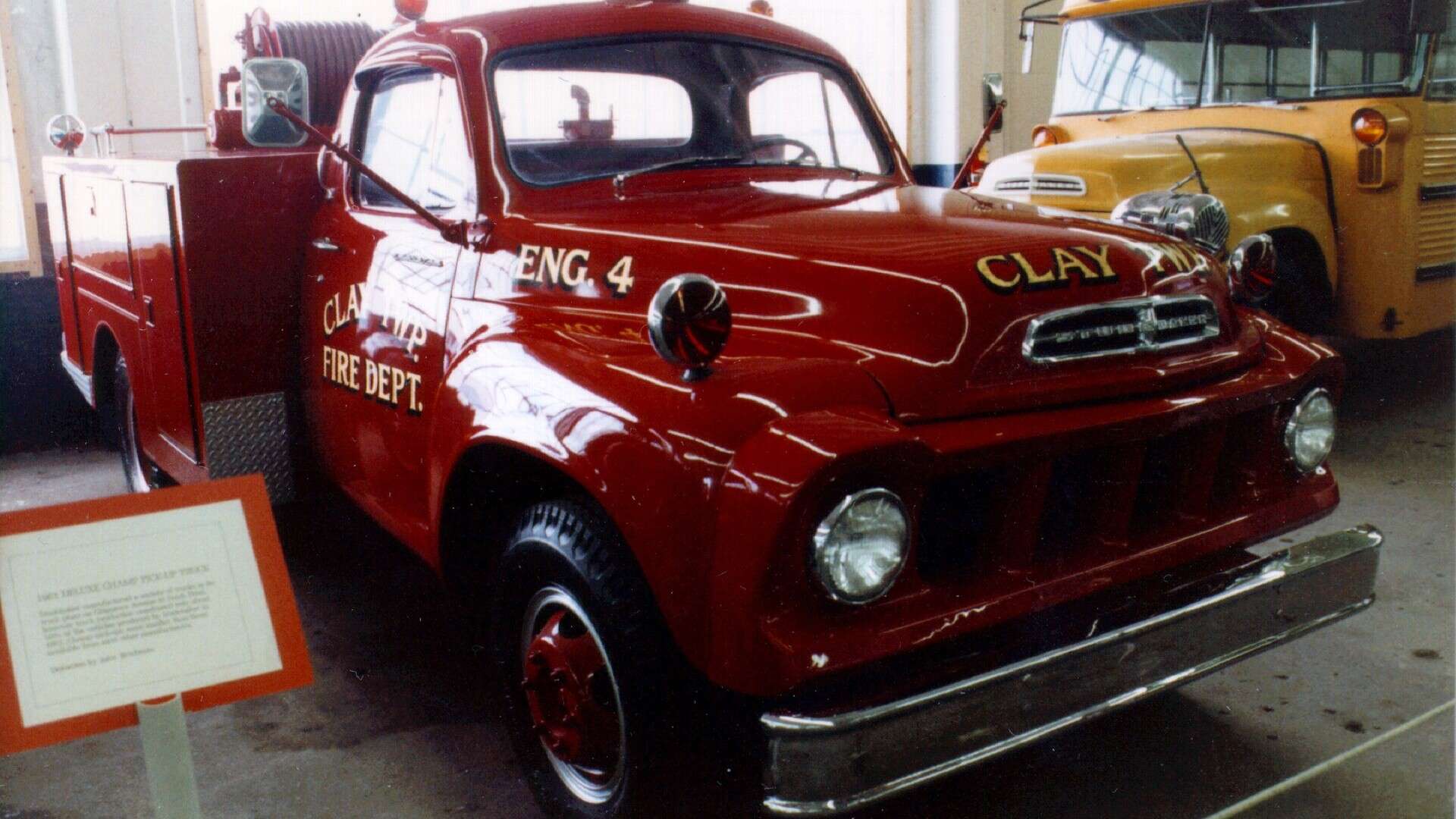
The plant makes steering columns for school buses, fire trucks and military vehicles, according to the local TV report. Sapienza described its output more generally as steering components. Either way, these are low-volume vehicles. Fire apparatus is built in small batches to individual department specs, and a school district buys a bus expecting to run it for years.
Heavy vehicles steer differently from passenger cars. A car with independent front suspension typically uses rack-and-pinion steering. A bus or fire truck riding on a solid front axle typically uses a steering gearbox bolted to the frame, which turns a pitman arm and a drag link to swing the wheels, with hydraulic assist doing the heavy work. The column carries the driver’s input down to that gearbox, and it has to fit cabs, seating positions and dashboards that vary from one builder to the next. That makes for a line that switches among many part numbers for a modest total volume, which is expensive capacity to keep running when orders fall.
Moving it is not simple either. When a supplier relocates a safety-critical part, each vehicle maker typically has to approve parts from the new plant before they go on trucks. That is one reason closings like this take a year or more, and why the schedule here stretches into April 2027.
For fleets, the issue is service parts. ZF’s aftermarket site says its TRW product range includes steering gears and pumps for trucks and buses, also available as spare parts. ZF has not said whether any of its service parts come from Lafayette today. A school district transportation director or a fire department fleet manager would reasonably want to know who will build replacements once the Heath Street line goes quiet.
Ross Gear’s steering business, 1906 to 2027
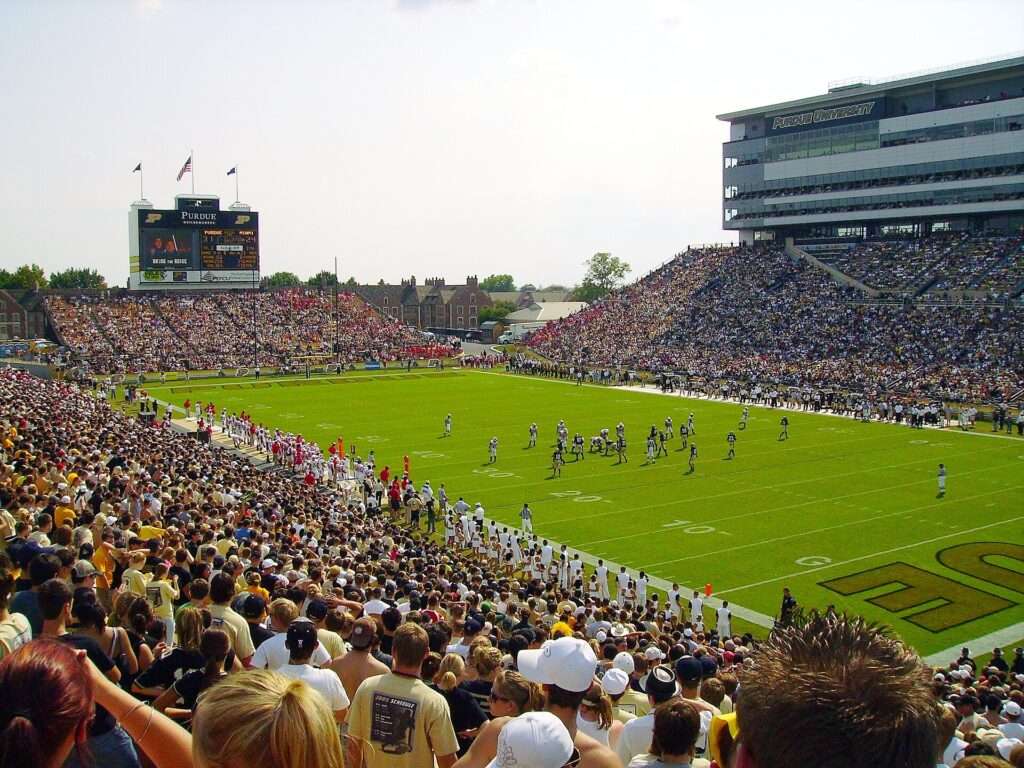
David Ross established Ross Gear and Tool Company in 1906, and it focused on steering gears, according to Purdue University’s College of Engineering, which credits him with 88 U.S. patents. Ross joined Purdue’s Board of Trustees in 1921 and helped pay for the stadium that carries his name. Ross Gear merged with TRW in 1964, and ZF bought TRW in 2015.
For most of that span, Lafayette both engineered and built steering hardware. After March 2027 it will only engineer it. ZF has already told local reporters the engineering center is “critical to our company and the future of ZF,” in Sapienza’s words. Paired with the closing, that statement describes a company that wants to keep its engineering talent near Purdue without carrying the cost of the factory that grew up beside it.
ZF’s companywide cuts
The Lafayette closing sits inside a much larger cutback. In a July 31, 2025, release, ZF said it “is in the midst of the most comprehensive restructuring program in its history,” and blamed stagnating global vehicle production, the slow ramp-up of electric vehicles and uncertainty over U.S. tariffs for lower sales and rising costs. It said it had cut 11,200 full-time-equivalent positions since the start of 2024.
The cuts kept going. ZF’s first-half 2026 results, released July 30, put its headcount at 149,675, down from 153,153 at the end of 2025. Sales slipped to €19.3 billion from €19.7 billion, while the adjusted EBIT margin improved to 5.0% from 4.3%. Capital spending fell 19%. ZF’s 2025 annual report shows North America’s share of group sales falling to 25.8% from 27.0% a year earlier.
A margin that rises while sales fall points to cost cuts doing the work, and a 19% cut in capital spending leaves little room for a small-volume plant that has lost a customer and would need new investment to win another. ZF is not alone. Bosch’s EV write-down and another round of Porsche job cuts show the same pressure on German auto employers.
What to watch between now and April 2027
The first thing to watch is the calendar. Nov. 30 is when the separations ZF says are subject to the federal notice begin. The big one is the period starting Feb. 28, 2027, when the schedule shows the assembly floor emptying. If ZF or one of its customers names where production is going, that will settle whether this work left Indiana or left the United States.
The second is the engineering center. Its count has already moved from about 160 to 135 in roughly a year. If ZF’s promise that Lafayette remains “critical” holds, that number should stop falling once the plant is gone.
The third is the parts counter. Bus fleets and fire departments that run heavy steering hardware should ask their dealers now where replacement gears and related parts will come from after the line shuts down.
ZF gave its Lafayette workers about 20 months of warning, roughly 10 times what federal law requires, and by our count the plant’s workforce fell by roughly a third while they waited. Was that long notice a fair deal for the workers, or did it mostly make the closing look smaller than it was?