
Best Dash Cams for Every Budget (2026 Buyer’s Guide)
Updated September 2026. The Auto Wire may earn a commission when you buy through links on this page, at no extra cost to you. Picks are chosen editorially from specs, owner reviews and product features; prices change often, so check Amazon for the current price.
A dash cam is the cheapest insurance policy you can buy. When another driver swears the light was green, when someone backs into you in a parking lot and drives off, or when a staged crash tries to pin the blame on you, video settles the argument in seconds. Insurers and police increasingly ask for it.
The hard part is choosing. Resolution numbers are inflated, “night vision” means different things to different brands, and the difference between a one-, two-, three- and four-channel system matters more than most shoppers realize. We sorted the best-reviewed dash cams on Amazon by what kind of driver they suit, from a simple front camera for a commuter to a 360-degree setup for rideshare drivers, and explained what actually matters below.
Our top picks at a glance
| Best for | Pick | |
|---|---|---|
| Best overall | ROVE R2-4K Dual | See price |
| Best value 4K front + rear | 70mai A800S 4K | See price |
| Most discreet | VIOFO A119M Pro Mini | See price |
| Best for rideshare | Vantrue N2X (front + cabin) | See price |
| Most coverage | Vantrue N5S 4-Channel 360° | See price |
Jump to: The picks · How to choose · FAQ
The 10 best dash cams in 2026
1. ROVE R2-4K Dual Dash Cam (Front & Rear)
Best for: Most drivers who want one camera that does everything well
The ROVE R2-4K Dual is one of the most-reviewed dash cams on Amazon and it earns that popularity with a sensible spec sheet rather than gimmicks. The front camera uses Sony’s STARVIS 2 IMX675 sensor with a wide F1.5 aperture, which is the part that matters most for reading plates at night, and the rear camera covers what happens behind you.
Built-in GPS stamps speed and location on your footage, and dual-band 5.8GHz WiFi makes pulling clips onto your phone fast enough that you will actually do it after an incident. A 128GB microSD card is included, so it works out of the box.
- STARVIS 2 front sensor with F1.5 aperture for low-light footage
- Built-in GPS for speed and location data
- 5.8GHz / 2.4GHz WiFi and app for quick clip downloads
- 3-inch screen; 128GB card included
Worth knowing: Parking mode that records while the car is off needs a hardwire kit (sold separately) to avoid draining the battery.
Check current price on Amazon →
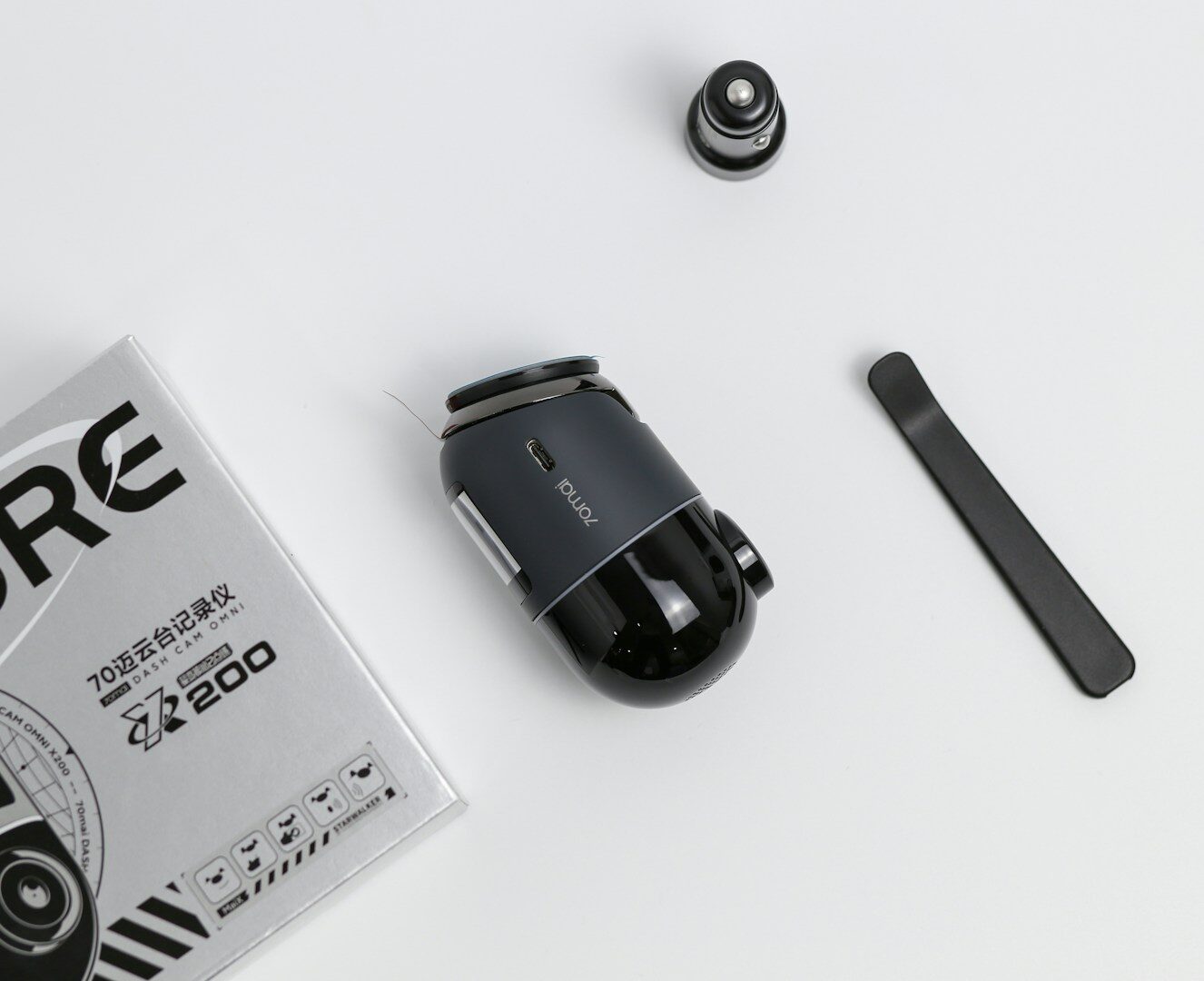
2. 70mai A800S 4K Dash Cam (Front & Rear)
Best for: Shoppers who want true 4K front video without paying premium prices
70mai built its reputation on dash cams that punch above their price, and the A800S is its long-running front-and-rear 4K model. The front camera records native 4K through a 7-element glass lens with an F1.8 aperture, and a 1080p rear camera watches your back bumper.
It adds 5GHz WiFi for faster transfers, over-the-air firmware updates, GPS, and driver-assistance alerts such as lane departure and forward collision warnings.
- 4K front + 1080p rear recording
- STARVIS sensor with F1.8, 7-glass lens
- 5GHz WiFi, GPS and OTA updates
- ADAS lane and collision alerts
Worth knowing: The ADAS alerts can get chatty in city traffic; most owners turn them down or off.
Check current price on Amazon →
3. Coolcrazy 4K Dash Cam Front and Rear
Best for: Tight budgets that still want two-camera coverage
If you want front and rear coverage at the lowest sensible cost, the Coolcrazy 4K is the pick. It records 4K up front with a 170-degree field of view and adds a 150-degree rear camera, so rear-end collisions, the most common crash type, are covered.
It uses a STARVIS-series night sensor with WDR, includes a 128GB card and has 5GHz WiFi. It is the kind of camera to buy for a teen driver’s car or a second vehicle.
- 4K front, wide 170° front / 150° rear angles
- STARVIS night sensor with WDR
- 5GHz WiFi app control
- 128GB card included
Worth knowing: A lesser-known brand than ROVE or VIOFO, so long-term firmware support is less certain.
Check current price on Amazon →
4. REDTIGER F7NP 4K Dash Cam Front & Rear
Best for: Drivers who want a proven best-seller with a big screen
REDTIGER’s F7N family is a fixture near the top of Amazon’s dash cam charts. The F7NP pairs a 4K front camera with 1080p rear recording and upgrades to a STARVIS 2 sensor with an F1.5 aperture for better night footage than older models.
A built-in screen lets you check framing without your phone, and a memory card is included.
- 4K front + 1080p rear
- STARVIS 2 sensor, F1.5 aperture, WDR
- Built-in display for easy setup
- Card included
Worth knowing: The rear camera is 1080p, which is fine for events but less reliable for reading plates behind you at night.
Check current price on Amazon →
5. REDTIGER F7N Touch 4K STARVIS 2 Dash Cam
Best for: People who hate fiddling with tiny buttons
The F7N Touch takes the popular REDTIGER 4K platform and adds a responsive touchscreen plus voice commands, so you can lock a clip or snap a photo without taking your hands off the wheel.
It records 4K front and 1080p rear through a STARVIS 2 sensor, includes GPS and 5.8GHz WiFi, and ships with a 128GB card.
- Touchscreen and voice control
- 4K front + 1080p rear, STARVIS 2
- GPS and 5.8GHz WiFi
- 128GB card included
Worth knowing: The larger body is more visible behind the mirror than a mini cam.
Check current price on Amazon →
6. VIOFO A119M Pro 4K Mini Dash Cam
Best for: A clean windshield and a camera thieves won’t notice
VIOFO is the brand dash cam enthusiasts tend to recommend, and the A119M Pro is its compact, screen-free 4K front camera. It records 4K at 30fps on a STARVIS 2 IMX678 sensor with HDR, and it is small enough to hide behind the rearview mirror.
Wi-Fi 6 and quad-mode GPS are built in, and VIOFO includes a CPL filter, which cuts windshield glare and dashboard reflections, an accessory most brands charge extra for.
- 4K 30fps, STARVIS 2 IMX678 sensor, HDR
- Compact, screen-free design
- Wi-Fi 6 and quad-mode GPS
- CPL anti-glare filter included
Worth knowing: Front camera only, and you’ll use your phone to view footage since there is no screen.
Check current price on Amazon →
7. Vantrue N2X 2.7K Dash Cam (Front & Inside)
Best for: Uber, Lyft and delivery drivers
Rideshare drivers need to record the cabin as well as the road, and the Vantrue N2X does both. It records 1944p up front and 1080p inside, with infrared night vision so the cabin camera still works after dark.
A 24/7 parking mode with 15-second pre-recording captures what happened before an impact, and 5G WiFi plus GPS round out the package.
- Front + interior recording
- IR night vision for the cabin
- Four parking modes with pre-recording
- 5G WiFi and GPS
Worth knowing: There’s no rear-facing camera; choose the N4S below if you need rear coverage too.
Check current price on Amazon →
8. VIOFO A229 Plus Dash Cam (Front & Rear)
Best for: Enthusiasts who prioritize image quality and reliability
The A229 Plus was the first front-and-rear dash cam to use Sony STARVIS 2 IMX675 sensors on both cameras, which means the rear footage is nearly as good as the front, a big deal when the other driver hits you from behind.
Both channels record in HDR, and VIOFO’s parking mode and firmware support have a strong reputation among owners.
- Dual STARVIS 2 sensors, front and rear
- 2K HDR recording on both channels
- Reliable parking mode (with hardwire kit)
- Strong firmware support
Worth knowing: It records 2K rather than 4K, which trades some headline resolution for better night and HDR performance.
Check current price on Amazon →
9. Vantrue N4S 3-Channel Dash Cam
Best for: Rideshare drivers who want front, cabin and rear
The N4S covers all three angles at once: the road ahead, the cabin and the road behind. All three cameras use STARVIS 2 sensors for night footage, which is rare in three-channel systems.
It supports large memory cards, so it can keep more footage before it starts overwriting old clips.
- Front, interior and rear cameras
- Triple STARVIS 2 night vision
- 2.7K recording
- Supports high-capacity cards
Worth knowing: Three cameras mean three sets of wiring; budget time for a tidy install.
Check current price on Amazon →
10. Vantrue N5S 4-Channel 360° Dash Cam
Best for: Maximum documentation around the whole vehicle
If you want to capture sideswipes, door dings and parking-lot hits from any angle, the N5S’s four cameras cover the front, rear, cabin and sides for close to 360-degree coverage.
All four channels use STARVIS 2 sensors. It is the most expensive and most complex option here, and for fleet, rideshare and high-value vehicle owners that tradeoff is worth it.
- Four cameras for 360° coverage
- STARVIS 2 night vision on all channels
- 2.7K recording
- Designed for rideshare and fleet use
Worth knowing: Overkill for most commuters, and hardwiring is strongly recommended.
Check current price on Amazon →
How to choose a dash cam
Ignore the biggest number on the box. These are the factors that decide whether your footage is actually useful when you need it.
How many channels do you need?
A front-only camera covers most disputes about who ran a light or cut someone off. Front-and-rear (two-channel) adds rear-end collisions, the most common crash type in the U.S. Rideshare and delivery drivers should add an interior camera (three-channel). Four-channel 360-degree systems are for people who want to catch side impacts and parking-lot damage too.
Sensor matters more than resolution
A 4K label means little if the sensor struggles at night. Look for a Sony STARVIS or STARVIS 2 sensor and a wide aperture (F1.8 or lower). A good 2K camera with a strong sensor will often read plates at night better than a cheap 4K one.
Parking mode and hardwiring
Many hit-and-runs happen when you’re not in the car. Parking mode records impacts or motion while you’re parked, but it needs constant power. A hardwire kit connects the camera to your fuse box and includes a low-voltage cutoff so it won’t drain your battery. If your car sits outside, budget for one.
GPS and WiFi
GPS stamps your speed and location on the video, which can support your account of a crash. WiFi (ideally 5GHz) lets you pull clips onto your phone right at the scene instead of hunting for a card reader later.
Use a high-endurance memory card
Dash cams write video constantly, which wears out ordinary microSD cards. Use a high-endurance card rated for continuous recording, format it in the camera every month or two, and check that it still records. A dead card is the most common reason a dash cam fails when it’s needed.
Heat and mounting
In hot climates, cameras that use supercapacitors instead of lithium batteries survive summer dash temperatures better. Mount the camera behind the rearview mirror so it doesn’t block your view, and route the cable along the headliner and pillar trim.
Frequently asked questions
Are dash cams legal?
Dash cams are legal to use in all 50 states, but some states restrict where you can mount anything on the windshield, and some require consent before recording audio or passengers. Check your state’s windshield obstruction and audio consent rules, especially if you drive for a rideshare company. See our driving laws by state guide.
Will a dash cam lower my insurance?
In the U.S., few insurers offer a direct discount for dash cams. The value comes from footage that proves you weren’t at fault, which can protect your record and your premium after a claim.
Is 4K worth it on a dash cam?
It can help with reading license plates at a distance in daylight. At night, sensor quality and aperture matter more. A 4K camera with a weak sensor can perform worse than a 2K camera with a STARVIS 2 sensor.
Do dash cams drain the car battery?
Not when they’re plugged into a socket that turns off with the ignition. Parking mode keeps the camera running, so use a hardwire kit with a low-voltage cutoff or a dedicated dash cam battery pack.
How long do dash cams record?
They loop-record, overwriting the oldest footage when the card fills. Impact-triggered clips are locked so they aren’t overwritten. A 128GB card typically holds several hours of front-and-rear footage.
The bottom line
For most drivers, the ROVE R2-4K Dual is the safest bet: strong night sensor, front and rear coverage, GPS and fast WiFi. On a tight budget, the 70mai A800S or Coolcrazy 4K cover the basics. Rideshare drivers should go straight to the Vantrue N2X or N4S.
More buying guides
Browse all Auto Wire buying guides →
Disclosure: The Auto Wire is a participant in the Amazon Services LLC Associates Program. As an Amazon Associate we earn from qualifying purchases. Product availability and pricing change frequently; the price shown on Amazon at the time of purchase applies.