
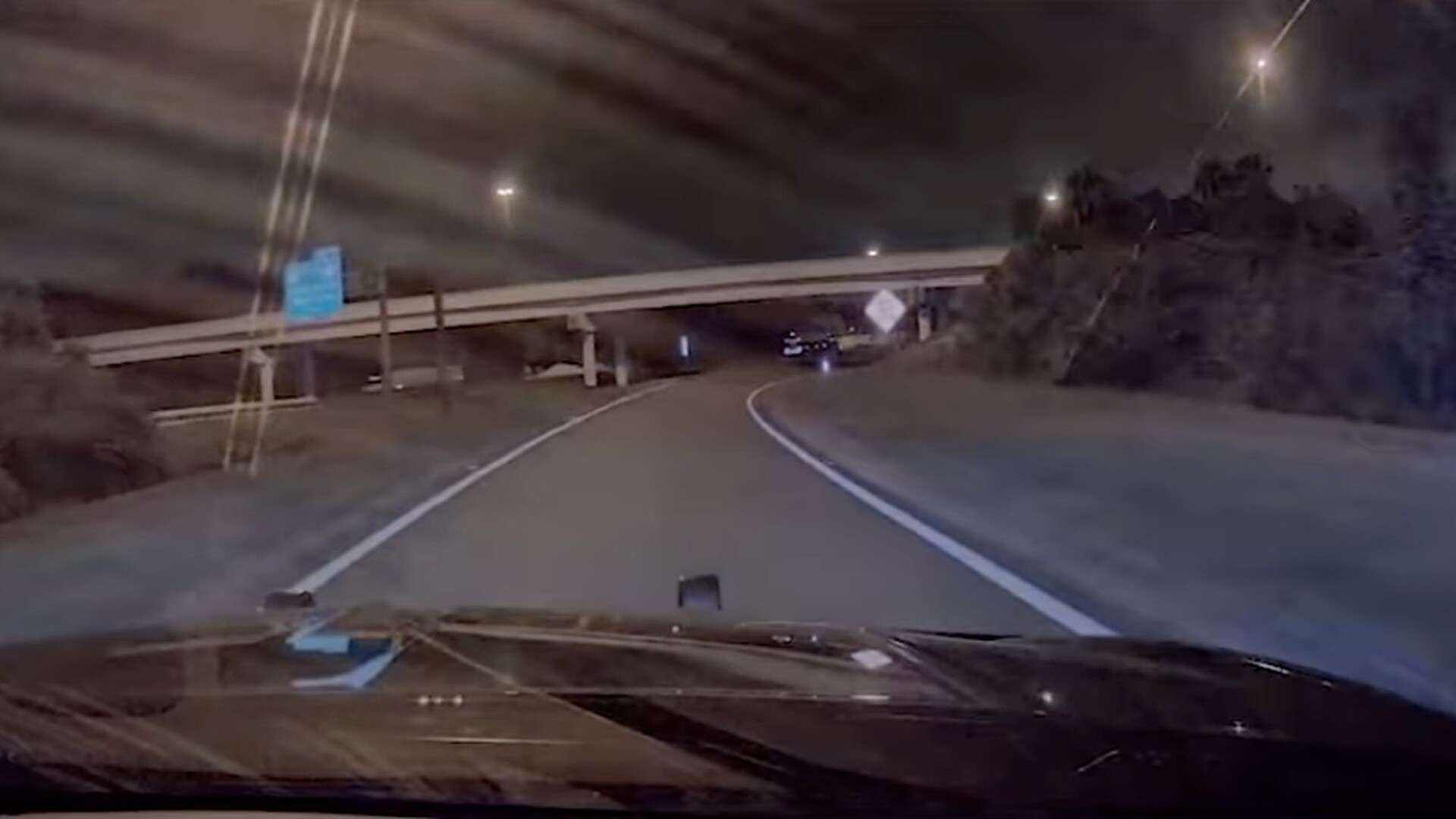
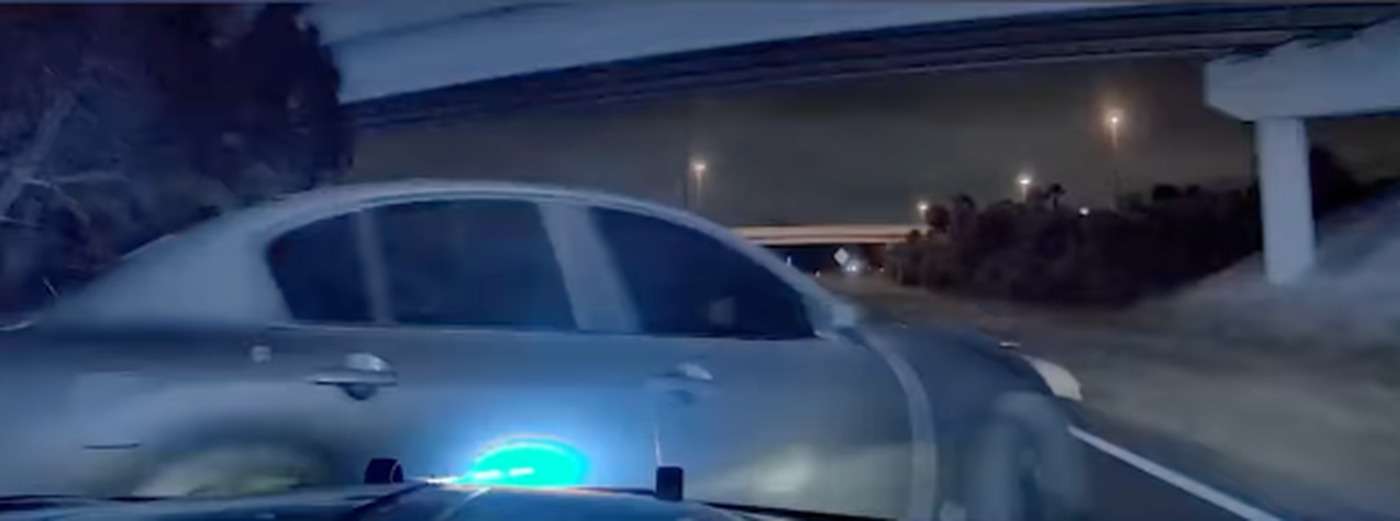
A Florida Highway Patrol trooper parked in the median of Interstate 75 in Hillsborough County at about 2:24 a.m. on Friday, Oct. 30, saw two gray sedans speed past him in the northbound lanes, according to an arrest report described by WFLA. By the time he got behind them, his own cruiser was doing 140 mph, and the report says the sedans were believed to be going faster.
Watch the WFLA video on Instagram
Video: WFLA, via Instagram.
What the arrest report describes
As the cars approached US-301, the trooper tried to pull them over. Instead, the report says, the drivers “aligned the front of their vehicles” and accelerated together, then made aggressive and unsafe lane changes to weave through and pass other motorists, WFLA reported.
At the I-4 interchange, the trooper used a PIT maneuver on one car, and its 19-year-old driver spun off the road and stopped on the shoulder. A second trooper stayed with the other car, driven by an 18-year-old, until it stopped at the entrance to the Seminole Hard Rock Casino. WFLA reported that both drivers were charged with racing on the highway and fleeing to elude. Those are accusations, and neither driver has been convicted.
Racing on a highway needs no crash and no finish line
Florida’s racing statute, section 316.191, treats a first violation as a first-degree misdemeanor with a fine of $500 to $2,000 and a one-year license revocation. A second violation within a year of a prior conviction becomes a third-degree felony. An officer can arrest on probable cause without a warrant and impound the car for 30 business days, and the statute puts the costs on the owner, lessee or renter, not only the driver.
What the trooper writes decides whether that statute fits. The Auto Wire covered a case on I-4 last month where a trooper wrote that two Mustangs “appeared” to be racing, and Florida law wants more than that. The report on the I-75 drag race, as WFLA describes it, gives the more: two cars lined up side by side and accelerated at the same moment.
Eluding is where the felony exposure sits
Section 316.1935 makes it a third-degree felony to refuse to stop, or to flee after stopping, when you know an officer has ordered you to stop. If the driver flees a marked patrol car with lights and siren on and drives at high speed or with wanton disregard, the offense becomes a second-degree felony, which carries up to 15 years in prison under section 775.082. A conviction requires the court to revoke the license for one to five years. The three-year mandatory minimum applies only when the driving causes serious bodily injury or death, and WFLA’s account does not say anyone was hurt.
WFLA reported the charge only as fleeing to elude, without a subsection or a degree, so how serious the count is depends on facts such as the lights and siren that its account does not give. The statute also bars courts from suspending, deferring or withholding adjudication for any violation of the section, which means a conviction goes on the record even for a first offender.
Charges at arrest are not charges filed
An arrest report lists what the officer charged. Prosecutors decide what gets filed, and the counts can change. The Auto Wire’s follow-up on a 140-mph Corvette arrest in Tempe, Arizona found no court case a year later.
WFLA’s report did not include a court date or a response from either driver. The next thing to watch is whether the Hillsborough County State Attorney’s Office files the racing and eluding counts as written, and whether the eluding count is charged as a second-degree felony.
Two teenagers, 140 mph, an exit by a casino. What, if anything, should a judge be allowed to weigh before a first offense at 18 goes on the record?