
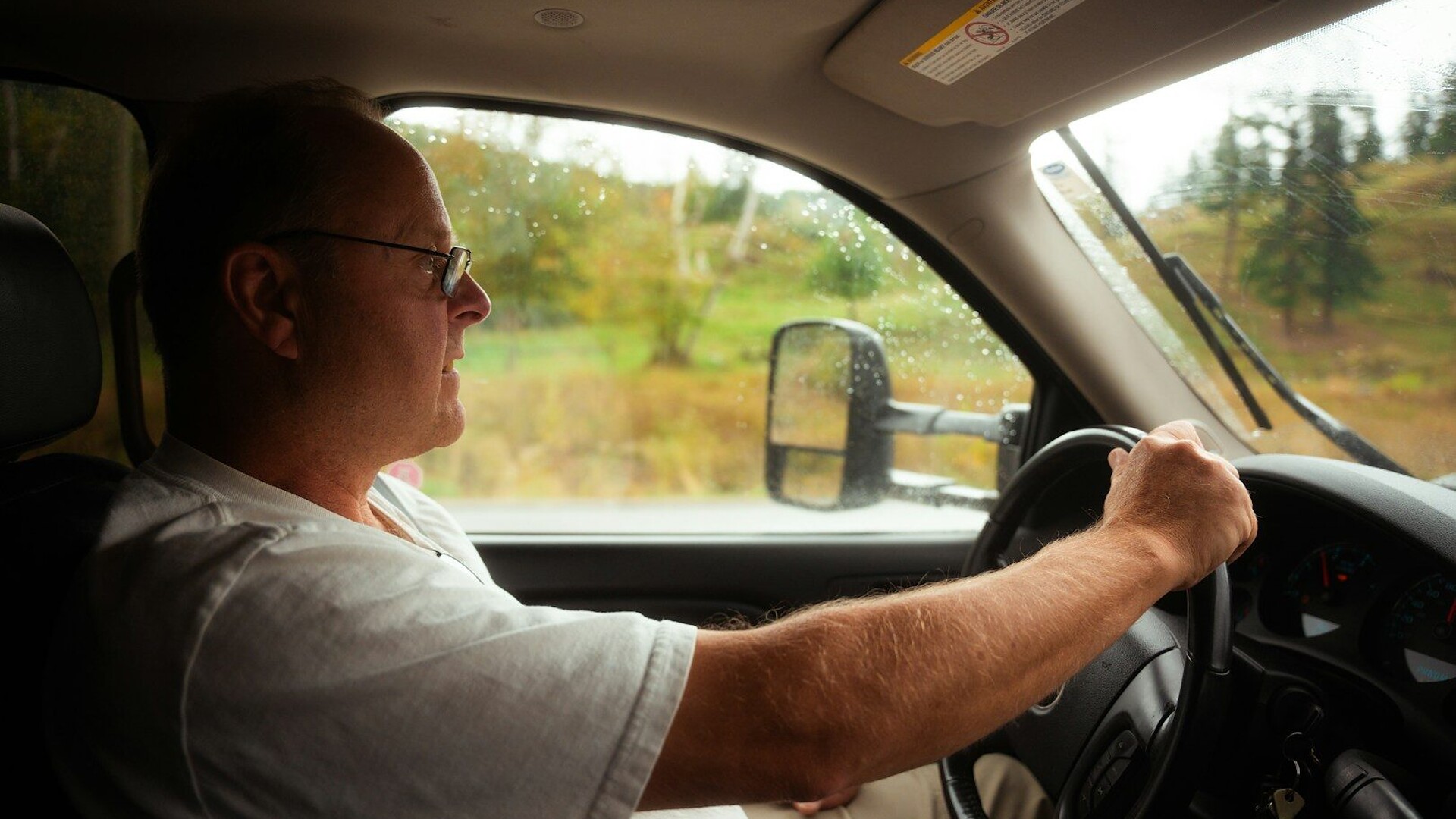
Joan Spalding, 89, lets Tesla’s Full Self-Driving (Supervised) handle much of the drive up to the house she and her late husband built in Evergreen, Colorado, a road she has driven for more than 50 years. She told NPR she had several minor fender benders and then a serious crash two years ago while turning left. Asked what she would do without the $99-a-month software in her Model Y, she said, “I’d have to move.”
Tesla is selling that outcome. In March, Tesla’s account on X reposted a video of an 87-year-old who hadn’t driven in five years, now behind the wheel of a Cybertruck, with the line “FSD Supervised can give you back your freedom,” Bloomberg reported Monday. In July, Elon Musk reposted a company-made video of a 93-year-old taking road trips on FSD and wrote, “Tesla self-driving enables safer mobility for senior citizens.” On Tesla’s most recent earnings call, chief financial officer Vaibhav Taneja said FSD “actually opens up a lot more flexibility” for people who previously had trouble driving, according to Bloomberg.
The pitch runs straight into Tesla’s own paperwork. The owner’s manual describes FSD as a job the human does the whole time the car is moving: watch the road, catch the software’s mistakes, and take over without delay. Those are the same abilities families watch slip when the conversation about a parent’s keys begins. A driver who can no longer drive safely is poorly placed to supervise a car that drives most of the way, and under Tesla’s manual and Colorado’s licensing rules, that driver is still the driver.
Tesla’s manual puts the driver on duty for the entire trip
The Model Y owner’s manual says “Full Self-Driving (Supervised) requires you to pay attention to the road and be ready to take over at all times.” It tells owners to “always be prepared to take immediate action,” singling out blind corners, intersections and narrow roads, and states flatly: “You are driving Model Y at all times.”
Tesla enforces the attention part with a cabin camera that watches the driver while FSD is engaged and can’t be switched off. Ignore enough warnings and the system disengages mid-trip, which Tesla calls a strikeout. Five strikeouts suspend FSD and Autosteer for a week. The camera can tell whether someone’s eyes are pointed at the windshield. It has no way to measure how long that person takes to understand what the car is doing wrong and get a foot on the brake.
That gap is where the researchers Bloomberg and NPR interviewed put their concern. Philip Koopman, an autonomous-vehicle researcher and emeritus professor at Carnegie Mellon University, described the supervisor’s task to Bloomberg this way: “You have to wait for it to make a mistake, notice it’s making a mistake, and then react.” Sandra Weintraub, a professor of psychiatry and neurology at Northwestern University, told Bloomberg that people in the early stages of cognitive decline often don’t notice it in themselves. Alexandra Mueller, a senior research scientist at the Insurance Institute for Highway Safety, told NPR that FSD works well often enough to make drivers complacent, and that “ultimately it is very unsafe if you have drivers who are not fully competent due to age-related impairments or decline.”
Federal investigators found FSD’s warnings can come at the last moment
How much time the human gets is a live federal question. On March 18, 2026, NHTSA’s Office of Defects Investigation upgraded its probe of FSD in reduced-visibility conditions from a preliminary evaluation (PE24031) to an engineering analysis (EA26002), the step that comes before the agency can seek a recall. The closing summary covers an estimated 2,410,002 vehicles and nine identified crashes or fires, one of them fatal.
In those crashes, the agency wrote, FSD “did not detect common roadway conditions that impaired its visibility and/or provide alerts when camera performance had deteriorated until immediately before the crash occurred.” Glare and airborne dust were among the conditions at issue. When the handoff arrives that late, the outcome depends almost entirely on the person in the seat, and on how fast that person is.
Federal crash reports don’t record how old the driver was
Bloomberg’s review of reports filed under NHTSA’s Standing General Order found that Tesla has reported almost 2,400 crashes since June 2025 in which one of its driver-assistance systems was engaged, 24 of them involving at least one death. For almost 2,300, the highest injury severity is listed as unknown. The reports don’t include the driver’s age, so no public data set can say whether people in their 80s and 90s crash more or less often on FSD than anyone else.
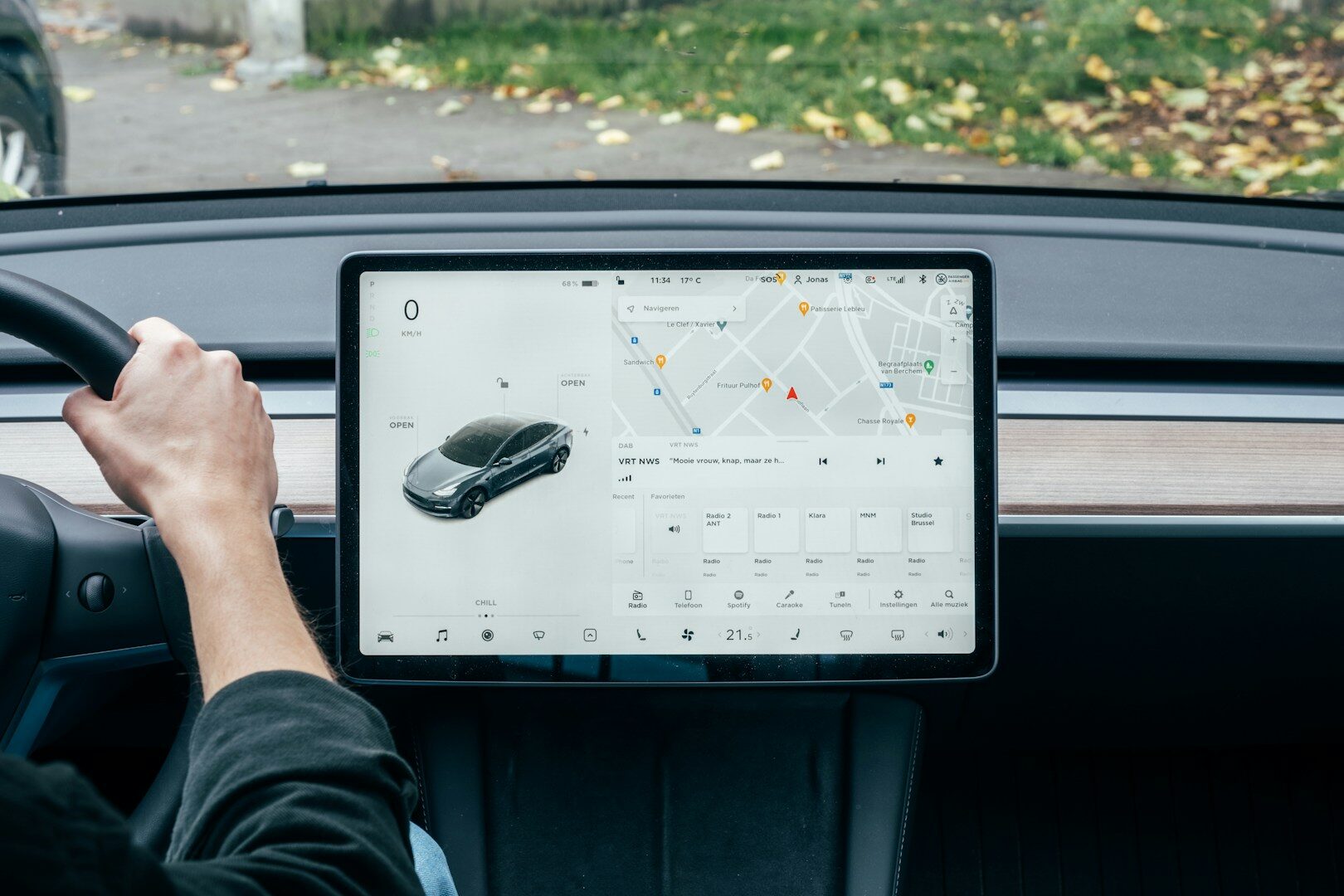
Tesla says FSD is up to nine times safer than human driving on its own safety page. MIT research scientist Bryan Reimer told NPR that the company releases too little data for anyone to check that claim, and that FSD, while impressive, can’t yet replace a human driver. Tesla reports more than 1.7 million active FSD subscriptions, up 67% from a year earlier, and NPR reported that Tesla doesn’t say whether it tracks how many of those subscribers are seniors. Tesla did not respond to requests for comment from NPR or Bloomberg.
Bloomberg cited two deaths this year involving older Tesla drivers. In May, an 87-year-old man in Florida died after his Model Y left the road, struck an electrical box and went into a pond; the Florida Highway Patrol confirmed the car was on Autopilot, a separate system Tesla has since discontinued. In July, an 89-year-old man died in San Mateo, California, after his Tesla ran a red light and hit a light pole. San Mateo police said in a release that the driver appeared to be unconscious, and Tesla reported to NHTSA that a matching vehicle had a driver-assistance system engaged. The cause of the Florida crash has not been determined, according to Bloomberg.
California already ruled Tesla’s old FSD name misleading
The word “Supervised” in the product’s name is a legal fix. On Dec. 16, 2025, the California DMV adopted an administrative law judge’s decision in Case Nos. 21-02188 and 21-02189 finding that Tesla’s use of “Autopilot” and “Full Self-Driving Capability” to market its driver-assistance features violated state law. Tesla had already renamed the product “Full Self-Driving (Supervised).” On Feb. 17, 2026, the DMV said Tesla had stopped using “Autopilot” in its California marketing and would not face a 30-day suspension of its license to sell cars there. Tesla has since sued the DMV to overturn the finding, the Los Angeles Times reported. I could not find a public ruling in that suit as of Monday.
California’s case was about what a reasonable buyer would believe the car can do. A post telling someone who gave up driving five years ago that FSD can give back their freedom invites the very belief the “Supervised” label was added to correct. Matthew Wansley, a Cardozo School of Law professor who studies autonomous vehicles, told Bloomberg that Tesla’s promotion conflicts with its own owner’s manuals and could create liability risk for the company. For the owner, the liability picture is simpler: with a Level 2 system, the person in the seat is the one a police report, an insurer and a plaintiff’s lawyer will look at first, as we’ve covered in who gets blamed in driver-assist crashes and in a Vallejo pedestrian crash in which the driver told CHP the car was in FSD.
What Colorado lets a worried family do
Colorado, where Spalding lives, doesn’t make anyone give up a license at a set age. Its DMV lets immediate family members, police and medical professionals request a re-examination of a driver they believe is physically or mentally unable to drive safely. A family member can email the DMV with the driver’s name, date of birth, the reason for concern and their own name and relationship. The request can’t be anonymous; under the state’s re-examination rule, the driver has the right to know who filed it.
The rule defines a re-examination as an eye exam, a written test and a driving test. A DMV official told Colorado Public Radio in March that a driver has 20 days from the notice to complete whatever is required, or the driving privilege is canceled. The DMV can also restrict a license instead of pulling it. Separately, Colorado drivers 80 and older who renew online must have passed a vision exam within the prior six months, according to the Governors Highway Safety Association, which counts 37 states and the District of Columbia with special licensing provisions for older drivers. Rules differ from state to state, so families outside Colorado should check their own DMV.
Nothing in that process has a box for driver-assistance software. The person sits the road test, and the license belongs to the person. That’s the same arrangement Mercedes spells out for its hands-free system. For a family weighing a $99 subscription against a parent’s keys, the practical test follows from Tesla’s manual: if the parent couldn’t pass a re-exam without FSD, the parent can’t do the job FSD assigns them either.
What NHTSA’s probe and Tesla’s lawsuit could change
NHTSA’s engineering analysis could end in a recall request covering more than 2.4 million Teslas, and Tesla’s suit could undo California’s finding on the old FSD name. Neither will settle the question in Evergreen, which is whether a $99 monthly subscription lets an 89-year-old stay in the house she has lived in for half a century. Tesla’s posts present FSD as a way for older drivers to stay on the road; its manual says the person in the seat is driving the whole time. Her family, and Colorado’s DMV if someone asks it to look, are the ones who decide which description fits her.
Has a parent or grandparent in your family started leaning on driver-assist to keep driving? What made you comfortable with it, or what didn’t?