
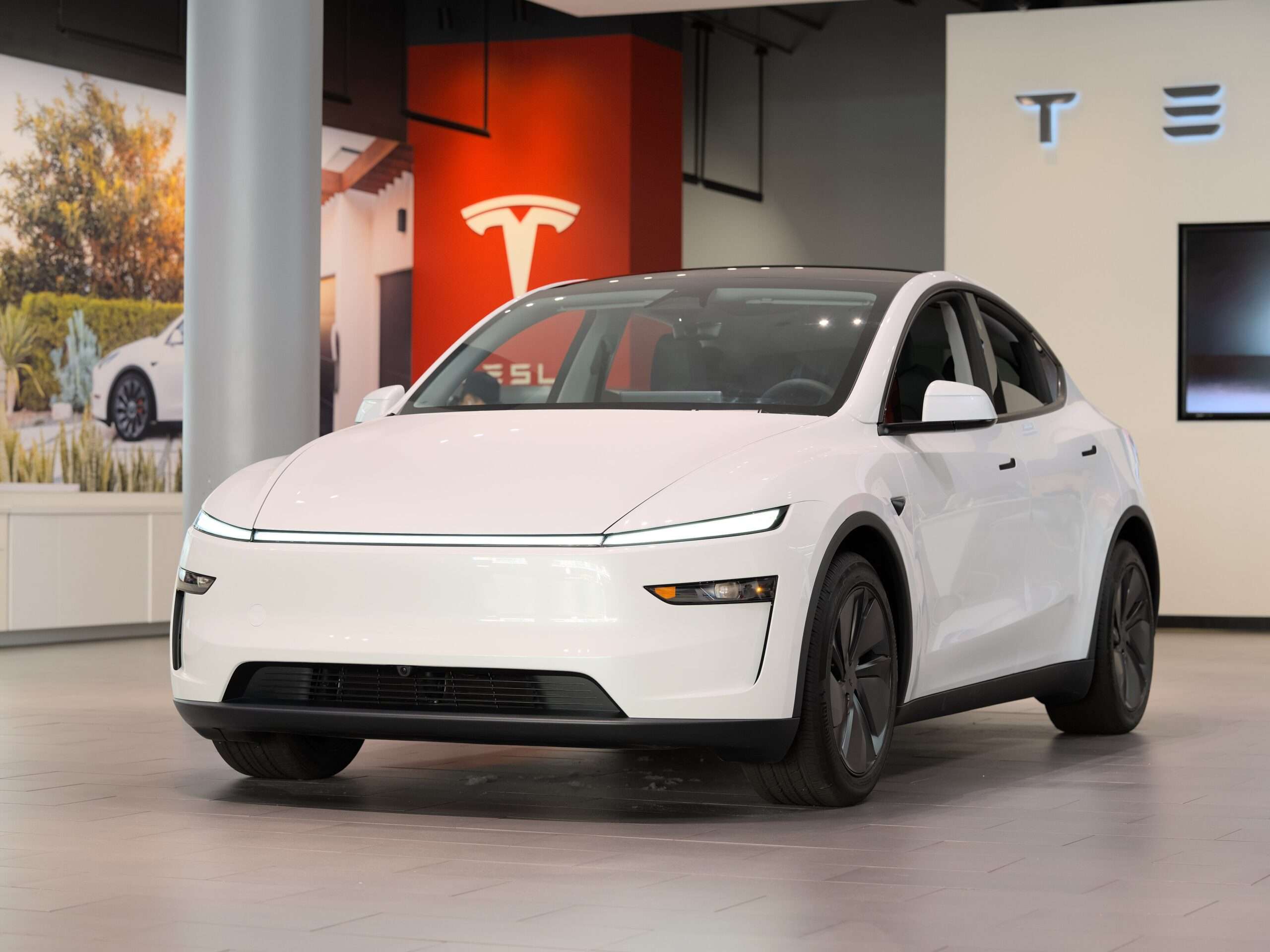
A 71-year-old man was crossing westbound Interstate 80 at the Interstate 780 interchange in Vallejo, California, at about 2:35 a.m. on Oct. 22 when a Tesla hit him, according to the California Highway Patrol as reported by ABC7. He died. The Tesla’s 26-year-old driver stayed at the scene and told officers the car was in Full Self-Driving mode, the CHP said. At least one other vehicle struck the man afterward, and none of them stopped.
What the dashcam video shows, according to CHP
The Tesla’s own dashcam recorded the crash, and the driver shared the video with officers, CBS San Francisco reported. In its preliminary review, the CHP said the Tesla was traveling about 70 mph in the second lane from the left when the man came off the right shoulder, heading toward the center divider, and stepped into its path. The CHP said the video shows the brakes applied and the car steering left. “Despite these evasive actions, the right front portion of the Tesla struck the individual,” the agency said.
The CHP has not released the names of the man or the driver. The reports I read include no charges and no CHP finding on cause, and they do not say whether investigators have confirmed that Full Self-Driving was engaged. That claim, for now, comes from the driver alone.
The driver’s duty under California law
A pedestrian on a roadway outside a crosswalk has to yield to vehicles close enough to be an immediate hazard, under California Vehicle Code section 21954. Subdivision (b) of the same section says that rule does not relieve a driver of the duty to exercise due care for any pedestrian on the roadway. Both obligations run at once, so an investigator asks what the man did and what the driver could have done. Caltrans and local authorities can also bar pedestrians from freeways under section 21960.
Nothing in those sections hands the duty to the software. Tesla’s support page describes FSD (Supervised) as an advanced driver assistance system meant to be used only with a fully attentive driver. The name itself is a product of a regulatory fight: the California DMV issued a decision on Dec. 16, 2025, finding Tesla’s “Autopilot” label misleading, and Tesla stopped using the word in California marketing after changing “Full Self-Driving Capability” to “Full Self-Driving (Supervised),” the DMV said in a Feb. 17, 2026 release. Whether the system was on may matter as evidence. It does not, on the statutes as written, change who was driving.
The other vehicles and the duty to stop
The CHP said at least one more vehicle hit the man while he lay in the traffic lanes and that no other vehicles stopped. Vehicle Code section 20001 requires the driver of a vehicle involved in an accident that kills or injures someone to stop immediately at the scene. When the accident results in death, a violation is punishable by two, three or four years in state prison, 90 days to one year in county jail, or a fine of $1,000 to $10,000. The CHP has no description of the vehicles or drivers and is asking witnesses to call the Solano Area office at 707-639-5600. Whether any of those drivers is even identified is an open question.
Federal regulators are already examining FSD
The National Highway Traffic Safety Administration opened engineering analysis EA26002 on March 18, 2026, upgrading an earlier preliminary evaluation. It covers an estimated 3,203,754 FSD-equipped Teslas and asks whether the system detects degraded performance in reduced visibility, such as glare and airborne obscurants, and alerts the driver in time. NHTSA’s summary cites nine crashes, one of them fatal. The CHP’s account of the Vallejo crash mentions no visibility problem, so that investigation is background, not a finding about this crash.
Other Tesla coverage this month: a driver who said he was asleep when his Tesla hit a CHP cruiser on I-80 in nearby Fairfield, and Tesla pointing to the second quarter of 2027 for unsupervised FSD in cars inside its robotaxi fleet.
The CHP’s final report should say whether it says FSD was engaged, what the car’s records show about the seconds before impact, and whether anyone is identified from the vehicles that left. A driver says FSD was driving. Should police have to check that claim, or does the law only care who’s in the seat?