
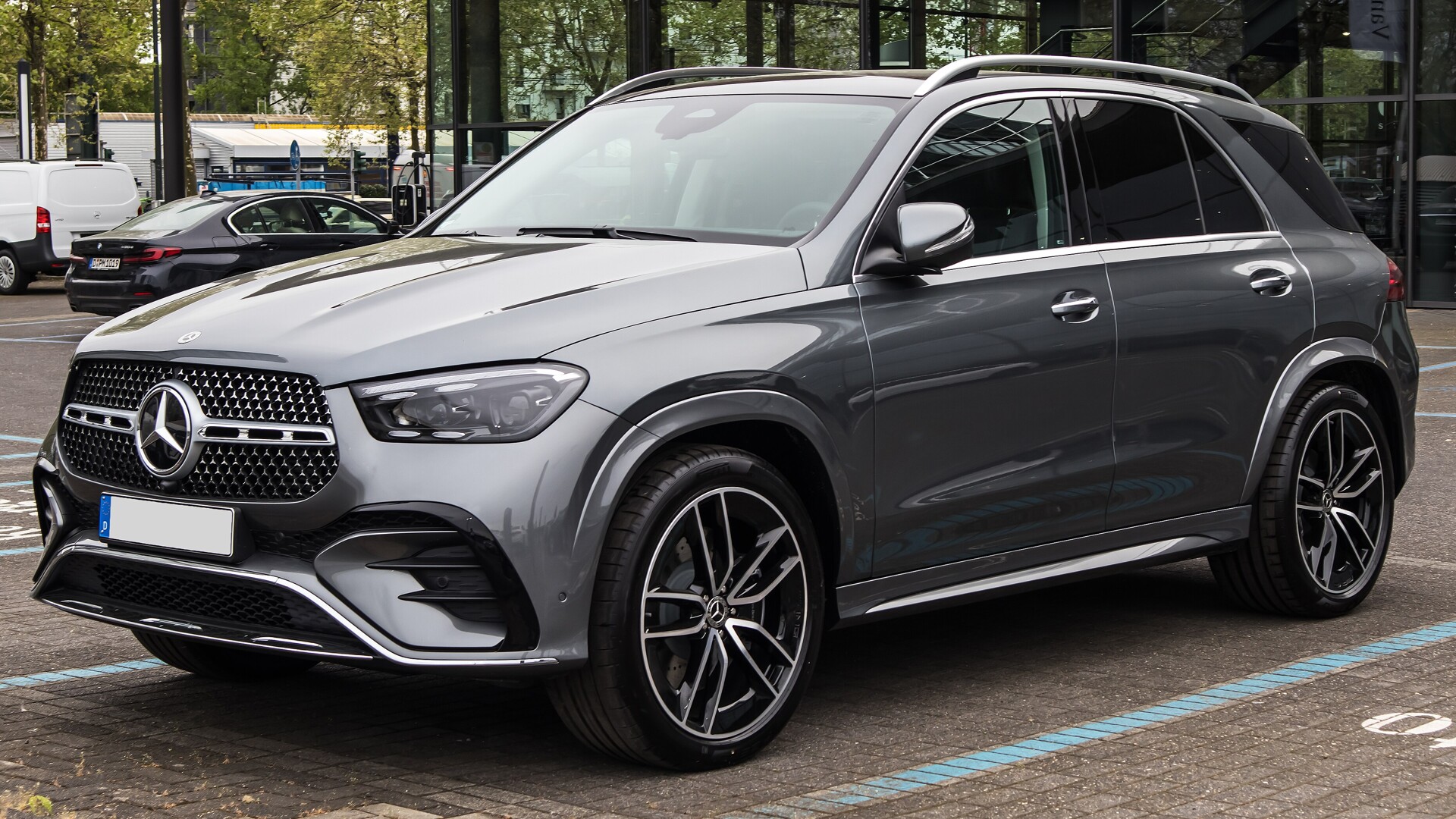
Mercedes-Benz has until Dec. 1 to hand Congress every agreement it holds with the two Chinese investors who together own 19.67% of the company, along with five years of their correspondence with its top executives. The demand came in a Nov. 16 letter from Rep. John Moolenaar (R-Mich.), chairman of the House Select Committee on China, and Rep. Ro Khanna (D-Calif.), its ranking member, to Jason Hoff, CEO of Mercedes-Benz North America in Sandy Springs, Georgia, and Ola Källenius, chairman and CEO of Mercedes-Benz Group AG in Stuttgart, Germany. The committee announced the bipartisan investigation on Nov. 17.
The two investors are Beijing Automotive Group (BAIC), a carmaker the letter describes as owned directly by the Chinese government, and Li Shufu, the founder of Geely. “Approximately one-fifth of Mercedes-Benz being owned by PRC entities presents significant risks,” Moolenaar and Khanna wrote. They asked for far more than share paperwork: a model-by-model list of Chinese parts in every Mercedes sold or built in the United States, notes from senior leaders’ conversations with top Chinese officials since 2010, including a Sept. 21, 2026, conversation with Commerce Minister Wang Wentao, and an in-person meeting with Hoff.
Mercedes said it had received the letter and would cooperate, and that it operates independently under its board of management, Reuters reported. “Our shareholders have no management board seats and no management authority,” the company said. It also rejected any suggestion that it opposes U.S. national security goals.
So how much say do two shareholders really have over a company when neither owns even 10%? Under a Commerce Department rule already in force, the answer helps decide whether a carmaker may keep selling connected vehicles in the U.S., starting with the 2027 model year. Mercedes has already introduced 2027 models here, including the S-Class.
A third of the votes, checked against Mercedes’ own count
Mercedes’ financial statements put BAIC’s holding, owned through a subsidiary called Investment Global Co., at 9.98%, and Li’s, owned through Tenaciou3 Prospect Investment Limited, at 9.69%. The letter goes further and says information indicates the two “collectively cast approximately one-third of the votes” at Mercedes shareholder meetings. It doesn’t show the math.
The math holds up, because most shareholders don’t vote. At Mercedes’ April 16, 2026, annual meeting, valid votes on the dividend were cast for 581,976,703 shares, or 60.44% of share capital, according to the company’s published voting results. Mercedes had 962,903,703 shares outstanding when it called that meeting. If BAIC and Li voted their full stakes at the percentages in Mercedes’ filings, about 189.4 million shares, they cast roughly 32.5% of the votes. That’s The Auto Wire’s calculation; the committee did not publish its own.
Mercedes’ share buybacks work in the same direction. Shares a German company holds in its own treasury carry no votes, and canceled shares drop out of the count entirely, so every repurchase enlarges the slice owned by investors who don’t sell. In February 2023, Mercedes said it had separately agreed with BAIC and Geely that each would keep its stake below 10% by selling shares pro rata alongside a buyback of up to €4 billion. The letter asks for that agreement and the correspondence behind it. It also notes that both holdings sit fractions of a percentage point below the level that triggers foreign investment review under German law.
Commerce’s connected-vehicle rule already asks who controls an automaker
The committee says the answers will inform Congress’s work on legislation, but a federal rule already asks the same question. The Bureau of Industry and Security’s connected-vehicle rule, finalized in January 2025, bars connected-vehicle manufacturers that are “owned by, controlled by, or subject to the jurisdiction or direction of China or Russia” from selling vehicles in the U.S. beginning with model year 2027, according to the bureau.
That test has no percentage in it. Under the rule’s definition in 15 CFR 791.301, a company counts as controlled when Chinese companies, Chinese government agents or Chinese citizens hold the power to decide its important matters through “a majority or a dominant minority” of the voting interest, board seats, proxy voting, contracts, or “formal or informal arrangements to act in concert.” The power counts whether or not it is ever used.
Read against that definition, much of the letter is a control inventory. It asks what non-public documents, technology, closed meetings and senior leaders BAIC or Li can reach, whether Mercedes keeps designated staff who routinely deal with them, and which side started the share purchases. Mercedes’ reply so far, no board seats and no management authority, is its side of the same test. I found no public BIS decision about Mercedes on the bureau’s connected-vehicle pages, and any finding would be the bureau’s to make, not the committee’s.
The Senate bill’s 15% line comes with a runway to 2030
The legislation the letter points to is the Connected Vehicle Security Act. The Senate version, S. 4429 from Sen. Bernie Moreno (R-Ohio), was reported by the Commerce Committee on Sept. 22 with a rewritten text. That reported text flags automakers at “more than 15 percent” ownership or control and counts holdings by “a combination of such individuals or entities,” which is how two stakes under 10% become one problem.
Section 11(d) of the same text exempts vehicles from model years before 2030 built by companies that were selling passenger vehicles in the U.S. on the day the law is enacted and had been manufacturing passenger vehicles for at least five years before that. Those companies must report to Commerce every year until they comply. Mercedes, which has built SUVs in Alabama since 1995, qualifies. After the runway, it would need its Chinese shareholders to own less or an authorization from the Commerce secretary, and authorizations issued on or after Jan. 1, 2030, can be blocked by a congressional joint resolution of disapproval.
The bill sits on the Senate calendar as No. 671 with no floor vote. Moolenaar wrote the House version, H.R. 8730, with Rep. Debbie Dingell (D-Mich.) and introduced it May 11. Both bills die if they don’t clear both chambers before the 119th Congress ends on Jan. 3, 2027, a deadline already squeezing the measure. A Dec. 1 response date hands the House bill’s author a fresh record about a month before that.

Lidar, driver assist and the Chinese parts inside U.S. models
The letter names Mercedes’ Chinese technology partners: lidar maker Hesai, which it calls a “strategic Lidar partner,” plus Tencent, Momenta, and Afari/Livan/Chongqing Qianli Technology. It asks how each company’s technology is used, or planned for use, outside China. It also asks about Chinese engines in current or forthcoming models and about the research done at Mercedes’ facilities in Beijing and Shanghai, including what safeguards keep non-Chinese research out of reach there.
Hesai’s May 19, 2026, announcement says its supply deal backs Mercedes programs in Europe and China. Mercedes’ newest driver-assist system, meanwhile, is headed for American streets. On Nov. 16, the date on the letter, Mercedes announced that select customers in California will get MB.DRIVE ASSIST PRO, its point-to-point system, through an early-access program starting in December, ahead of a nationwide rollout in 2027. Owners and lessees of the GLE, GLS, S-Class, 2027 GLC Electric and CLA Electric are eligible, according to Mercedes-Benz USA. That release credits unnamed “leading AI partners” and notes the system is already available in China; Mercedes’ technology site says it developed the system with Nvidia. The letter asks Mercedes to describe Momenta’s role outside China, and the Dec. 1 response will put that answer on paper for Congress.
The request with the most direct reach to buyers is Question 6(a): for each Mercedes sold or built in the U.S., list every part, component or input that comes from China. Today’s window sticker can’t answer that. Under the American Automobile Labeling Act, the parts-content label shows the share of U.S. and Canadian content, the final assembly point, the countries of origin for the engine and transmission, and up to two other countries only if each contributes 15% or more, according to NHTSA. A Chinese-made camera module, radar unit or telematics board below that line never shows up. If Mercedes produces the list, the committee will hold a model-by-model map of Chinese content in the U.S. lineup, and it will decide how much of it to make public.
What changes for Mercedes owners and shoppers, and when
Nothing in the letter touches a Mercedes already in someone’s garage. A committee letter requests documents and a meeting; it doesn’t stop a sale. The Commerce rule and the Senate bill both aim at new-vehicle sales and imports, and the rule’s own exemptions let connected-vehicle hardware be imported for repair or warranty work on vehicles from model years before 2030, under 15 CFR 791.308. Anyone shopping for a new Mercedes this winter is buying a model year the Senate text would exempt.
The dates to watch are close together. Mercedes’ records are due Dec. 1, and the committee has also asked for an in-person meeting with Hoff. The Connected Vehicle Security Act has until Jan. 3 to pass both chambers or start over in the next Congress. And whatever Mercedes tells the committee about votes, contacts and access will describe the same facts the Commerce rule’s control test turns on, and that rule’s 2027 model-year line has already arrived.
Neither investor owns 10%. Neither has a board seat. Together they cast about a third of the votes counted in April. Is that control? If you were writing the rule, would you draw the line at what they own, or at how much of the vote they actually swing?