
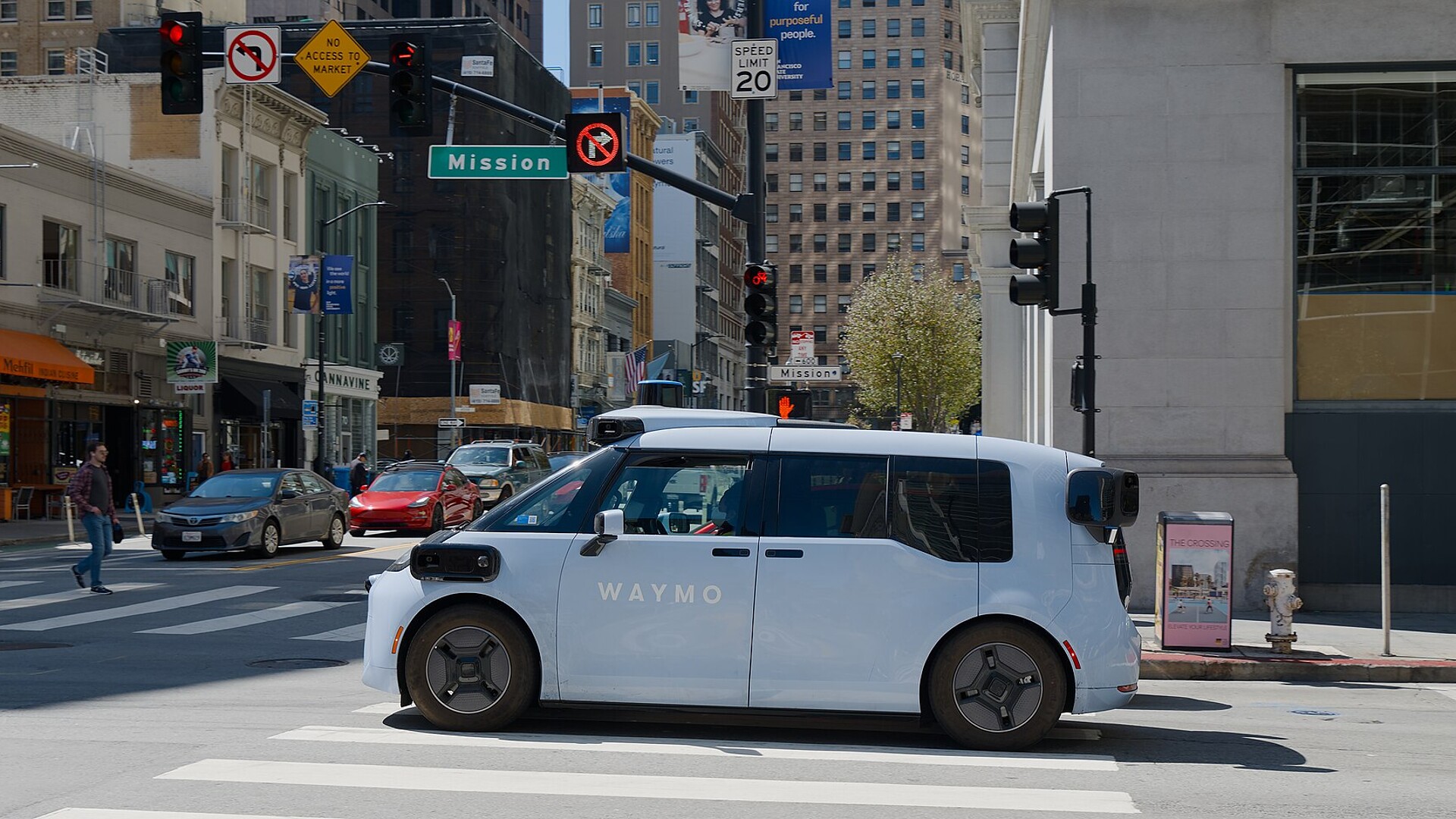
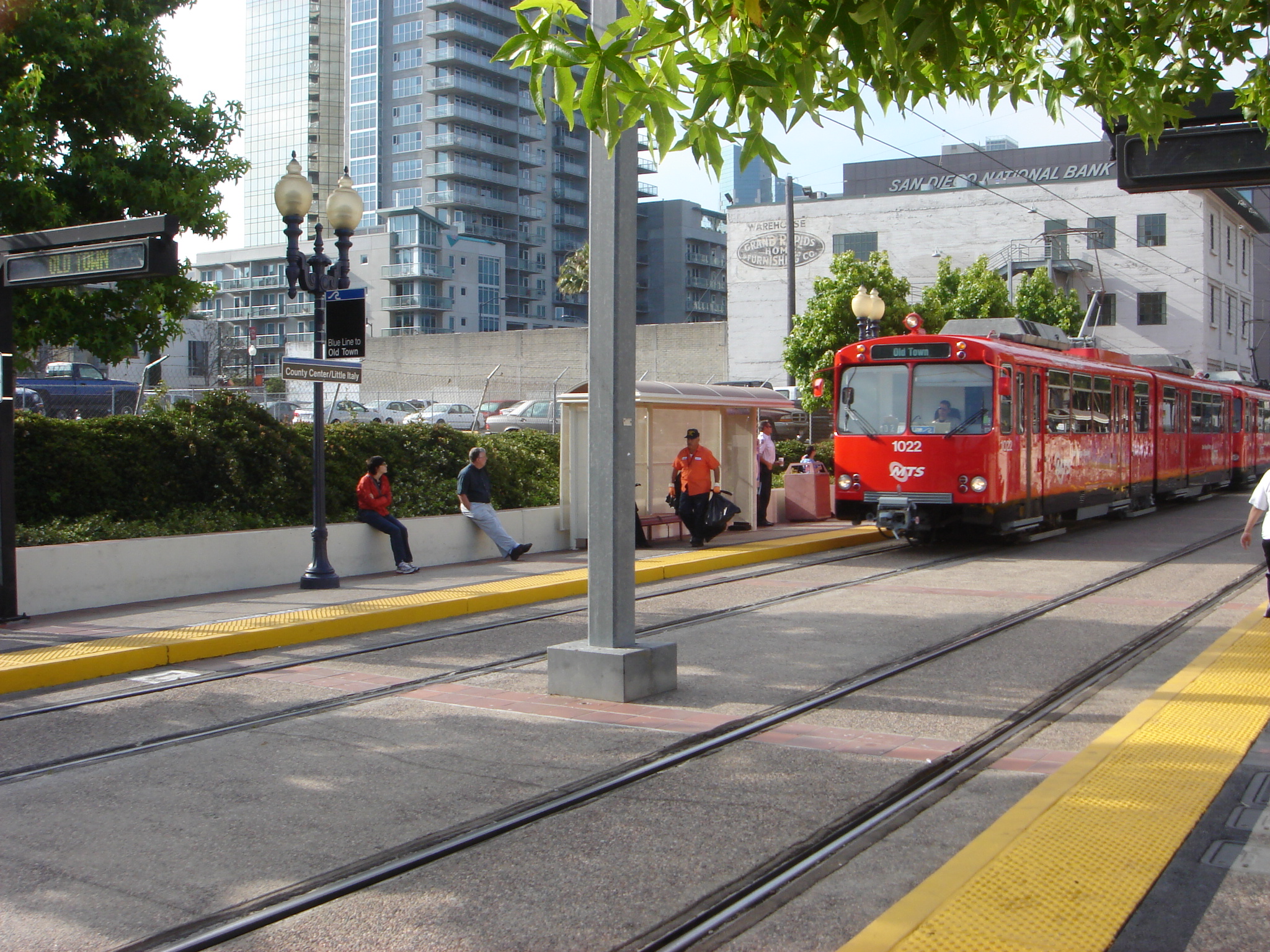
Weeks after San Diego’s king tides left Waymos stalled in floodwater until a police officer climbed in and drove one out, another of the company’s driverless cars stopped somewhere with far less margin for error: on the trolley tracks at the County Center/Little Italy station in downtown San Diego, California, on the night of Monday, Nov. 16.
A security guard who saw it told CBS 8 the Waymo drove into the intersection and stopped. The crossing gates came down around it, and both passengers got out. The car then reversed through the gates and broke its own back window doing it. Police responded, and a short time later a Waymo employee arrived and drove the car away. FOX 5/KUSI reported that the robotaxi blocked a trolley and that other drivers pulled onto the sidewalk to get clear of it as it backed out.
The San Diego Metropolitan Transit System, which runs the trolley, confirmed the crash to CBS 8, said it is investigating, and said it is in contact with both Waymo and the California Department of Motor Vehicles. Waymo did not respond to CBS 8’s request for comment. None of the local reports described anyone being hurt.

San Diego City Councilmember Raul Campillo told FOX 5/KUSI that “Waymo shouldn’t be testing its technology on our people.” He said city officials will look to recoup losses, and he is frustrated that the city can’t do more to push back against the company.
That frustration has a basis in state law. Had a human driver parked a sedan on those tracks, the California Vehicle Code spells out the violation and the fine. For a car with no driver, the state’s newest enforcement tool is a notice that, by the Legislature’s own description, carries no penalty. Waymo’s exposure, then, is mostly a bill for the gates and the DMV’s shrinking patience. MTS’s investigation will shape both.
The rail-crossing rules a human driver would face
California’s Vehicle Code Section 22526, the Anti-Gridlock Act of 1987, bars a driver from entering a rail crossing, even with a signal telling them to go, unless there is room on the far side for the vehicle and any passing railway vehicle, a category the statute says includes a trolley. A separate law, Section 22451, requires drivers to stop at least 15 feet from the nearest rail when crossing signals warn of a train, and says no driver may go “through, around, or under” a closed crossing gate.
What that costs a person is set in Section 42001.16: a $100 fine for a first railroad-crossing infraction, up to $200 for a second within a year, and up to $250 for a third. Those are base fines. State and county penalty assessments are added on top, so the amount a driver pays ends up well above the figure printed in the statute, and in some counties a court can also order traffic school.
Rail-safety groups give the people in a stuck car one instruction. Operation Lifesaver, the national rail-safety education nonprofit, tells them to get out and away from the tracks right away, even if no train is in sight, and then call the number on the blue Emergency Notification System sign posted at the crossing. By the guard’s account, the two riders did the first part. Backing out of the trolley’s path was the one useful thing the car did that night. The problem was stopping on the tracks in the first place.
California’s ticket for robotaxis carries no fine
Assembly Bill 1777, by then-Assemblymember Phil Ting, created a way to cite a car with nobody driving it. Under rules the DMV adopted on April 28 and that took effect July 1, an officer who sees a driverless car break a traffic law can issue a notice of autonomous vehicle noncompliance to its manufacturer. The officer leaves it in the car where the registration and insurance papers are kept. The company then has 72 hours to forward it to the DMV, or 24 hours if the officer flags it for priority review.
Then the process stops. The background paper the Assembly Transportation Committee prepared for its June 8 hearing on the new rules says: “There are no specified penalties for a notice of noncompliance.” The paper adds that it is unclear what, if anything, the DMV may do after one is issued, and that police aren’t required to send the department their own copy. CBS 8 reported that police came to the crossing Monday night. I found no public record of whether an officer wrote Waymo a notice.
The DMV’s leverage is the permit. The April rules gave the department what the committee paper calls incremental enforcement measures: it can cut how many cars a company runs in an area, shrink its operating zone, limit its hours, or require a test driver or support staff on board, and the company can ask for relief once it shows the problem is fixed. Under the 2018 rules, suspension or revocation were the only options. The new rules also require companies to report when a car is immobilized, including whether it stopped on rail tracks. The state put this exact scenario on its reporting form months before it happened in Little Italy.
The DMV used that leverage on freeways five days earlier
On Nov. 11, the DMV ordered Waymo’s driverless cars off California freeways. In a statement FOX 5/KUSI published, the department said Waymo’s “driverless freeway operations pose an imminent hazard to public safety” because its cars kept entering active construction zones where workers, vehicles, and equipment were present. According to NBC News, the DMV also cited a car that tried to pass California Highway Patrol officers running a traffic break on a Bay Area freeway. The DMV told TechCrunch the incursions continued despite a prior restriction and corrective actions put in place after similar incidents on May 18, 2026.
Waymo pointed out that no one was hurt in any of the incidents the DMV cited and extended the freeway pause to every market it serves, saying in its statement that it wanted to evaluate its performance. The freeway order is one of several open fronts: federal regulators are also questioning whether Waymo’s software fix for passing stopped school buses works. San Diego is newer ground. Waymo opened its service there to anyone with the app on Oct. 14, and on Oct. 27 it said it was expanding the San Diego area north to La Jolla.
Waymo cars have stopped at rail gates in Austin before
Waymo has been on the wrong side of a crossing arm before. In March, the company confirmed to KABB in San Antonio that two of its cars in Austin, Texas, braked when crossing lights began flashing and stopped about 2.5 meters, roughly 8 feet, short of the CapMetro tracks, past the lowered gate. Waymo told the station its cars can move through barriers like gate arms when safety requires. A spokesperson said the company was “temporarily restricting traversals at similar crossings” while it refined the system. CapMetro said it had asked Waymo for immediate action at every rail crossing in its area.
For comparison, California’s Section 22451 sets the stopping point at 15 feet from the nearest rail. The San Diego car went past that line and onto the rails themselves. I found no statement from Waymo or MTS on whether a similar crossing restriction now applies in San Diego.
What San Diego can do, and what it can’t
Campillo’s complaint reflects how California divides the job. The DMV permits the cars to drive, and the California Public Utilities Commission permits the paid passenger service. The Assembly committee’s paper on the April rules gives cities no explicit authority over how driverless cars operate. San Diego can’t pull Waymo’s permit or cap its fleet, and its officers can’t hand Waymo a ticket with a fine attached. The same gap exists elsewhere: Colorado law names no one for Denver police to cite when a Waymo breaks a traffic law.
What a city or transit agency can do is send a bill. If the crossing gates were damaged, whoever owns them can file a claim against Waymo the same way it would against a human driver’s insurer. MTS has not released a damage figure. Civil attorney Jess Jordan told FOX 5/KUSI that Waymo records everything but also holds all of the data, so people on the other side of a dispute “have to push, push, push to get to the cameras and the software.” In a claim over a crossing gate, that footage would show where the car stopped and when the gates began to drop.
What happens next at the Little Italy crossing
The next documents to watch are MTS’s investigation and any immobilization report Waymo files with the DMV, which has to say whether the car stopped on rail tracks. By every account so far, this one did. If the DMV handles Little Italy the way it handled the freeway incursions, its options include restricting rail-crossing routes in San Diego, cutting the local fleet, or putting support staff back in the cars.
For anyone sharing those streets, the rules at a crossing haven’t changed. Stop at least 15 feet back when the lights flash, don’t pull onto the tracks unless there’s room on the other side, and if the car you’re in ends up stopped on the rails, with a driver or without one, get out, move away from the tracks, and call the number on the blue sign at the crossing.
Park a sedan on those tracks and you pay $100 plus penalty assessments. Waymo gets a notice with no fine attached. Should that change, or is the DMV’s grip on the permit a bigger stick than any ticket?