
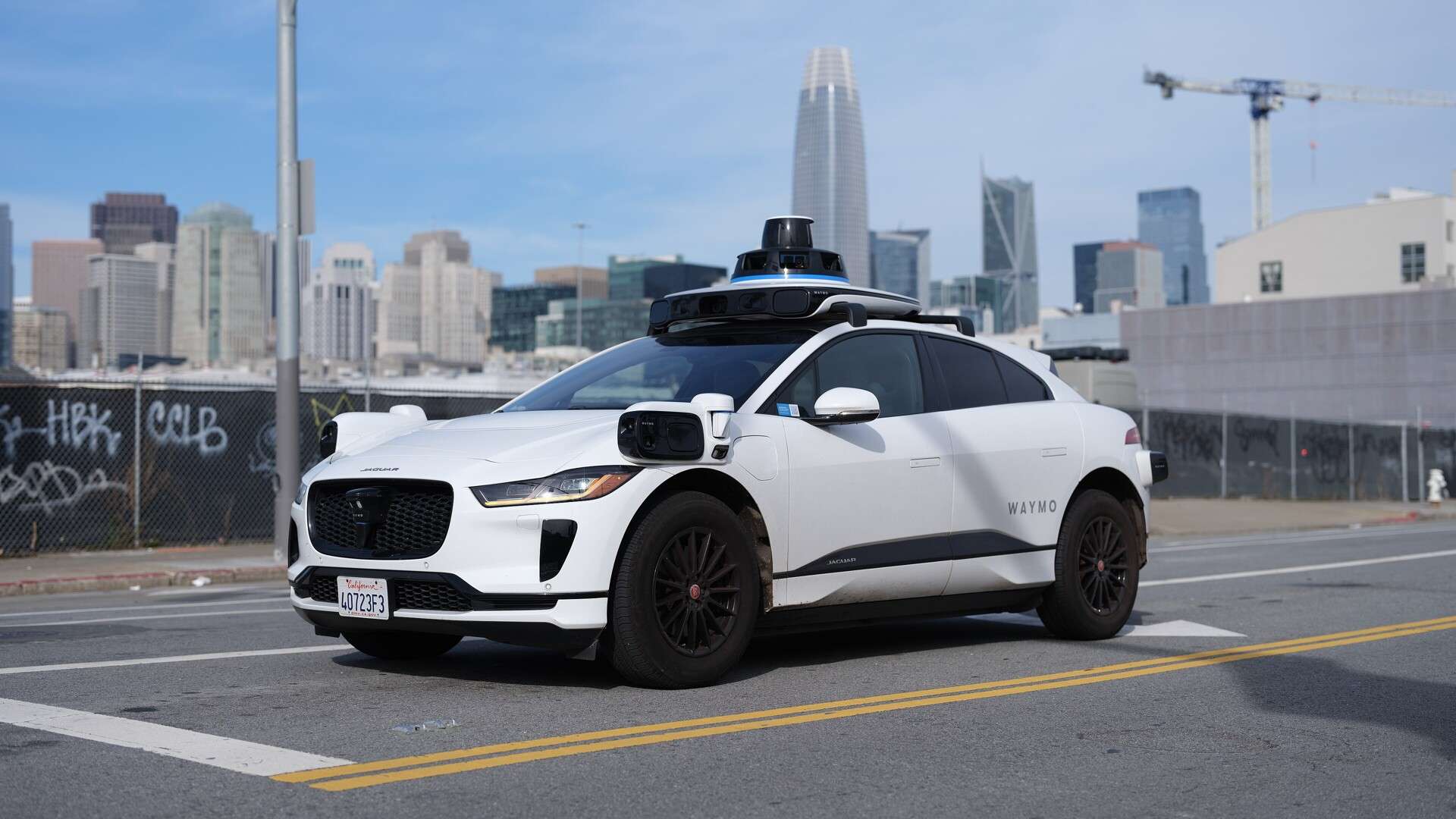
Denver can put a parking ticket on a driverless Waymo, and the company says it pays them. If the same car blows through a stop sign in front of a Denver police officer, the officer has no one to hand a citation to. “If there’s no driver, there currently isn’t a mechanism within state law for issuing a citation,” a Denver Police Department spokesperson told BusinessDen in September, and the department gave CBS Colorado the same answer on Oct. 14.
Colorado wrote that gap into law in 2017, when lawmakers told self-driving systems to obey every rule of the road and never said who answers when one doesn’t. The fix other states settled on is a single sentence naming the company. The harder problem is that a fine, by itself, does very little to a fleet.
Waymo began taking its first public riders in Denver on Sept. 1, after a summer of employee-only driverless trips. Waymo spokesman Chris Bonelli told BusinessDen the company has dozens of cars in the city and will add more, and that “We have been ticketed and pay them like any other driver.” Those are the tickets that attach to a parked car. Denver’s Department of Transportation and Infrastructure told CBS Colorado it can issue parking citations to autonomous vehicles but has no power to cap how many companies operate in the city.
State Rep. Sheila Lieder, a Jefferson County Democrat, told CBS Colorado that “there’s absolutely a need for guardrails on autonomous vehicles” and that she plans to bring a bill in the coming session. “We’re looking at all different types of options, and we got a lot of stakeholdering to do,” she said.
Colorado’s 2017 law sets the rules but names no defendant
The law in question is Senate Bill 17-213, approved June 1, 2017, which created section 42-4-242 of the Colorado Revised Statutes. It lets a person use an automated driving system to drive a car if the system can comply with every state and federal law that applies to what it is doing. It then says the parts of Colorado’s vehicle code that by their nature regulate a human driver don’t apply to the system, “except for laws regulating the physical driving of a vehicle.”
So a Waymo has to stop at red lights, yield to pedestrians and stay under the limit, the same as you. What the section never does is say who is charged when it doesn’t. It addresses crashes in one line: liability “is determined in accordance with applicable state law, federal law, or common law,” which sends wreck disputes to insurers and courts. Traffic infractions get no such pointer.
That matters because of how a moving violation works. An officer writes it to the person driving, and a conviction lands on that person’s license. Under Colorado’s point system, going 10 to 19 mph over the limit is 4 points, failing to obey a traffic sign or signal is 4 points, and 12 points in 12 months, or 18 in 24, can cost a driver the license. With nobody in the driver’s seat, there is no one at the curb to accept the ticket and no license to mark.
Colorado already fines owners who weren’t driving, through cameras and meters
The state has a working model for charging a vehicle’s owner instead of its driver. It just doesn’t reach a police officer. Colorado’s automated vehicle identification law, the statute behind speed and red-light cameras, mails the notice to the registered owner and enters any final order of liability against that owner. CDOT’s own guidance says the owner is responsible even if someone else was driving.
Those camera penalties are small by design. The statute caps a speeding penalty at $40 and a signal violation at $75, surcharges included, gives a first minor speeding offense a warning, assesses no points and bars the state from keeping a record of the violation. I found nothing in that statute that exempts a car with no driver, so a camera could in principle bill the company that owns a robotaxi while the officer who watches the same car make an illegal turn cannot. I also found no public record of a Colorado camera ticket issued to a Waymo.
Arizona, Texas and California each picked a name for the ticket
Arizona settled the question in A.R.S. 28-9702. Before a fully autonomous vehicle can operate without a human, the company files a written statement acknowledging that “the person who submits the written statement for the fully autonomous vehicle may be issued a traffic citation or other applicable penalty if the vehicle fails to comply with traffic or motor vehicle laws.” The same section treats the engaged automated driving system as the vehicle’s driver.
Texas reached a similar answer with Senate Bill 2807 in 2025. The engaged system is the operator, and the owner, or the holder of the state’s operating authorization, “shall be issued any citation for a violation of traffic or motor vehicle laws related to the vehicle.” That is the provision now in play as Tesla’s Austin robotaxis face school-zone speeding complaints.
California went a different way. Assembly Bill 1777, chaptered Sept. 27, 2024, lets an officer issue a notice of autonomous vehicle noncompliance, which the manufacturer must forward to the Department of Motor Vehicles within 72 hours. The DMV adopted the rules to carry it out on April 28, 2026. The notice carries no fine, as San Bruno police found with a Waymo this month, but it feeds a regulator that can restrict a company’s fleet size, operating area, speed and weather limits, or suspend its permit.
A robotaxi has no license for points to land on
A ticket changes human behavior mostly through what follows it: points, the threat of suspension, and a driving record. A $75 penalty sent to a company running dozens of cars, and planning more, is an operating expense. If Colorado copies Arizona and Texas and stops there, Denver police will be able to write tickets that Waymo pays the way it already pays for parking.
California’s version is the only one of the three built around a consequence that scales with a fleet, because each notice lands in front of the agency that controls the permit. Colorado has no equivalent permit to put at risk. Section 42-4-242 requires approval from the Colorado State Patrol and CDOT only to test a system that cannot comply with every applicable law. A company that says its system can comply needs no state sign-off under that section, and the law’s main oversight tool is an annual CDOT report to legislators on testing.
Lieder has already seen how far Colorado’s governor will go on this. Her House Bill 25-1122 would have required a commercial driver’s license holder aboard any self-driving commercial truck, with fines of $1,000 for a first offense and $2,000 for a second. It passed the House 55-9 and the Senate 27-8, and Gov. Jared Polis vetoed it on May 29, 2025. Polis is term-limited, so whatever she files next will reach his successor.
What Denver drivers and lawmakers should watch next
The first thing to watch is whether Lieder’s bill only names who receives a ticket or also creates a way to count them. A citation that goes to Waymo’s mailroom and stops there fixes the paperwork. One that is reported to a state agency, with authority to limit where and when the cars run after repeated violations, gives Colorado the equivalent of points.
The second is what happens to people who share the road with these cars now. If you are in a crash with a Waymo, liability runs through ordinary negligence law and the two insurers, not a citation. According to the police training bulletin BusinessDen obtained, Denver officers leave the driver section of the crash report blank and check a box marking the car as self-driving. The same bulletin says officers need a search warrant for passenger history and interior camera footage, which it says is deleted after 24 hours. A driver who thinks that footage matters to an insurance claim should tell the officer at the scene.
When a driverless car breaks a traffic law, should its owner pay a fine like any motorist, or should repeat violations cost the company the right to run cars in that city?