
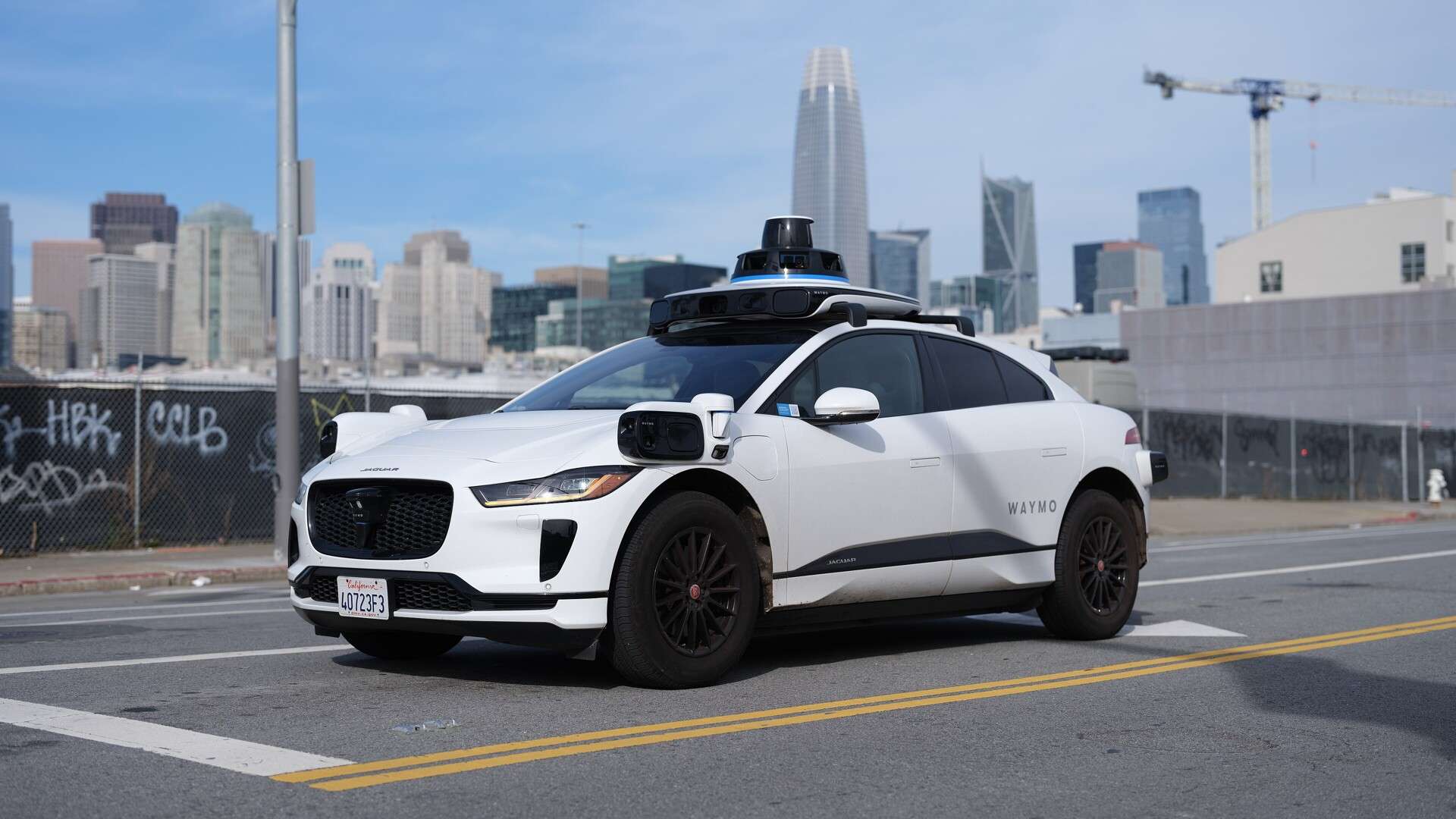
Police officers in San Bruno, California, were working a grant-funded DUI enforcement operation in late September 2025 when, the department said, a driverless Waymo made an illegal U-turn at a traffic light in front of them. They pulled it over, found the driver’s seat empty and had nobody to hand a ticket to. The department summed up the stop on Facebook as “no driver, no hands, no clue,” and said its citation books had no box for a robot, according to CBS San Francisco. The officers called Waymo instead. The company said in a statement, “We are looking into this situation and are committed to improving road safety through our ongoing learnings and experience.”
California has since closed the gap the San Bruno officers ran into, at least on paper. Since July 1, 2026, a California officer who sees a driverless car break a traffic law can write it up. What the officer writes is not a ticket, carries no fine and puts no points on anyone’s record. It is a report to the company, and the company passes it to the DMV.
The industry is planning for far more robotaxis than California has today. On Oct. 5, the Swedish research firm Berg Insight forecast that the global robotaxi fleet will grow from about 6,500 vehicles at the end of 2025 to 1.53 million in 2036. California’s new rules decide who hears about a robotaxi’s illegal U-turn without attaching a price to it, and that gap grows with every car added to a fleet.
California’s “Notice of Autonomous Vehicle Noncompliance” Goes to the Company, Not the Court
The change comes from Assembly Bill 1777, which Gov. Gavin Newsom signed in September 2024. It added Section 38752 to the Vehicle Code, which lets a peace officer issue a “notice of autonomous vehicle noncompliance” after observing an alleged violation by a car whose self-driving system is engaged. The notice has to list the alleged violation, the date, time and place, and the license plate number.
From there, it is a paperwork deadline. The manufacturer must forward the notice to the DMV within 72 hours, or within 24 hours in cases the department flags for priority review, according to the DMV’s industry memo AVIM 2026-02. Missing that deadline is what the memo says can cost a company: restriction, suspension or revocation of its driverless testing or deployment permit. The memo names no dollar penalty for the violation itself, and the statute does not create one.
The law also protects the company’s side of the dispute. A notice “shall not create a presumption that the autonomous vehicle is unsafe,” Section 38752 says, and it does not limit the manufacturer’s ability to contest whether the violation happened at all.
The DMV’s leverage sits in the rules the state’s Office of Administrative Law approved on April 28, 2026. According to the DMV’s announcement, the department can now impose “targeted operational restrictions” on a manufacturer, including limits on fleet size, location, speed and weather. The same package lets local emergency officials order a company to pull its cars out of an area, and requires the company to direct its fleet out within two minutes.
The Driver in the Next Lane Gets a Fine, a Point and a Record
A human driver caught making the same U-turn faces a different outcome. A conviction for most moving violations in California carries a base fine set by the court’s bail schedule, and the state stacks penalty assessments on top of it. Penal Code Section 1464 alone adds $10 for every $10 of the fine, before county penalties, surcharges and court fees. That is how a modest base fine becomes a bill several times larger.
The fine is the cheap part. Vehicle Code Section 12810 assigns a point to a driver’s record for a conviction involving the safe operation of a vehicle, and Section 12810.5 presumes a driver negligent at four points in 12 months, six in 24 or eight in 36, which opens the door to suspension. That same record is what an insurer pulls at renewal. Each violation costs a human driver something on its own, and the costs build.
A robotaxi has no license for points to land on. Under California’s system, each notice is one more entry in a file the DMV can act on through the permit. Discipline comes, if it comes, for the fleet as a whole and at the department’s discretion, not violation by violation. California has made robotaxi traffic enforcement a permit matter between the company and the DMV, and that choice shows up in what each side pays for the same illegal turn.
Arizona Lets Police Cite the Robotaxi Company Directly
Other states with driverless fleets wrote the law another way. Arizona, where Waymo runs driverless rides in metro Phoenix, makes the self-driving system the legal driver. Arizona Revised Statutes Section 28-9702 says the automated driving system “is considered the driver or operator” for judging compliance with traffic laws, and that the person who filed the vehicle’s required statement with the state “may be issued a traffic citation or other applicable penalty” if the car breaks those laws. In Arizona, the company can be cited the way a driver would be.
Parking is its own category, because parking tickets attach to the car, not the driver. That is why Waymo’s robotaxis have been collecting parking tickets in Austin even though no one is behind the wheel to sign for a moving violation.
Washington is rewriting a different set of rules. Federal safety standards still assume a steering wheel and pedals, so a manufacturer that wants to sell a car without them needs an exemption, and 49 U.S.C. Section 30113(d) caps that at 2,500 vehicles per manufacturer in any 12-month period. That ceiling is why Zoox can legally build 2,500 of its robotaxis a year. On June 26, 2026, NHTSA proposed amending the light-vehicle brake standard, FMVSS No. 135, to drop manual brake-control requirements for driverless vehicles built never to be driven by a person, while keeping the stopping-distance tests. Comments closed July 27 under docket NHTSA-2026-0728. The proposal is not yet a final rule, and if adopted it would make steering-wheel-free robotaxis easier to build in volume. Nothing in California’s enforcement rules scales the consequence of a violation with the size of a fleet.
Berg Insight’s 1.53 Million Forecast Puts About $104,000 in Fares on Each Robotaxi
Berg measures the market in what riders pay. The firm expects passenger fare revenue from commercial robotaxi services to grow from $260.0 million in 2025 to $158.7 billion in 2036, a compound annual growth rate of 79.2 percent. Driverless services today run mainly in the U.S., China and the Middle East, Berg says, with recent launches in Europe, South Korea and Singapore.
Berg’s 2036 fare figure divided by its 2036 fleet comes to about $103,700 per robotaxi per year. The same division for 2025 gives about $40,000 per car, though that figure likely runs low, since fleets grew during 2025 and the division uses the year-end count. That is The Auto Wire’s arithmetic on Berg’s numbers, not a figure Berg published.
Berg’s analysts are clear that the path to those numbers runs through regulators. “The companies that successfully combine advances in AI and vehicle design, build effective partnerships, meet safety and regulatory requirements and develop commercially viable business models will be best placed to scale across markets,” Martin Cederqvist, a senior analyst at the firm, said in the release. The firm also says commercial viability depends on demand at fares that cover the full cost of the service. Under California’s current rules, a moving violation is not one of those costs.
What California Drivers Sharing the Road With Robotaxis Can and Can’t Trigger
The notice system runs on what an officer sees. Section 38752 lets a peace officer issue a notice “upon observing” an alleged violation. A driver who gets cut off by a robotaxi, or watches one roll through a crosswalk, cannot generate a notice by complaining after the fact. Crashes are a separate track: manufacturers already have to report collisions to the DMV, and damage claims go through the company and its insurer, as they would with any commercial fleet.
What to watch is the DMV’s own record. The department now has the power to shrink a fleet, fence off neighborhoods and slow cars down, and the notices officers have written since July 1 are the evidence it would use. The first time it cuts a company’s fleet size or service area over a pile of traffic notices will show whether paperwork works as a deterrent. Until then, the San Bruno officers’ problem has a form to fill out, and a company whose car gets written up pays no fine for it.
Should a robotaxi company pay the same fine a human driver would for every violation an officer sees, or is California right to handle driverless cars through the company’s operating permit instead?