
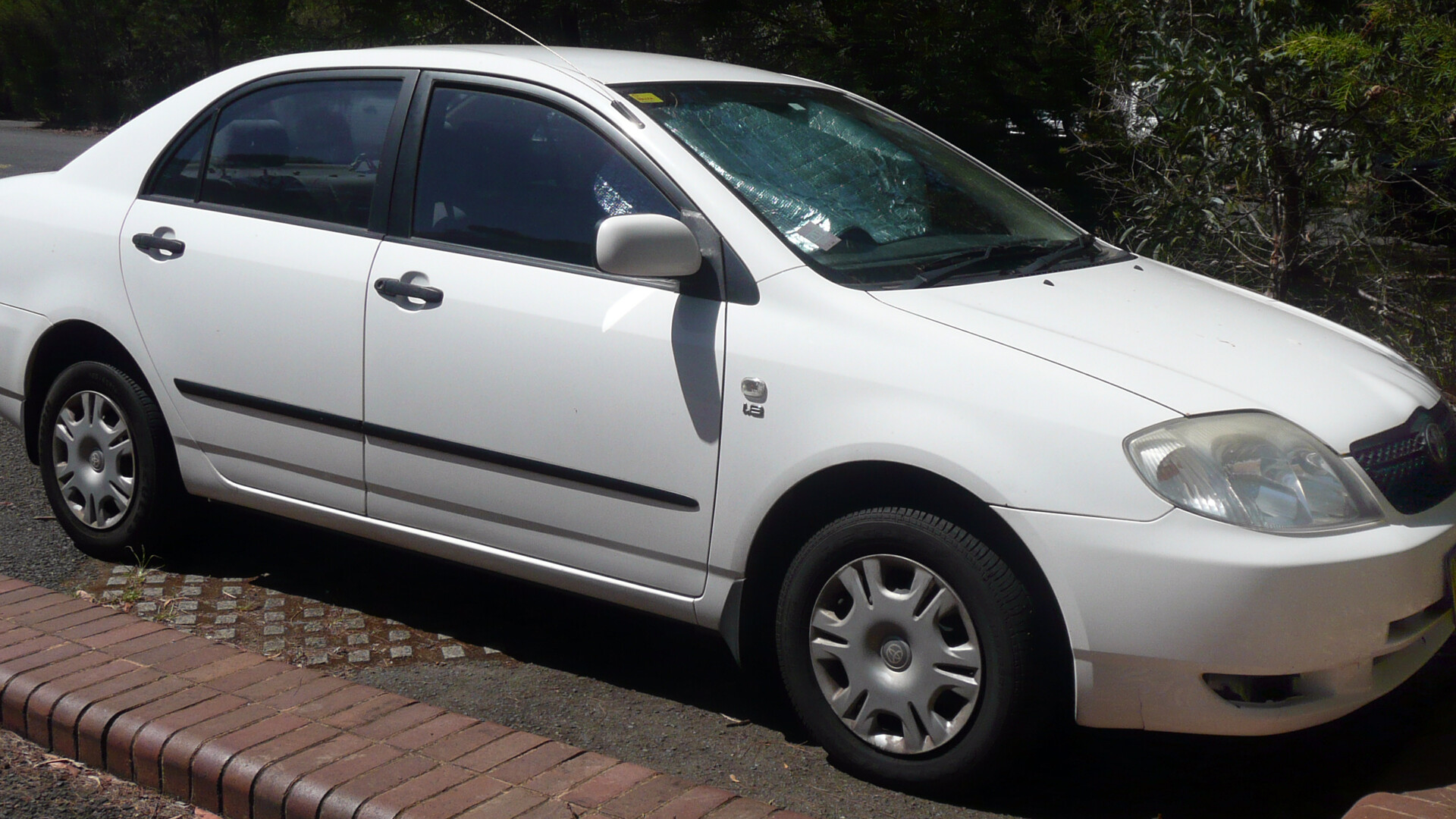
Toyota’s own testing hasn’t found the propellant breaking down, and nobody has reported a rupture. It’s recalling 314,029 Toyota and Lexus vehicles over Takata front passenger air bag inflators anyway, because a service-life model says those inflators are getting old. In its Part 573 report, filed with NHTSA on Nov. 12, Toyota says it has observed no measurable degradation of the propellant, has received no U.S. warranty claims or field technical reports tied to the condition, and knows of no field ruptures reported under NHTSA’s Standing General Order 2015-01A.
Which Toyota and Lexus models are in the recall
NHTSA campaign 26V748 covers seven nameplates, and one of them is most of the recall. The report counts 232,174 Corollas built between Jan. 11, 2002, and Dec. 21, 2007, about 74% of the 314,029 total. The full breakdown, from Toyota’s filing:
- Toyota Corolla, 2003–2008: 232,174
- Toyota 4Runner, 2016–2017: 35,949
- Toyota Tundra, 2005–2006: 25,174
- Toyota Sequoia, 2005–2007: 10,736
- Lexus GX 460, 2017: 8,931
- Lexus SC 430, 2002–2010: 1,064
- Lexus IS 250, 2011: 1
A one-vehicle line item is a clue to how the list was drawn. Toyota says the recall covers only vehicles whose inflators were installed, as original equipment or as replacements during an earlier recall, in a specific window. A model year alone does not put a car on it.
What the filing says about failures
Toyota says it has been collecting and analyzing Takata inflators with this propellant, a desiccated, phase-stabilized ammonium nitrate type that the filing calls 2004-type, since 2016. It reports no measurable degradation in that testing. It says it decided on Nov. 6 to run a voluntary recall as a precaution.
The filing’s “estimated percentage with defect” field reads 1%. Toyota’s own text says it cannot estimate how many of the vehicles contain the defect and that NHTSA’s portal requires a whole number, so the 1 stands for “unknown.” Anyone quoting a 1% defect rate is misreading the form.
Why age triggers the recall
What Toyota points to instead is modeling. The filing says TK Global and the Independent Testing Coalition each modeled a safe service life for inflators with this propellant. The coalition’s work was published in October 2019 and TK Global’s in November 2021, and Toyota says TK Global’s was the more conservative. Taking TK Global’s study together with the dates the subject inflators went into service, Toyota concluded they will approach the end of their estimated service life, after which propellant degradation could cause a rupture if the air bag deploys.
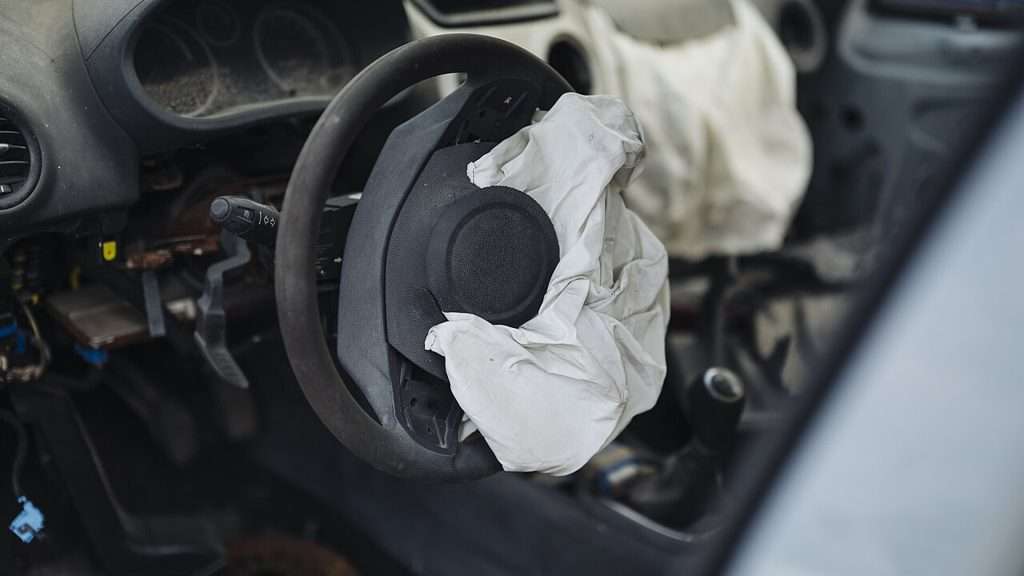
The mechanism is the one NHTSA describes for Takata inflators generally. Years of heat swings and humidity break the propellant down, it burns faster than designed, pressure inside the inflator climbs, and in the worst cases the metal housing bursts and throws fragments at the occupants. Because the clock runs on each inflator’s age and exposure, the recall is drawn by inflator, not by car.
The filing also says that inflators of the same design installed at a later time have more service life remaining, and that Toyota is continuing to monitor them. It does not say whether more recalls will follow or how many same-design inflators sit outside this population. A model that gives every inflator an expiry date will eventually reach the later ones, though, and that is the thing to watch in Toyota’s next Takata filing.
Owners who already had a Takata repair
The subject inflators include replacements installed under a prior recall. The filing does not say which recall or how many of the 314,029 vehicles got replacements. Toyota has been through this before: NHTSA’s record for recall 19V741, received Oct. 17, 2019, covers Toyota and Lexus vehicles, including 2003–2013 Corollas, whose inflators had been replaced under an earlier recall with inflators of the same design. NHTSA’s Takata schedule also carries a Dec. 31, 2019 filing date for all like-for-like replacement parts, which means same-design swaps were themselves pulled into later recalls. The 26V748 filing does not say whether its replacement inflators are that kind.
The severity is different from the 2015 campaigns. The Part 573 report leaves the Do Not Drive and Park Outside boxes unchecked, and NHTSA’s record shows neither advisory. By contrast, NHTSA’s record for recall 15V285 put some 2003–2004 Corollas under a Do Not Drive advisory. Our earlier coverage of an active park-it order on Stellantis vehicles shows what that looks like when the risk is judged to be immediate.
What owners should do
Enter your 17-digit VIN at nhtsa.gov/recalls or Toyota.com/recall. NHTSA warns that its lookup may not yet show recently announced recalls for which not all VINs have been identified, so a clean result this month is not final; check again in a few weeks. Toyota’s customer service line is 1-800-331-4331, and the company’s recall numbers are 26TB25, 26TA25, 26LB11 and 26LA11.
Dealers will replace either the front passenger inflator or the whole air bag assembly, depending on the model, at no cost. Toyota’s filing says owner notifications will go out by Jan. 11, 2027, with the remedy-notice window planned for Dec. 28, 2026, through Jan. 11, 2027. The affected model years run from 2003 to 2017, so many of these cars have changed hands, and the letter goes to the address on the registration. NHTSA tells owners to keep that address current. Our guide to what to do when your car is recalled covers the general steps.
Toyota says its own testing found no measurable degradation and no field ruptures, yet it is pulling 314,029 inflators on a service-life model’s word. If the letter shows up for your Corolla, do you book the repair the week it arrives, or wait to see one of these inflators actually fail?