
John Lawler’s last day as Ford’s vice chair is Dec. 31, and the title leaves with him. In a Nov. 17 release, Ford said it “will not replace the vice chair role,” news that landed the same week GM’s board was reported to be looking outside the company for Mary Barra’s successor.
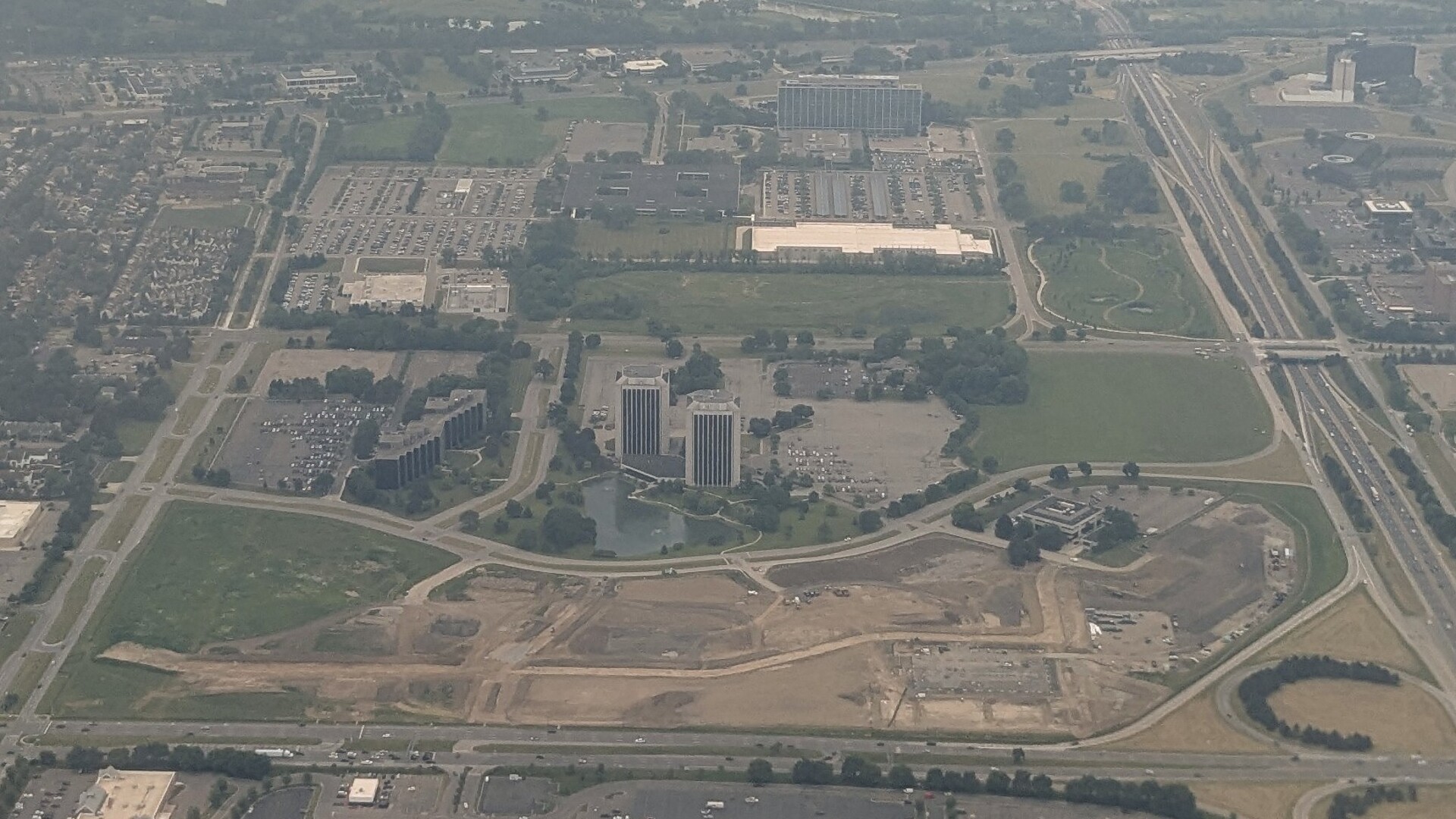
The three businesses Lawler oversaw are Ford’s European operation, its new grid-battery company Ford Energy, and Michigan Central, the Detroit innovation district built around the old train station. Starting Jan. 1, Ford Europe and Ford Energy report straight to CEO Jim Farley, and Michigan Central reports to Executive Chair Bill Ford. Those are the company’s biggest bets outside of building and selling cars in North America. Two of them, Ford Energy and Ford Europe, carry 2027 or 2028 deadlines, and from January nobody stands between those bets and the top of the company.
What Ford filed with the SEC
Ford’s Form 8-K, dated Nov. 17, says the company “was notified that John Lawler, Vice Chair, has elected to retire” on that same day, effective Jan. 1, 2027. Securities rules give a public company four business days to file an 8-K when certain senior officers decide to leave, so the filing and the news release went out together. The release itself says Ford “has been preparing for John’s retirement,” which suggests the decision was not a surprise inside Dearborn, whatever date the formal notice carries.
Bill Ford called Lawler “an exceptional leader and a trusted partner to me and to Ford.” Farley credited him with having “consistently challenged us to make thoughtful choices for the long term.” Neither quote addresses who now does the strategy, partnerships, alliances and corporate development work that the release lists as Lawler’s vice-chair focus. The release names only the three reporting changes. Ford already has a chief strategy officer, Marin Gjaja, who was named to that job in February 2025, but the Nov. 17 announcement does not mention him.
A vice chair title that started as a CFO handoff
Lawler spent more than three decades at Ford, with finance jobs in Japan, Europe and Asia Pacific and a stint leading in China. According to a May 2024 filing, he was vice president of mobility partnerships and CEO of Ford Autonomous Vehicles from December 2019, became chief financial officer in October 2020, and was 57 when the board made him vice chair, effective June 3, 2024.
The vice chair job came as part of a two-step succession. The May 2024 announcement brought in Sherry House, Lucid’s former CFO, as Ford’s finance vice president, with a plan for her to take over as CFO, while Lawler kept both titles and picked up a brief to lead strategy choices, use partnerships and “liaise with leaders on industry-critical policy around the globe.” House became CFO on Feb. 6, 2025. From then on, the vice chair role was not a finance job. It was a collection of Ford’s side bets, and those bets have changed shape a great deal since.
Ford Energy turned an EV battery plant into a grid-storage factory
The clearest example is Ford Energy. On Dec. 9, 2025, Ford signed an agreement to unwind BlueOval SK, its 50-50 battery venture with SK On. SK On keeps the Tennessee plant, and a Ford subsidiary takes the two Kentucky plants along with their liabilities. In its second-quarter 2026 results, Ford booked a $3.6 billion, largely non-cash special-item charge tied to that disposition, which helped produce a $1.3 billion net loss for the quarter.
What Ford plans to build in Glendale, Ky., is not car batteries. Ford Energy’s product is a 20-foot shipping container full of lithium iron phosphate cells, 512 amp-hour prismatic cells, sold to utilities, data centers and large industrial customers in two versions: the FE-250, which discharges over two hours, and the FE-450, which runs four. LFP chemistry gives up energy density compared with the nickel-rich cells most long-range EVs use, but density matters far less in a container sitting on a concrete pad than in a pickup’s floor, and LFP’s longer cycle life and lower fire risk count for more there. Ford says it will put about $2 billion into the conversion, creating at least 2,100 jobs, and targets 20 gigawatt-hours of annual capacity by the end of 2027 and a full run rate by the third quarter of 2028.
Ford Energy has already had two presidents in 2026. Lisa Drake was named to launch it early in the year, and when she was appointed it was Lawler who said, “Her leadership is essential as we stand up Ford Energy.” In late August, Ford named Dave Carroll, the former CEO of ENGIE North America, to replace Drake effective Aug. 31, with Drake retiring at year-end. Come January, Carroll will report directly to Farley, running a business whose customers are power companies and data centers, about a year before the first containers are due.
Ford Europe now builds its future on Renault and Geely hardware
Jim Baumbick became president of Ford Europe on Nov. 1, 2025, and Ford’s appointment announcement said he would report to Lawler. His strategy depends on other automakers. In December 2025, Ford and Renault Group agreed to develop two Ford-branded electric cars on Renault’s Ampere platform, due in showrooms in 2028, and signed a letter of intent to look at sharing light commercial vans. In July 2026, Ford and Geely announced a joint venture at Ford’s Valencia, Spain, plant that will build a Ford-designed crossover, a compact Bronco-family SUV and two Geely electric SUVs, with production starting in 2028 and the Kuga continuing in the meantime.
For a European Ford owner in 2029, that means a blue oval on a car whose underpinnings were engineered by Renault or co-developed with Geely. Parts sourcing, software updates and recall work on those cars will run partly through another company’s supply chain and engineering staff. Somebody at Ford has to manage those relationships when a supplier shortage or a defect lands on two companies at once. Until now, Baumbick’s boss was the executive whose title included “partnerships” and “alliances.” Next year it is Farley, who also runs everything else.
Michigan Central moves to Bill Ford
The third change is the most personal. Michigan Central is a Ford subsidiary, and its own materials describe the restored train station and the 30-acre district around it as Bill Ford’s vision. Awenate Cobbina was named its CEO on Aug. 3, 2026. From January he reports to the executive chair, which puts the project under the person most invested in it and takes it off the operating chain of command entirely.
What lands on Jim Farley’s desk in January
Farley picks up two more direct reports, and they are not small ones. Ford Energy is a startup inside a car company, selling to customers Ford has never had, out of a plant Ford took over after taking a multibillion-dollar charge. Ford Europe is a turnaround whose new products depend on two outside partners. Both have promises due in the same 12-month window: Ford Energy’s 20 gigawatt-hours by the end of 2027, and the Renault-based EVs and Valencia joint-venture models in 2028.
Ford’s release calls the handoff “designed to be seamless,” and fewer layers can mean faster calls. The price is Farley’s calendar. A CEO who also has to answer for F-Series production, the Louisville EV plant, tariffs and quarterly earnings now has a battery business and a partner-built European lineup reporting to him directly, with no one whose full-time job is the deals themselves.
Ford’s fourth-quarter results early next year will be the first with Lawler gone and the first chance for analysts to ask Farley how Ford Energy is selling. Ford’s next proxy statement, due in the spring, is where any separation arrangements for Lawler would be disclosed. The first Ford Energy containers are due off the Glendale line in late 2027, and the Renault-platform Fords are due in European showrooms in 2028. If either slips, there is now only one person to ask about it.
Should a CEO personally run a grid-battery startup and a partner-dependent European lineup, or did Ford just eliminate the one job built to keep those bets on track?