
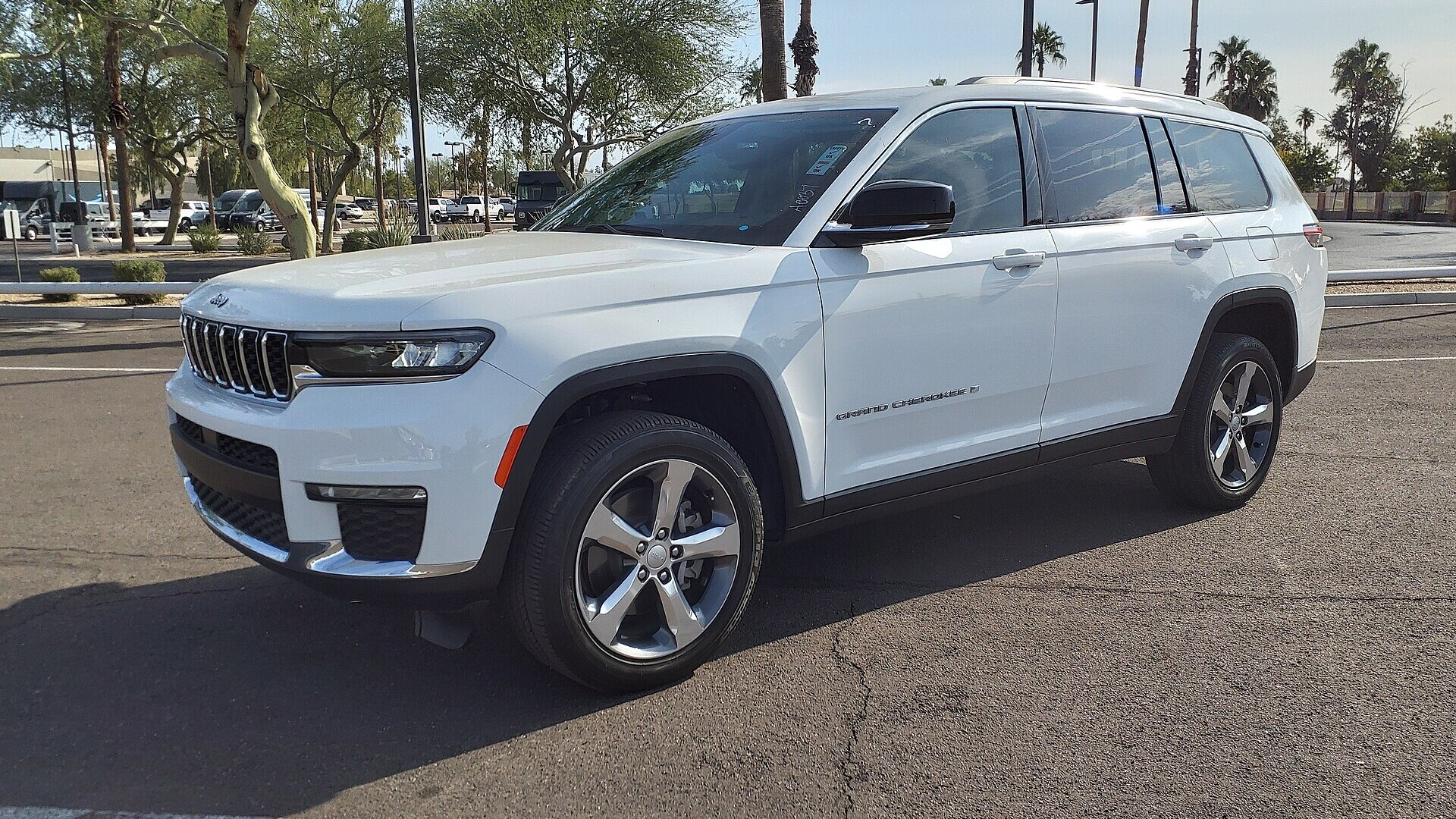
Pennsylvania State Police have charged a Leesport used-car dealer over a Facebook Marketplace sale in which, by their account, the ad promised a 2015 Jeep Grand Cherokee with no mechanical problems while a state form filled out at the notary’s counter that same day noted “motor issues.” It is the latest in a run of used-car cases this month that come down to a gap between what the paperwork says and what the buyer was told.
The Troop L Vehicle Fraud Investigation Unit filed summary charges under the state’s Board of Vehicles Act against Osiris Baez Jr., of Reading, who owns 61 Bros Auto Sales in Leesport and holds a license as a vehicle salesperson, according to a state police release reported by Berks Weekly. The charges were filed through Magisterial District Court 23-2-01, and police did not list the individual counts. Baez acknowledged selling the Jeep but disputed the buyer’s account of the price, of what he disclosed about its mechanical condition and of the dealership’s role in the sale. None of it has been decided in court.
Summary offenses sit below misdemeanors in Pennsylvania, and this is one SUV and one buyer. But the sale, as police describe it, ran into nearly every rule Pennsylvania rewrote in 2024 to protect used-car buyers. It also shows how a dealer’s listing that reads like a private sale can leave a buyer with no idea those rules applied to her.
What police say happened between Centre Avenue and the notary
The buyer, Britni Putalavage of Schuylkill County, complained to state police on Oct. 19. She told investigators the Marketplace ad described the Jeep as “being in good condition, ready to drive, and free of mechanical issues,” as WFMZ quoted the police release, and that nothing in it named 61 Bros Auto Sales or said the seller was a dealer.
On June 23 she met Baez at 1635 Centre Avenue in Reading, looked the Jeep over and drove it. The paperwork and title transfer were done at Lancaster Ave Multiservice, 655 Lancaster Avenue. She says she paid $5,200 in cash and that Baez left once he had the money, without going over the documents with her.
Shortly after she drove away from the notary, the Jeep overheated and the engine failed. She could not reach Baez afterward. When she read the paperwork, she found that the bill of sale named 61 Bros Auto Sales as the seller, listed the price as $1,000, described the Jeep as sold “AS-IS” and rated its condition as fair. The PennDOT fair-market-value form completed by the notary noted the motor problems. Investigators concluded the bill of sale did not disclose the known mechanical defects in writing, as state law requires.
Pennsylvania’s 2024 rule: ‘as is’ no longer covers known defects
Police have not said which provision they believe the bill of sale violated. The obvious candidate is the Attorney General’s automotive trade-practices regulation, which the office amended in a rule published July 20, 2024 and in effect since Aug. 19, 2024.
Under 37 Pa. Code § 301.2(5), any vehicle offered for sale is treated as a representation that it is roadworthy. The seller must disclose in writing, before the sale, six conditions it knows or should know about: a bent, cracked or twisted frame; a cracked engine block or head; a vehicle that cannot pass state inspection; a transmission or a differential bad enough to need replacement; and flood damage.
The 2024 amendments added two things that matter here. A dealer may not advertise or offer a vehicle until a certified inspection mechanic has checked it for those six conditions within 30 days of its entering inventory, with another check if it racks up 500 or more miles on the lot. That takes away the “I didn’t know” defense, because the inspection is how a dealer is supposed to know. And under § 301.4(a)(9.1), writing “as is” on the contract no longer satisfies the disclosure when the car is not roadworthy; the contract has to list the condition. When the Attorney General’s office announced the changes in September 2024, it said they applied to “As Is” sales and that the definition of advertising now explicitly reaches statements made on the web.
An older line in the same section applies to the ad itself. Section 301.2(7) makes it a deceptive practice for a dealer to advertise a vehicle without disclosing the business name and address or the word “dealer.” A Marketplace post from a personal profile that never mentions the dealership is the kind of ad that rule describes.
“Motor issues” is vaguer than anything on the regulation’s list. An engine that overheats and fails can trace back to a cracked head, which is listed, or to a failed water pump or radiator, which is not. Police described the defects as known and undisclosed; the court record, not the release, will have to say which.
A $1,000 bill of sale for a $5,200 Jeep
The price on the bill of sale has a consequence the buyer may not have considered: it can land her with a tax bill. Pennsylvania can collect sales tax on a used car’s fair market value rather than the price on the paperwork. The Department of Revenue’s Motor Vehicle Understated Value Program routinely reviews sales where the reported price is far below fair market value. If the buyer cannot document the lower price, Revenue bills her for tax on the fair market value, plus penalty and interest. At the 6% rate that applies in Schuylkill County, tax on $1,000 is $60; on $5,200 it is $312.
That review is also why the fair-market-value form exists. Revenue says issuing agents complete it when a reported price is significantly lower than market value. In this sale, by the police account, that form is where the motor problems were written down. Police have not alleged any tax violation, and Baez disputes the $5,200 figure. But the same transaction produced an ad that said the Jeep had no mechanical issues and a state form that noted motor problems.
Pennsylvania investigators have seen this paperwork before. In October, state police in Cambria County charged a Cresson man who, they said, completed 54 vehicle sales this year without a dealer license. In nine of them, the buyer told troopers the price listed on the PennDOT fair-market-value form was not the price actually paid.
A dealer plate on a test drive away from the lot
Police said Baez acknowledged letting the buyer test-drive the Jeep with a dealer registration plate issued to 61 Bros Auto Sales, at a spot separate from the dealership’s licensed premises. The plate puts the dealership on the transaction from the start: the car was moving under 61 Bros’ registration while the ad presented it as an ordinary private listing.
Dealer plates carry their own exposure. PennDOT’s sanctions schedule for dealer registrants lists unlawful use of a vehicle or its plates, with a one-month suspension for a first violation, three months for a second and revocation for a third. That penalty is administrative and separate from the criminal case.
Why a licensed dealer faces a $1,000 fine and an unlicensed seller faced felonies
The penalty section of the Board of Vehicles Act makes a violation a summary offense carrying a $1,000 fine on conviction. That is less than the $4,200 difference between what the buyer says she paid and the price on the bill of sale. A fine paid to the commonwealth also does nothing to fix her Jeep; getting money back would take a civil claim or a settlement.
The Cambria County case shows the other end of the scale. That seller was charged with two felony counts of theft by deception, a felony count of deceptive or fraudulent business practices, five misdemeanor counts of false application for a title or registration, 11 counts of unsworn falsification and 57 summary violations, and released on $50,000 unsecured bail. That case involved 54 sales without a dealer license and, police said, false figures on state forms. The Leesport case, as police have described it so far, is one sale by a licensed dealer, and it has been charged under the licensing law. Whether the State Board of Vehicles takes up his license is a separate matter the criminal case does not settle.
Federal rules don’t close the gap. The FTC’s Used Car Rule applies to anyone who sells or offers more than five used vehicles in 12 months and requires a Buyers Guide posted on each vehicle before it is displayed for sale, showing whether it comes with a warranty or is sold as is. The FTC has been willing to go after dealers who advertise one thing and bill another, as it did with a Long Island dealer this month, but its dealer guide describes posting the Buyers Guide on the vehicle itself and says nothing about online listings.
What a Marketplace buyer can check before handing over cash
State police advised buyers to confirm who the seller is and whether a dealership is involved, get an independent mechanical inspection and read every sales and title document before signing. In practice, that means asking a Marketplace seller directly whether he works for or owns a dealership; if the answer is yes, the 2024 disclosure and inspection rules apply, and the seller should be able to show the written condition disclosure. It means making sure the price on the bill of sale matches the cash that changed hands, because the buyer is the one Revenue bills if it doesn’t. And it means reading anything the notary or tag agent fills out, since that form went to the state with the buyer’s name on it.
The next steps to watch are the hearing schedule at Magisterial District Court 23-2-01 and whether the State Board of Vehicles opens a licensing case against 61 Bros. Like the Kansas odometer case, this one could grow if other buyers come forward with Marketplace purchases that turned out to be dealer sales.
Should a dealer who sells through a personal Facebook profile, without ever saying “dealer,” still get to hide behind “as is”?