

The Dutch chipmaker whose stranded parts cost Honda 110,000 vehicles of North American production last year has now put a price on its split from its Chinese owner: $2 billion, plus statutory interest running from Oct. 1, 2025.
Nexperia B.V. confirmed on Nov. 5 that it has started proceedings in the Netherlands against Wingtech Technology, the Shanghai-listed company that owns it, against Nexperia China, and against Wingtech founder Zhang Xuezheng. The company said Nexperia China has run outside its corporate governance under Wingtech’s control since October 2025 and estimated its damages at $2 billion. The dollar figure is Nexperia’s claim, and nothing more yet. No court has looked at it.
The size of the bill matters less than the date on it. Oct. 1, 2025 is the day Nexperia’s own books stopped treating its Chinese factories as part of the company. The lawsuit asks a Dutch court to treat the Chinese operation the same way: as a competitor that walked off with a piece of the business. For carmakers and their suppliers, that turns a governance feud into a sourcing problem. There are now two operations making parts that trace back to the same Nexperia designs, run by owners who are suing each other in two countries.
What Nexperia filed, and what Wingtech says about it
Nexperia’s statement is short on detail. Wingtech’s Shanghai Stock Exchange filing published Nov. 4 fills in more, and I read it in the original Chinese. According to that filing, Nexperia B.V. brought the case in the Amsterdam District Court against Wingtech, Zhang (whom the filing calls Wingtech’s actual controller), Nexperia (China) Ltd. and Nexperia (Shanghai) Ltd. It wants the four held jointly liable for $2 billion.
Wingtech’s summary of the claim has two parts. The first is contract: Nexperia says the two Chinese subsidiaries broke internal agreements with the Dutch parent. The second is the competition theory that gives the case its edge. Nexperia argues that all the defendants built their own supply chain in China, disrupted Nexperia’s operations and set up as a direct competitor, and that this amounts to wrongful commercial conduct under the Dutch Civil Code.
Wingtech said it, Zhang and both Chinese units reject every allegation, the causation argument and the damages figure. It also said it had not been formally served and that the court had not yet registered the case. That last point is procedural but real. Under China’s civil procedure law and the Hague Service Convention, the filing explains, papers from a foreign court have to travel through judicial-assistance channels, passed by China’s Ministry of Justice to a Chinese court for delivery. Wingtech said it will hire overseas counsel if the case is served and registered.
This is the Dutch side’s answer to a suit running the other way. In May, Wingtech and its subsidiary Yuching Holding sued Nexperia’s Dutch entities and executives in China under the country’s Anti-Foreign Sanctions Law, seeking damages it provisionally put at 8 billion yuan. On Aug. 28, according to Wingtech’s Nov. 4 filing, the Dongguan Intermediate People’s Court froze 2,139,057,955 yuan of assets belonging to Nexperia B.V. and its subsidiary ITEC B.V.
Interest from Oct. 1, 2025, the day Nexperia wrote off its China units
Nexperia’s third-quarter results, released Oct. 26, carry a footnote that explains the interest date. The company deconsolidated five entities, Nexperia (China), Nexperia (Shanghai), Nexperia Technology (Shanghai), Nexperia (Wuxi) and ITEC Technology (Wuxi), effective Oct. 1, 2025, citing “the loss of actual control.” Its full-year 2025 results still have not been published.
What remains is a smaller business. Nexperia reported Q3 2026 revenue of $389 million, up 9.3% from Q2’s $356 million. In 2024, before the split, Nexperia reported revenue of $2.06 billion, an average of about $515 million a quarter. By The Auto Wire’s math, the company outside China is running about a quarter below that pace, and the $2 billion it wants from Wingtech is close to a full year of its pre-split sales. Interim CEO Stefan Tilger blamed the hit to revenue, profitability and operations on Nexperia China continuing to run outside the group’s governance.
One part, two factory networks
Nexperia makes the unglamorous parts: diodes, transistors, MOSFETs and protection devices, the components soldered by the dozen onto the circuit boards inside a car’s control modules. Production happens in two stages. Front-end fabs in Hamburg and Manchester make the silicon wafers. Back-end plants cut the wafers into dies, package them and test them. Nexperia lists three back-end sites: Guangdong, China; Seremban, Malaysia; and Cabuyao, the Philippines.
That layout is why the fight landed on assembly lines. When the Dutch government invoked its Goods Availability Act on Sept. 30, 2025, China’s commerce ministry responded on Oct. 4 by blocking exports from Nexperia’s Chinese operation. Nexperia then stopped sending wafers to the Dongguan plant, saying the local unit had refused to pay for them. Chips that needed both halves of the company to exist suddenly needed two governments to agree. Beijing later granted exemptions for compliant exports for civilian use, and the Netherlands suspended its order on Nov. 19, 2025. The court measures stayed in place.
Both halves have spent the year since building around each other. Nexperia says it had about 55 billion pieces of annual back-end capacity installed in Malaysia and the Philippines by October, with more than 6,200 product types released and shipping, and new foundry and assembly partnerships with Tata Electronics and Polar Semiconductor. The company’s own boilerplate says it ships more than 100 billion products a year, so the new capacity covers roughly half of that. The court-appointed officials overseeing Nexperia wrote on Nov. 12 that the Chinese subsidiaries “are now controlled separately by Wingtech.”
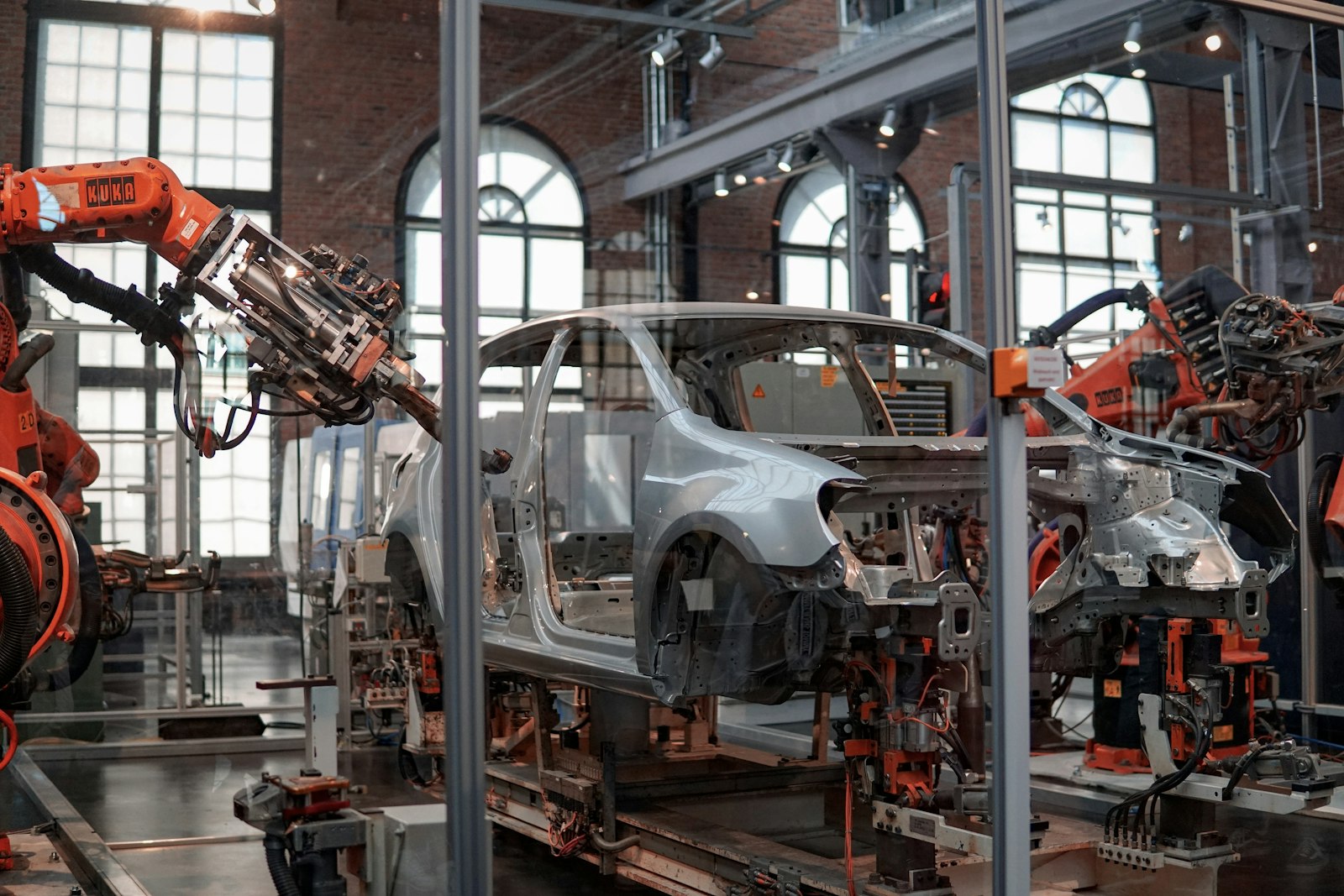
For a parts supplier, a transistor that comes out of a different packaging plant is not automatically the same transistor. Automotive parts are qualified against a specific manufacturing process, and moving a part to a new plant or a new source means testing and approval before it goes into a production module. In October 2025 the European carmakers’ association ACEA warned that homologating new suppliers for specific components and ramping up their output would take several months, while stocks of Nexperia chips would last only a few weeks. Honda’s explanation to investors on Nov. 7, 2025 was blunter: “The semiconductor in question was sourced from a single company.” Honda’s finance chief put the shortage’s impact on its forecast at 150 billion yen.
The lawsuit’s competition theory goes straight at that problem. If a Dutch court agrees that Nexperia China’s separate supply chain is wrongful competition, Nexperia gains leverage over who can sell parts built on its designs and under its name. If the court disagrees, Tier 1 suppliers have to treat the China-run operation as a separate vendor with its own legal risk.
The Hague trademark ruling Nexperia’s statement left out
Nexperia’s Nov. 5 statement highlighted a Nov. 2 win at the Court of The Hague, which barred Nexperia (China) Ltd. from relying on or enforcing a Chinese court judgment inside the European Union that would limit Nexperia’s ability to enforce its intellectual property. Nexperia also said Nexperia B.V. is the registered owner of the group’s patents, manufacturing methods and trademarks.
Wingtech’s filing on the same ruling describes the other half. The court, Wingtech says, rejected Nexperia B.V.’s requests for interim injunctions against Nexperia China for infringing Nexperia’s EU and Benelux trademarks, and ordered Nexperia B.V. to bring a full case on the merits within six months. The Chinese judgment in question came from the Jiangsu High People’s Court. Nexperia China told the Dutch court that the Jiangsu court had already fined Nexperia B.V. 58 million yuan for not fully complying with it, according to Wingtech’s account.
Nexperia’s statement did not mention the trademark request. For anyone buying discrete semiconductors in Europe, that is the part of the ruling that bears most directly on whose parts can carry the Nexperia name, and it is unresolved.
Dueling court orders in Amsterdam and Dongguan
The same day as the Hague ruling, Nov. 2, the Dongguan court issued a preservation order at Wingtech’s request. According to Wingtech’s Nov. 4 filing, it bars six respondents, among them Nexperia Holding, Nexperia B.V., ITEC and interim CEO Tilger, from selling, diluting or pledging shares in Nexperia and its subsidiaries, from transferring Nexperia’s intellectual property anywhere in the world, and from disposing of its assets. The order carries a penalty of 100,000 yuan a day.
Amsterdam answered on Nov. 11. The Enterprise Chamber of the Amsterdam Court of Appeal, which suspended Zhang as a director and handed Wingtech’s shares to a court-appointed administrator in October 2025, imposed new measures on Wingtech, Yuching, Nexperia China, Zhang and individual Wingtech leaders. They must not interfere with Nexperia’s partnerships, capacity expansion, IP licensing, financing or ordinary asset sales. They must let the officials sound out investors. They must withdraw Chinese claims that undercut the Chamber’s rulings and must not enforce the Dongguan injunctions where those block IP or asset transfers. Nexperia said the Chamber found Wingtech’s conduct amounted to an abuse of law.
Wingtech’s Nov. 16 filing lists the price tags. Several of the orders carry penalties of €5 million per violation or per day, each capped at €100 million, with total exposure for Wingtech, Yuching and Nexperia China capped at €300 million. Wingtech called the ruling an anti-suit injunction across borders, said it has no legal effect in China and does not touch the Dongguan orders, and said it will appeal.
Each side now holds an order from its own courts telling the other side not to do what it is doing, and each says the other’s order has no force where it matters.
A possible buyer, a ‘Two Circles’ plan and a U.S. export deadline
Wingtech’s Nov. 4 filing says administrator Arnold Croiset van Uchelen and court-appointed director Guido Dierick proposed a “Two Circles” structure: Wingtech would keep ownership and control of the China business, outside investors would take control of the rest of the world, and Wingtech would keep a minority stake. Wingtech refused in writing.
The officials’ Nov. 12 statement says Wingtech misrepresented confidential talks. They wrote that they are not currently preparing to sell a majority stake to outside investors and are not trying to divide Nexperia into Chinese and non-Chinese businesses. They are, however, testing investor interest in “either a majority or a minority stake,” and the Chamber ordered Wingtech not to interfere. They also explained why they will not hand control back. In their view, giving in to Wingtech’s demand would create serious risks to Nexperia’s ability to keep operating, given export controls in several major countries where it does business.
The most concrete of those controls is American. The U.S. Commerce Department put Wingtech on its Entity List in December 2024, which at the time did not apply to Nexperia itself. In September 2025 the Bureau of Industry and Security adopted an “Affiliates Rule” that would automatically extend Entity List restrictions to any company at least 50% owned by a listed entity, which would reach a Nexperia that Wingtech owns. BIS suspended that rule for a year in November 2025, after the U.S.-China trade deal. The pause was set to end Nov. 9, 2026. This month BIS extended it only through Jan. 10, 2027, a reprieve of about two months.
That deadline explains the Dutch side’s urgency better than anything in the lawsuit. The rule’s 50% test turns on ownership, not on who votes the shares, and Wingtech still owns Nexperia through Yuching even with an administrator holding the votes. Keeping Wingtech out of the boardroom does not take Nexperia out of the rule’s reach. Only a change in who owns the majority would, which is what a market sounding for a majority stake is built to test. Washington has been drawing similar ownership lines elsewhere in the auto business, including in the Chinese car ban bill racing a lame-duck deadline. The $2 billion claim also gives the officials something to set against Wingtech’s 8 billion yuan in any negotiation over price.
What carmakers, suppliers and owners should watch
Jan. 10, 2027 is the first date to circle. If BIS lets the Affiliates Rule take effect while Wingtech still holds its shares, the officials’ export-control argument stops being hypothetical, and the pressure for a sale gets stronger. If BIS extends the pause again, Wingtech gets more time.
The second thing to watch is whether the Amsterdam District Court ever registers the $2 billion case. Until service through China’s Ministry of Justice is complete, the claim functions mainly as leverage. Wingtech’s appeal of the Nov. 11 order, and whether anyone tries to collect the euro or yuan penalties, will show which court’s orders the two sides treat as binding in practice.
For the supply chain, the number to follow is Nexperia’s back-end capacity outside China. At about 55 billion pieces, Malaysia and the Philippines cover roughly half of the company’s stated annual volume. A part qualified there can reach a module supplier without Beijing’s export exemption or Wingtech’s cooperation, while anything still packaged in Dongguan needs both.
Owners will not see any of this on a window sticker. They would see it the way Honda’s dealers did in late 2025, as vehicles that were scheduled and never built.
If you buy chips for a module line, do you keep ordering from both Nexperias to keep the line moving, or cut the China side loose and eat the requalification now?