
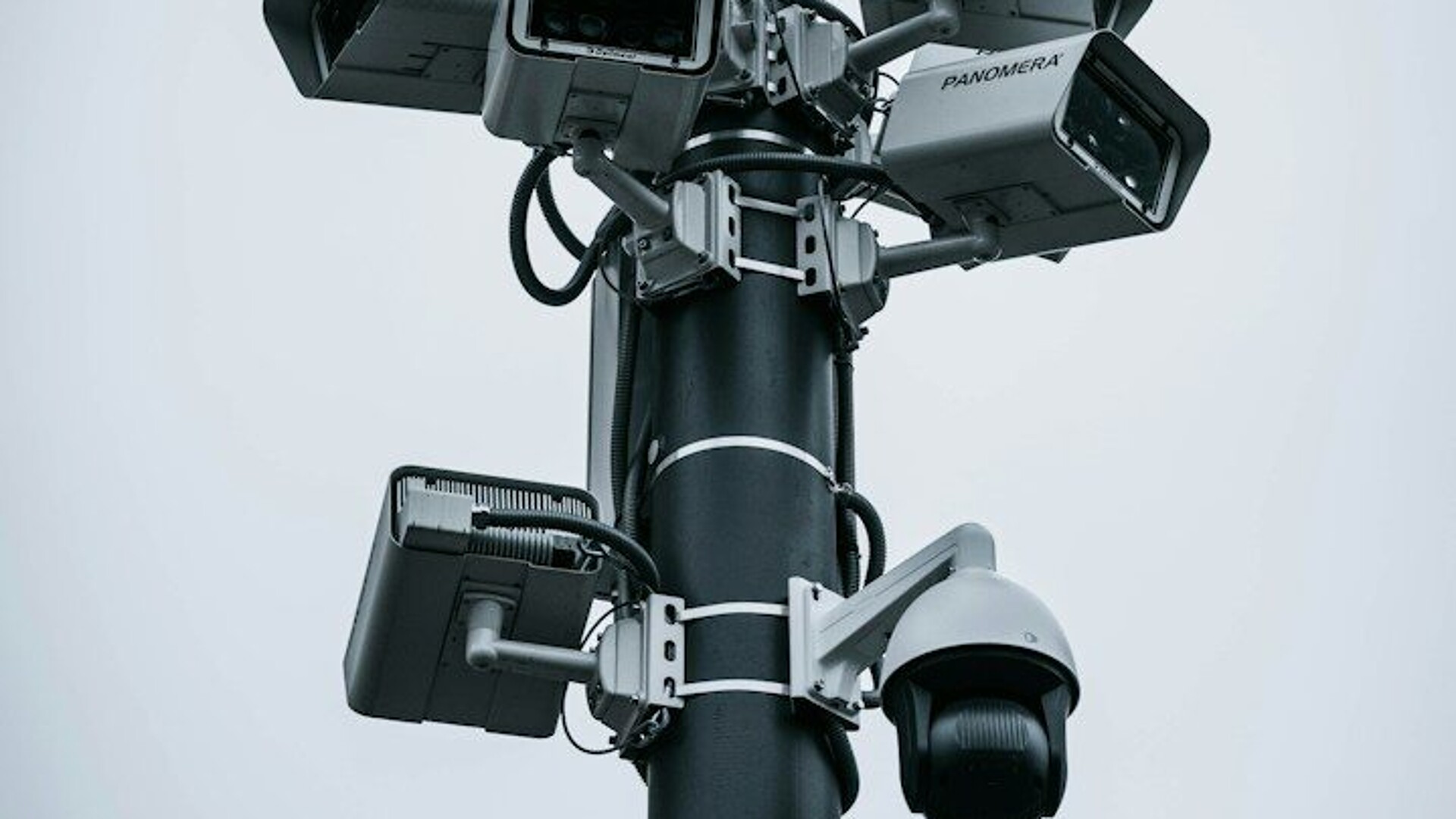
Within about 24 hours, two of Southern California’s larger cities told their police departments to stop reading every license plate that drives by. San Diego went first on Monday, and Santa Ana followed on Tuesday. San Diego’s council killed Flock’s authorization unanimously. Santa Ana’s vote was 6-0.
Both votes were about Flock Safety’s automated license plate readers (ALPRs), and both came down to one question: where does the photo of your rear bumper go after the camera takes it?
San Diego: 500 cameras on light poles
San Diego’s system isn’t a few cameras on poles at a handful of intersections. The city’s ALPR report counts 500 Smart Streetlights with embedded ALPR, deployed citywide in all police divisions. According to SDPD’s technology disclosure page, the cameras capture rear plates from passing vehicles, recording an image with the date, time and location, plus the plate, plate type, and the vehicle’s make, model, color and distinguishing features.
Related Articles
- The Average New Car Cost a Record $51,109 in October, but the CPI Says Prices Rose Just 0.7% Over the Year
- A Brampton Warehouse, 96 Stolen Vehicles, C$4.5 Million in Containers, and an Export Check That Starts With a Form
If your car has personality, the camera notices. A crunched fender or a missing front plate becomes something an officer can search for. Swapping plates won’t hide a car that’s recognizable for other reasons.
The council voted unanimously to rescind authorization of Flock’s ALPR technology for SDPD use, and it also voted 5-2 on Monday night to rescind Smart Streetlights authorization. Mayor Todd Gloria, who had defended the program for months, had said beforehand he wouldn’t block it. In his post-vote statement, he wrote, “I respect the Council’s decision and will not veto either action.”
Gloria hadn’t changed his mind about whether the cameras work. In October, he said the readers had assisted in “nearly 900 criminal investigations” and helped people recover over $8.7 million in stolen property. Days before the vote, he argued the city’s privacy safeguards weren’t enough because Flock and the city’s use of the technology had lost public trust. Gloria never said the cameras failed. He said people stopped trusting the city with the data.
Why trust ran out
San Diego’s own paperwork explains a lot. The city’s amended ALPR report says that from December 29, 2023 to January 17, 2024, a configuration error let other California law enforcement agencies access SDPD’s ALPR data, and the system was included in 12,914 searches before Flock corrected the settings. The same report says that in a few serious cases in 2024, the department shared ALPR data with out-of-state and federal agencies, before ending all such sharing after California Department of Justice guidance.
California’s SB 34 has governed ALPR data since 2016, and the Attorney General’s 2023 bulletin states that the definition of “public agency” does not include out-of-state or federal law enforcement agencies. The state has enforced it in court: Attorney General Rob Bonta sued El Cajon over its refusal to stop sharing plate data with federal and out-of-state agencies. A city that keeps these cameras running also takes on legal risk.
Santa Ana: done in about 18 months, and looking at private cameras next
Santa Ana’s program barely got going before it ended. An April 2025 police staff report pitched an ALPR program that would scan and process thousands of license plates daily. The council approved it in May 2025, using a mix of readers from Flock and Motorola.
According to the city’s announcement, the council voted unanimously on November 17 to terminate the agreements with Flock Group, Inc. and Motorola Solutions, Inc., citing residents’ privacy and potential sharing of data with non-City agencies or entities. The vote was 6-0, with Councilmember Phil Bacerra absent.
Related Articles
- Honda’s Stop-Start Trouble Spreads to the 2024–2026 Pilot, Odyssey and Acura MDX
- Toyota’s Own Recall Filing Is the Clock Ticking in the Camry Hybrid Inverter Lawsuit
Buried in Santa Ana’s vote: staff now have to study whether the city can ban these cameras on private property too. Flock’s customers include HOAs and car dealers, not just police. Telling a car dealer what it can mount over its own lot is a much harder fight than canceling a police contract.
What drivers should take from this
Turning off city cameras doesn’t make you invisible. Private ALPR networks, repo-industry plate scanners and neighboring cities’ systems keep running. San Diego residents still drive through Chula Vista, El Cajon and Oceanside.
Stolen-car recovery may get harder. San Diego’s report credits the system with 223 vehicles recovered under California Vehicle Code 10851, the vehicle-theft statute. If you own a car thieves love, like an immobilizer-free Kia or Hyundai, a GPS tracker or AirTag just went up in value. Some insurers also give discounts for tracking or recovery devices, so ask yours.
Watch for copycats. Two unanimous votes in large California cities give every other council a precedent, and hand Flock’s sales team a rough week. If your council took this vote next month, what would it take for you to trust those cameras again?