
If you ride in a Zoox robotaxi in San Francisco this year, you are not going to pay for it. That is not a launch promotion, and it is not Amazon being generous with a rounding error. It is the law. Under the permits Zoox actually holds in California, charging you would be illegal.
That one fact explains the influencer tours, the Union Square lounge and the waitlist better than any fleet-size number ever will. A company that can sell rides sells rides. A company that cannot sell rides builds an audience and waits.
The ladder Zoox is only halfway up
California splits robotaxi oversight between two agencies that do not answer to each other, and the split is where this story lives. The Department of Motor Vehicles decides whether the robot may drive. The California Public Utilities Commission decides whether the robot may pick you up, and whether anyone may be billed for it.
The CPUC runs a four-rung ladder: Drivered Pilot, Driverless Pilot, Drivered Deployment and Driverless Deployment. According to the commission’s own list of permits issued, Zoox holds two of them: Drivered Pilot and Driverless Pilot. Waymo holds all four.
The pilot rungs come with a restriction the CPUC states plainly in its program rules: monetary compensation may not be charged for any rides in test autonomous vehicles. Deployment permits are the rung where fares become legal. Zoox is not on it.
So the Zoox Explorers program is a waitlist for free rides because a waitlist for free rides is the entire legal product. The marketing is downstream of the paperwork.
The other permit that is missing
The DMV side tells the same story from a different angle. Zoox holds a driverless testing permit covering Foster City and San Francisco. What it does not hold is a DMV deployment permit.
Look at who does: Nuro, Waymo and Mercedes-Benz. That is the list. Mercedes is on it because of Drive Pilot, a hands-off highway system in a car with a steering wheel, which tells you how narrow the deployment category really is.
Zoox therefore needs two separate approvals from two separate regulators on two separate clocks before a San Francisco rider can be charged a dollar. Neither agency is obliged to care what the other is doing.
Washington said yes first, and it said yes to something strange
Here is where it gets genuinely odd. The federal government has already given Zoox more than California has.
On July 31, 2026, NHTSA granted Zoox a temporary exemption from portions of eight Federal Motor Vehicle Safety Standards, running through July 31, 2028. The exemption exists because the Zoox vehicle has no steering wheel, no manual brake control and no driver to serve.
Read the list of standards and the absurdity of regulating a car built for nobody comes into focus. FMVSS 135, manual brake controls. FMVSS 111, mirrors. FMVSS 103 and 104, windshield defrosting and windshield wipers. FMVSS 201, sun visors. FMVSS 208, the airbag warning label that federal law says must be printed on the sun visor.
Zoox needed a federal exemption to build a vehicle without a sun visor, and a second one because the airbag warning had nowhere to live. The rulebook assumes a human is squinting through a windshield. Remove the human and the standards do not become safer or less safe. They become meaningless, and meaningless is still a violation until someone signs a waiver.
The number that actually caps the business
Buried in that grant is the figure that matters more than any demo video: up to 2,500 exempted vehicles may be introduced into commerce in any 12-month period.
That is not a NHTSA preference. It is a statutory ceiling written into the Safety Act, which caps equivalent-safety exemptions at 2,500 vehicles in any 12 months. Congress set that number long before anyone was building a car without a steering wheel, and it applies whether you are exempting nine prototypes or an entire commercial fleet.
Do the arithmetic on a nationwide robotaxi network. Vehicles wear out. Cities need density to make wait times tolerable. A hard cap of 2,500 new units a year is a serious constraint on a business whose entire economic argument is scale, and it is a constraint no amount of engineering removes. Only Congress or a rulemaking does.
Waymo made the boring choice, and the boring choice has no ceiling
Waymo buys ordinary production vehicles and adds sensors to them. It is an unglamorous decision that has been quietly mocked for a decade, and it is looking better every year.
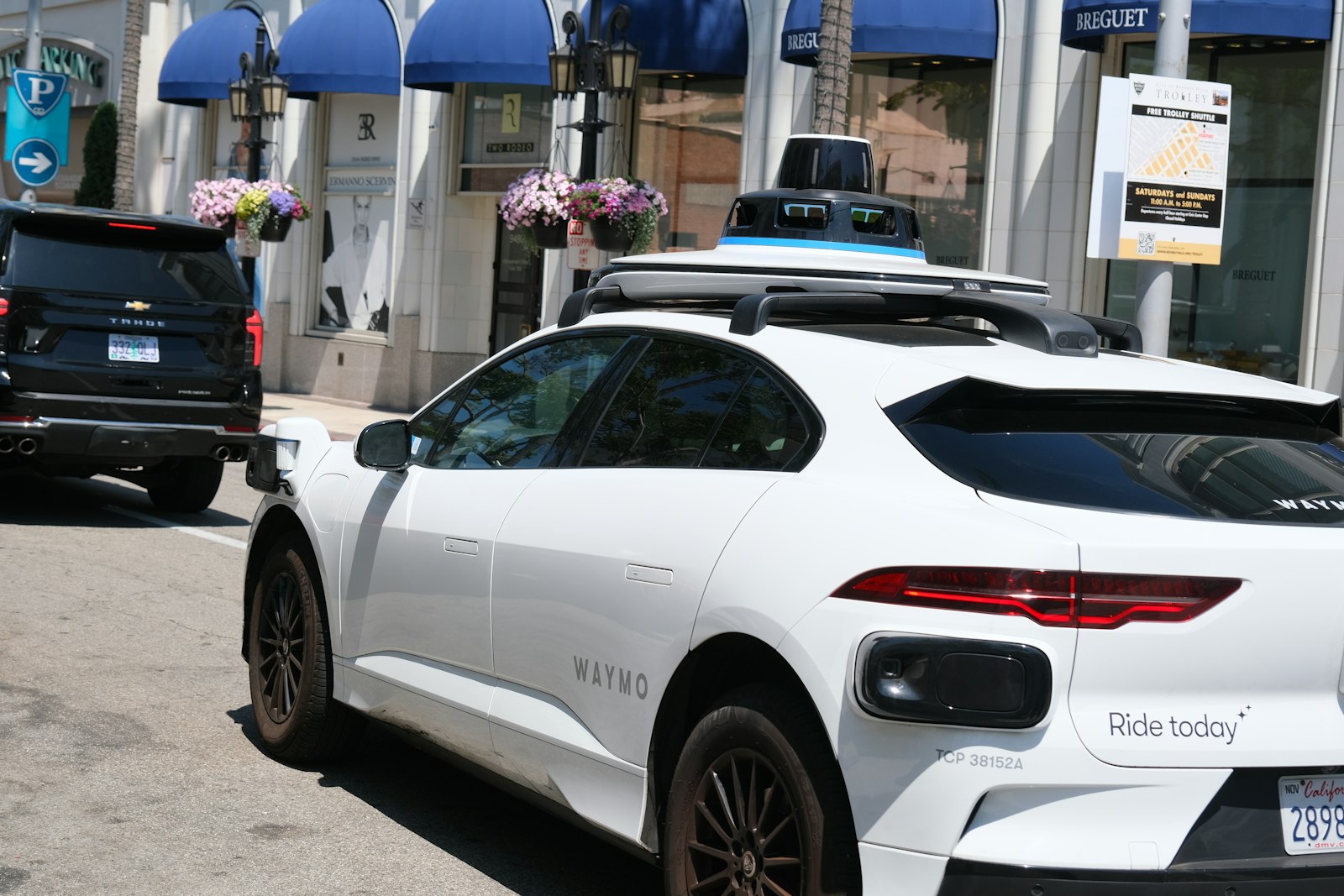
A vehicle that already complies with every FMVSS needs no exemption. No exemption means no 2,500-unit cap, no two-year expiration date and no federal review of whether the safety case still holds. Waymo can add as many vehicles as it can afford and as many cities as it can staff, and it is serving riders in 15 metro areas while Zoox runs a waitlist in one.
This is the asymmetry that will decide the next five years. Zoox built the better idea of what a robotaxi should be: no controls, bidirectional, carriage seating, designed from a blank sheet for the job. Waymo built a Jaguar with a hat. The blank sheet earned an exemption with an expiration date. The Jaguar earned a business.
We have watched the same trade play out at Tesla, which removed the steering wheel from the Cybercab without asking first, and in Spain, where the first national robotaxi permit still requires a human in the seat. Every regulator on earth is more comfortable approving a car that could theoretically be driven by a person.
The three-year-old file nobody talks about
There is one more piece of paper worth knowing about. In March 2023, NHTSA opened audit query AQ23-001 into Zoox.
The question it asked: had Zoox properly certified that its bidirectional, control-free vehicle met every applicable federal standard? The agency wanted the process and the technical data, including whether Zoox had leaned on its own test procedures or simply decided certain standards did not apply to a vehicle shaped like nothing else on the road.
American vehicle safety runs on self-certification. Manufacturers declare compliance; NHTSA audits afterward. Zoox declared. NHTSA asked to see the work. Three years later, the resolution was not a ruling that the self-certification was sound. It was an exemption, with a two-year clock and a unit cap, granted on the different legal theory that the vehicle is at least as safe overall as a compliant one.
That is a quieter outcome than a press release suggests. The company did not win the argument that the old rules fit. It won permission to stop pretending they did.
What to remember
Forget the permit tiers and the FMVSS numbers. Remember the shape of the thing.
The hardest part of building a driverless car was never teaching it to drive. It was convincing two agencies, on two schedules, using a rulebook written for people, that a machine with no sun visor deserves to be on the road and deserves to be paid.
Zoox solved the driving. The free ride is what is left.
Would you take a free robotaxi ride if one showed up in your city? Let us know in the comments.