
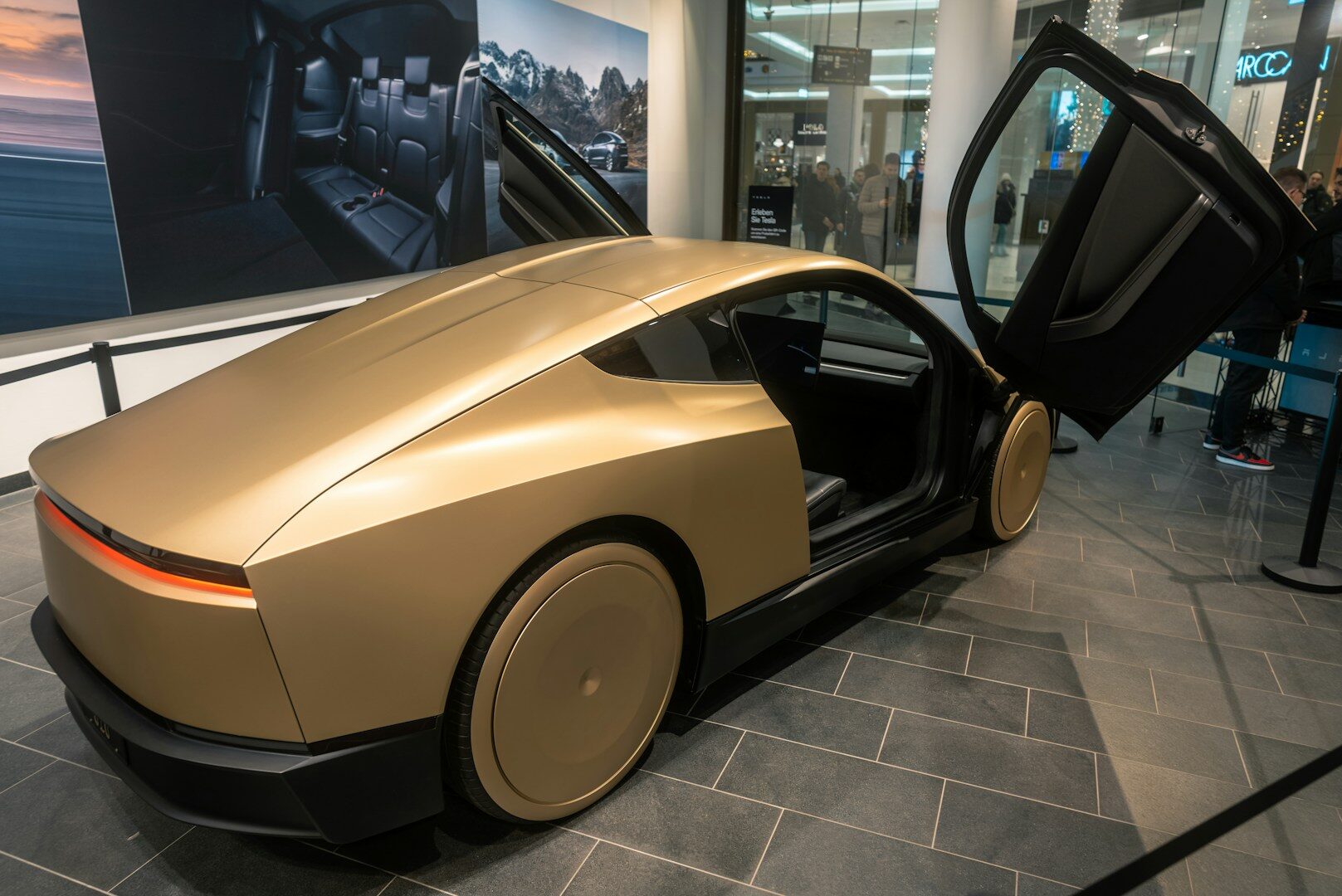
NHTSA didn’t open a Cybercab audit because anyone believes the car is dangerous. It opened one because Tesla, unlike every other company running driverless fleets on public roads, didn’t ask for permission first.
CBS Austin was first to report that Tesla’s gold Cybercabs had begun picking up paying riders in Austin this month. Days later, on September 3, the National Highway Traffic Safety Administration opened what’s called an Audit Query into the two-seat, steering-wheel-free robotaxi. The agency wants to see the technical basis Tesla used to certify that the Cybercab meets every Federal Motor Vehicle Safety Standard that applies to it. NHTSA Administrator Jonathan Morrison said the agency needs “to ensure that all of our laws are followed.” That’s not a recall, and it isn’t a finding that anything is unsafe. It’s a paperwork review, aimed at roughly 1,000 vehicles Tesla told the agency it plans to deploy.
Here’s the part most drivers never think about: nobody at the federal government actually approves a new car before it goes on sale in the United States. Since the 1966 Safety Act created NHTSA, automakers have operated under a self-certification system. A manufacturer builds the car, runs its own tests, and signs a piece of paper swearing it complies with every applicable standard. NHTSA’s job is to audit that paperwork after the fact and go after companies that got it wrong. It’s closer to the honor system than most car buyers realize, and it’s the only reason a two-seat pod with no wheel, no pedals, and no way for a passenger to physically take over could start hauling paying riders around Austin without a single government agency signing off on the design first.
That system has a pressure valve for exactly this situation, though, and Tesla didn’t use it. In July, NHTSA granted Zoox, Amazon’s robotaxi subsidiary, whose vehicle also has no steering wheel, a formal, temporary exemption to commercially deploy up to 2,500 vehicles a year for two years, under an enhanced oversight structure. Zoox asked. Tesla didn’t. Tesla built the Cybercab, certified it against existing standards on its own authority, and rolled it straight into commercial service. Those are two very different regulatory postures for two nearly identical vehicles, and only one of them is currently being audited.
The timing makes it stranger. NHTSA is in the middle of rewriting the rules that would make a car like the Cybercab uncontroversial. In June, the agency proposed eliminating the requirement for a manual brake pedal on vehicles designed never to be driven by a human, one of several rulemakings the agency has opened to modernize decades-old standards for cars with no driver. That proposal still isn’t final. Tesla launched a commercial, paid robotaxi service built around the absence of pedals before the rule that would unambiguously bless that design had finished being written. NHTSA is now auditing Tesla under the very framework its own AV modernization push is racing to replace.
None of this means the Cybercab is unsafe, and it’s worth separating the legal question from the engineering one. Tesla’s robotaxi fleet runs on cameras alone. Waymo and Zoox layer in lidar and radar, giving their software multiple, physically different ways to confirm what’s actually in front of the car, a redundancy that matters most in exactly the edge cases, like glare or fog, where a single sensor type can be fooled. Tesla has also built its entire emergency-intervention plan around software: a touchscreen button that requests a pull-over and connects a rider to a remote support line. There’s no wheel to grab and no pedal to stand on if that chain of software and connectivity doesn’t respond fast enough. That’s a defensible design choice. It’s also one with zero physical fallback, which is a very different risk profile than a robotaxi where a stopped car and a spare set of controls still exist somewhere in the loop.
The business logic behind moving this fast isn’t subtle. Tesla’s stock story increasingly depends on robotaxis working at scale, and the company has been racing to add territory. Nevada regulators cleared Tesla for up to 5,000 robotaxis around Las Vegas last month, more than the company has ever operated anywhere else combined. An audit query in Washington doesn’t slow that expansion down today. But it does put a federal file number on the question of whether Tesla’s certification claims will hold up, right as the company tries to multiply its driverless fleet by orders of magnitude.
It also fits a pattern. Tesla has spent much of this year fielding federal scrutiny it insists it has already addressed. NHTSA opened a separate investigation into a front suspension fix the agency says didn’t actually fix the problem, and the agency has been probing Tesla’s Full Self-Driving system since last year over crashes in reduced-visibility conditions. The Cybercab audit isn’t a one-off. It’s the latest entry in a running argument between Tesla and its own regulator over whether Tesla’s internal judgment about compliance and safety is sufficient on its own.
The part that will matter in five years isn’t whether this specific audit produces headlines this month. It’s what happens if NHTSA decides Tesla was wrong about which standards applied. In a car with no driver, there’s no human to absorb blame when something goes wrong. Liability, insurance exposure, and regulatory consequence all land directly on the manufacturer’s certification decisions. Unwinding a self-certification after a thousand vehicles are already on the road is a far messier problem than approving one before it launches, which is precisely the scenario the exemption process exists to avoid.
Nobody should expect a recall notice out of this. What’s actually being tested is whether a car company can write its own permission slip for a vehicle with no steering wheel, deploy it commercially at scale, and settle the paperwork argument after the fact. Tesla didn’t wait for Washington to finish rewriting the rules for cars without pedals. It built one anyway and dared the regulator to catch up.