
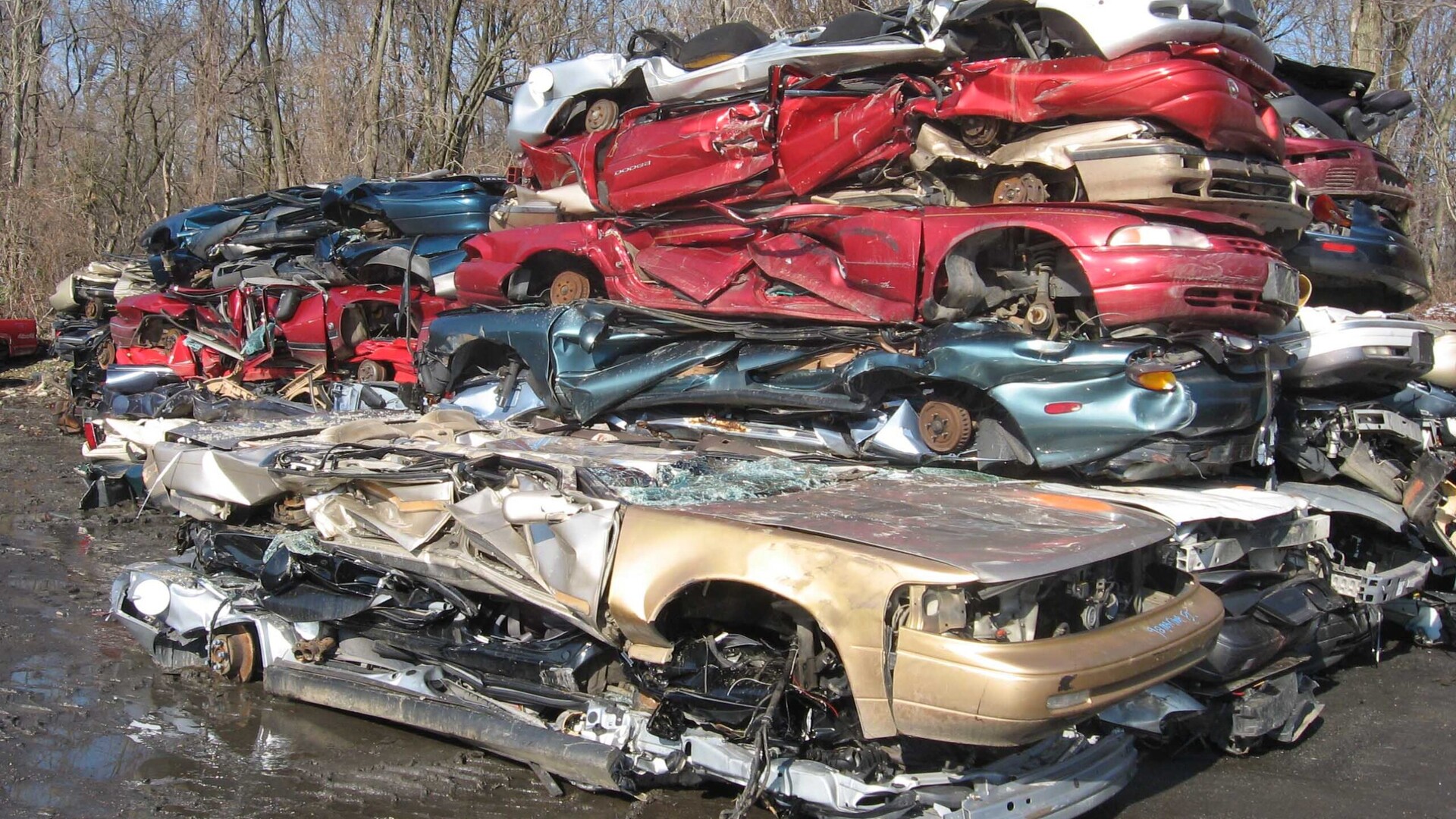
Kentucky state Rep. Jason Nemes told Louisville’s WHAS11 in April 2025 what he wanted done to a repeat street racer: “We’re going to take his car, which he loves, and we’re going to crush it. And I hope he has to watch it.” Seventeen months later, no Kentucky judge has that power. House Bill 425, the second version of Kentucky’s car-crushing street racing bill, died in Frankfort on April 15, 2026, the last day of the legislative session. The House recommitted it to its Appropriations and Revenue Committee, and the session ended with it there.
That leaves Kentucky where it started. Under KRS 189.993, racing on a public road still carries a fine of $60 to $200, up to 30 days in jail, or both. Louisville has been seizing racers’ cars under its own ordinance since 2023 and has crushed one. Las Vegas police shredded two in June. In Los Angeles, police impounded about 200 cars in one Labor Day weekend raid. The state law used for racing arrests caps that kind of hold at 30 days.
Destroying a car is rare. In Louisville and Las Vegas, it has come only after a conviction or after an owner abandoned the car; in Los Angeles, the law used for the raid has no destruction provision at all. What most drivers actually face is the impound and a storage bill that grows every day. HB 425, as the Kentucky Senate rewrote it, would have let a judge order a car destroyed only after a driver’s third racing conviction. Three strikes, then the crusher.
What the street racing bill would have done to a racer’s car
Louisville Democrat Beverly Chester-Burton filed the street racing bill on Jan. 16, with Nemes, a Middletown Republican, as the second sponsor. It raised the fine for a first racing offense to $1,000 and required that the car be impounded for “not less than six (6) months.” A second offense brought a $2,000 fine and forfeiture, with the car “forfeited to the Commonwealth and destroyed or sold at public auction.” Auction money would have gone to the state’s Crime Victims Compensation Board. The House passed it 75-19 on March 16.
An officer could not have crushed anything on his own. The bill amended the forfeiture statute, KRS 500.090. That law lets the sheriff in the county of conviction destroy forfeited property “upon order of the trial court”. A crushed car under HB 425 required a conviction, a judge’s order and a sheriff.

How the Senate rewrote the street racing bill
The Senate Transportation Committee rewrote the bill on April 1. Its substitute added a second six-month impound for a second offense and pushed forfeiture back to the third. It also attached something that had nothing to do with racing: rules on how automakers must pay dealers for warranty repairs. Those rules covered time allowances, labor rates, parts markups and payment deadlines. That language mirrors Senate Bill 94, which the Senate passed 36-0 on March 6. SB 94 had been sitting on the House floor calendar since late March. The full Senate passed the combined street racing bill 35-3 on April 14. The next day, the House recommitted both HB 425 and SB 94 to Appropriations and Revenue, and the session ended.
A year earlier, the House had passed the first version, HB 465, 85-10 on March 5, 2025. It went to Senate Judiciary and never came out. WHAS11 reported that the crushing provision appeared to be the sticking point. Senate President Robert Stivers, a Manchester Republican, told the station: “Maybe fines, forfeitures, but maybe a little bit extreme to start crushing their cars.” Nemes answered that the point was that it’s extreme, “because that’s what’s going to save our people.” Louisville Mayor Craig Greenberg and LMPD Chief Paul Humphrey both lobbied for the bill, the station reported. Greenberg had started pressing for state crushing authority in the fall of 2024.
Louisville seizes cars by the dozen and has crushed one
The city didn’t wait for Frankfort to pass a street racing bill. Metro Council Ordinance 154-2022, amended in 2023, lets police seize a car used in a speed contest, a reckless driving exhibition or a street blockage. Officers can act on video, photos, their own observation or sworn eyewitness testimony. Under Section 71.24, the ordinance sets the impound at six months, and an appeals board can shorten it. The owner owes a civil fine of $1,000 for a first offense and $2,000 for each one after. The owner gets the car back only after paying the citation plus “all towing, handling, impoundment and storage charges imposed.” When police identify a car after the fact, they mail the owner a notice. The owner can keep it off the tow truck by paying the maximum fine plus an extra $1,000 civil penalty up front. For a first offense, that buyout comes to $2,000.
The ordinance makes a car city property only if nobody claims it. Forty-five days after the impound period ends, with no appeal pending, the city treats an unclaimed car as abandoned. It then “shall escheat to Metro Government.” The city can then use it, auction it or, if it isn’t fit for use, sell it “for its scrap or junk value.” Metro also holds a lien for the fines, towing and storage. The ordinance ranks that lien ahead of all other liens on the car.
What Louisville’s numbers show
That design explains the numbers. On Sept. 17, 2025, Greenberg pressed the button that crushed a green Dodge Durango with a Hellcat engine at LMPD’s impound lot. Police said stolen parts in the SUV made it too risky to auction or add to the city fleet. At that event, LMPD said it had confiscated 167 cars under the ordinance since 2023, auctioned four and scrapped one, the Durango. That is five of 167, about 3 percent, auctioned or destroyed. LMPD said it had 15 racing cars in its lot at the time.
Greenberg said illegal street racing in the city was down nearly 40 percent. Humphrey said the department would crush every car that met the criteria. He also described why seizure works on this crowd: “It’s a weird dynamic sometimes that people are less afraid of arrest and prosecution than they are of having their cars taken away from them.”
Las Vegas shredded two cars, both after guilty pleas
On June 17, 2026, Las Vegas Metropolitan Police Department officials stood at SA Recycling on North Nellis Boulevard. They watched a 2009 Infiniti and a 2007 Nissan 350Z go into an industrial shredder. The Las Vegas Review-Journal reported they were the first cars from street takeover investigations that Nevada shredded under its forfeiture laws. Both drivers had already pleaded guilty, according to News 3 Las Vegas. One pleaded to reckless driving, the other to failing to stop for police, reckless driving and destroying evidence.
“If you participate in these criminal activities, we are going to arrest you, we are going to prosecute you, and we are going to destroy the vehicles that you use to create havoc,” Sheriff Kevin McMahill said, according to the Review-Journal. Deputy Chief Branden Clarkson said a team formed in 2026 had arrested about two dozen people on felony evading, speeding and stolen-vehicle charges tied to 36 takeovers and races. The team arrested 47 more for reckless driving. Two cars went into the shredder. The sequence in Las Vegas, seizure, then a guilty plea, then destruction, is the one HB 425 would have required in Kentucky, minus the repeat-conviction threshold.
Los Angeles has 200 impounded cars and a 30-day limit
Early on Saturday, Sept. 5, more than 150 officers broke up a takeover of more than 700 people at South Figueroa Street and West Alondra Boulevard in the Harbor Gateway section of Los Angeles. LAPD called it Operation Street Sweeper. Chief Jim McDonnell said officers arrested 66 people for participating in or aiding a race or takeover and three more on other charges. He said officers also wrote 570 citations, 442 of them to spectators, ABC7 reported. Police impounded about 200 vehicles.
LAPD’s public statements on the operation didn’t say whether any of those cars will be auctioned or crushed. McDonnell did say some were stolen, rented or borrowed from relatives who didn’t know how they would be used. “Nobody’s going to do that with their own vehicle,” he said, CBS Los Angeles reported.
The state law covering an arrest for a speed contest, reckless driving or an exhibition of speed, California Vehicle Code Section 23109.2, answers most of the question McDonnell didn’t. A car seized under it “may be impounded for not more than 30 days.” The section requires early release when the car was stolen, when the driver didn’t have the owner’s permission, or when the registered owner wasn’t in the car or didn’t know it was being used that way. The registered owner is generally responsible for the towing and storage charges. The section contains no forfeiture or destruction provision. Unless prosecutors reach for a different statute, the 30-day maximum under that section runs out Oct. 5, and whoever claims those cars will generally be paying the towing and storage bill.
What racing costs a Kentucky driver now that the street racing bill is dead
Outside Louisville, a driver caught racing on a Kentucky road faces the state’s $60-to-$200 fine and up to 30 days in jail. Inside Louisville Metro, the same act brings a $1,000 civil fine, an impound the ordinance sets at six months, and the towing and storage charges that come with it, and police can come for the car days later based on video. Neither law lets a judge order the car crushed. Louisville can scrap a seized car only after it goes unclaimed.
Kentucky’s next regular session opens in January 2027 and is limited to 30 legislative days. The things to watch are whether a third street racing bill keeps the crush option, whether it starts forfeiture at the second offense or the third, and whether it moves on its own or once again gets a dealer warranty-pay package stapled to it.
Should a judge be able to send a three-time street racer’s car to the crusher, or does a six-month impound and a $2,000 fine already hit harder than any photo op? If you’ve had a car impounded in Louisville, tell us in the comments what getting it back actually cost.