
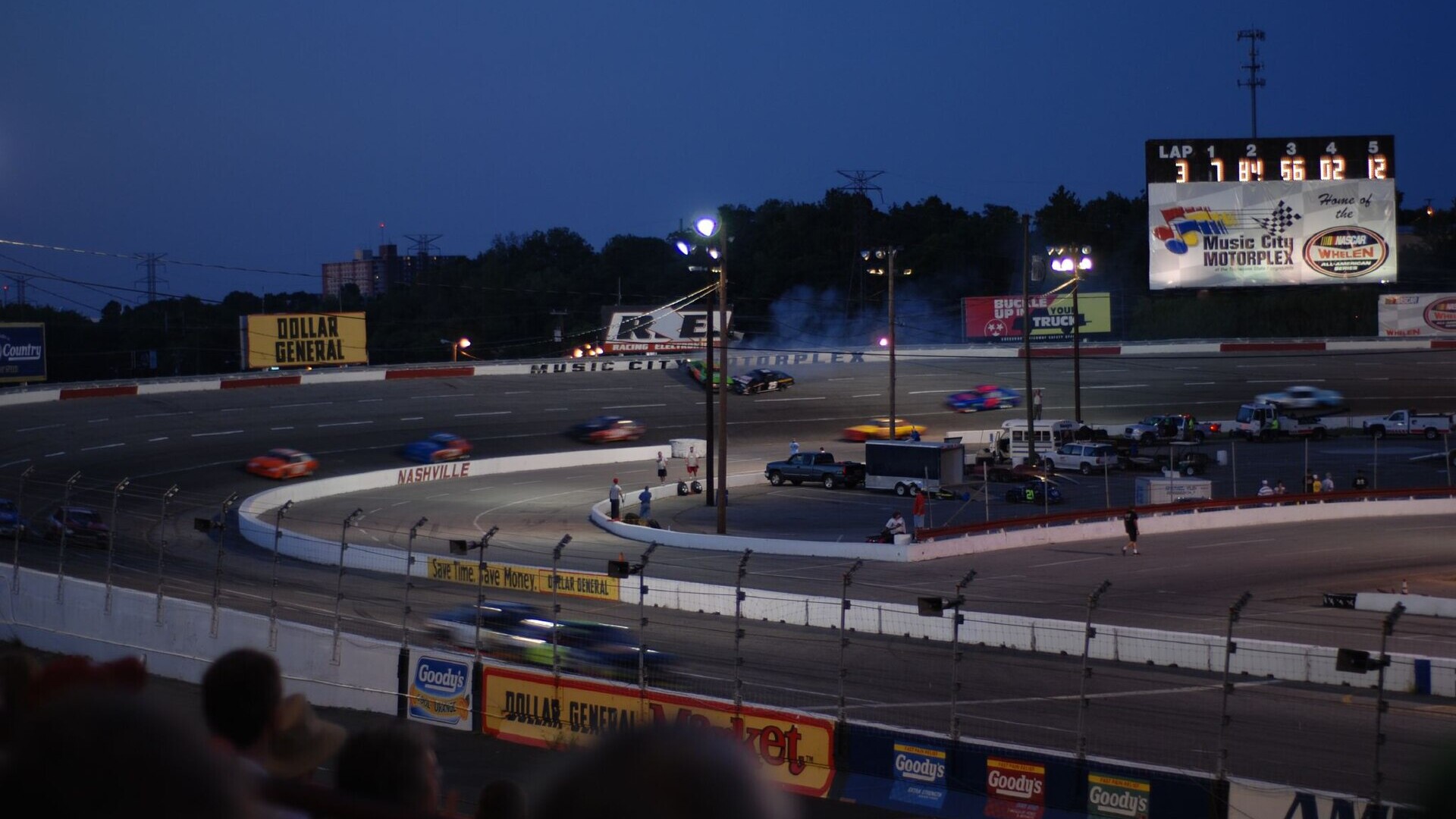
Nashville voters may get to kick racing out of a track that’s run cars since 1904. What they won’t get to vote on is the $100 million-plus rebuild plan, or the 30 years of bond payments that would come with it.
On September 18, the Restore Our Fairgrounds coalition, which includes the nonprofit Citizens Against Racetrack Expansion, turned in a petition with nearly 75,000 signatures to the Davidson County Election Commission. The petition backs a Metro Charter amendment that would take auto racing off the list of uses the fairgrounds is required to host. The fair, the flea market and the expo center would stay. The speedway land could then be turned into green space and housing.
The math behind the rebuild
The proposed renovation, which has not been approved, is now expected to cost more than $100 million. A $17 million state grant and money from the Nashville Convention & Visitors Corp would cover part of the cost. Under the proposal, Metro would borrow the rest through Sports Authority revenue bonds.
The money to cover the debt would come largely from the track operator. Speedway Motorsports, the parent company of Bristol Motor Speedway, would get a 30-year lease on the rebuilt track under the proposal. Metro’s published deal terms set rent at $1 million a year, rising 1% annually, plus a share of ticket taxes, sponsorships and concessions. If racing is removed from the charter after the bonds are sold, Metro could still owe the payments on a facility that no longer has its main tenant. So far, neither side of the petition fight has said much about that in public.
Why this is happening a second time
This is the second version of the same amendment. In April 2026, Davidson County Chancellor Patricia Head Moskal overturned the Metropolitan Charter Revision Commission’s certification of the first one. Her ruling didn’t address racing or housing. It rested on Metro Charter § 19.03(c)(6), which says an amendment’s subject must be “clearly expressed in its title.”
That petition was titled “Updating the Functions and Duties of the Metropolitan Board of Fair Commissioners.” The judge found that title didn’t tell voters the amendment would end racing and allow housing. The rest of the petition held up in court. The new filing is essentially the same amendment with a clearer title, built to survive the one argument that worked last time. That makes it harder to stop on a technicality.
The reason the fight needs a charter amendment at all goes back to August 2011. That year, more than 70% of Nashville voters approved a charter amendment requiring the fairgrounds to keep its existing activities, racing included. Because that protection came from a referendum, the Metro Council can’t undo it with a simple vote. Only another referendum can. Nashville could end up using the same tool twice in 15 years to settle the same question in opposite directions.
More than a century of racing on the line
The track has a strong claim to being the second-oldest operating motor speedway in the country. Cars have raced on the site since 1904, on an oval that opened in 1891 as the horse track at Cumberland Park. The Tennessee State Fair moved there two years after the first auto race.
NASCAR’s top series raced there from 1958 to 1984, first on a half-mile layout and, from 1970, on the .596-mile oval. Richard Petty won there nine times, more than any other driver. That history is a big part of why Speedway Motorsports wanted the lease. It also follows a wider trend in the sport, as NASCAR spent years reviving North Wilkesboro rather than building a new track. Nashville is being asked to go the other way just as historic short tracks are coming back into favor.
The people with the most to lose aren’t Cup teams. They’re the weekly short-track divisions and touring series like the CRA Street Stock Series, where drivers pay much of their own way and are already squeezed, from the cost of keeping development programs funded to federal proposals that could affect racers. Take away a sanctioned track and you don’t take away the urge to race, just the legal place to do it, and states like Georgia are already cracking down hard on street takeovers.
What comes next
The Election Commission now has to verify the signatures. The petition needs 40,193 valid signatures, so with nearly 75,000 turned in, that should be a formality, though the first attempt shows these petitions can fail on paperwork. If certification holds, the amendment is expected to go to voters in August 2027, alongside the mayoral and Council elections. Meanwhile, Speedway Motorsports keeps racing at Bristol, its Tennessee flagship, so the company that wants to rebuild Nashville’s track isn’t short on places to run.
The vote decides whether racing stays. The contract decides who’s stuck with the bill. Only one of those has a date on the calendar.
If you lived in Nashville, how would you vote? Keep cars racing at a track that’s been running since 1904, or turn the land into parks and housing instead?