
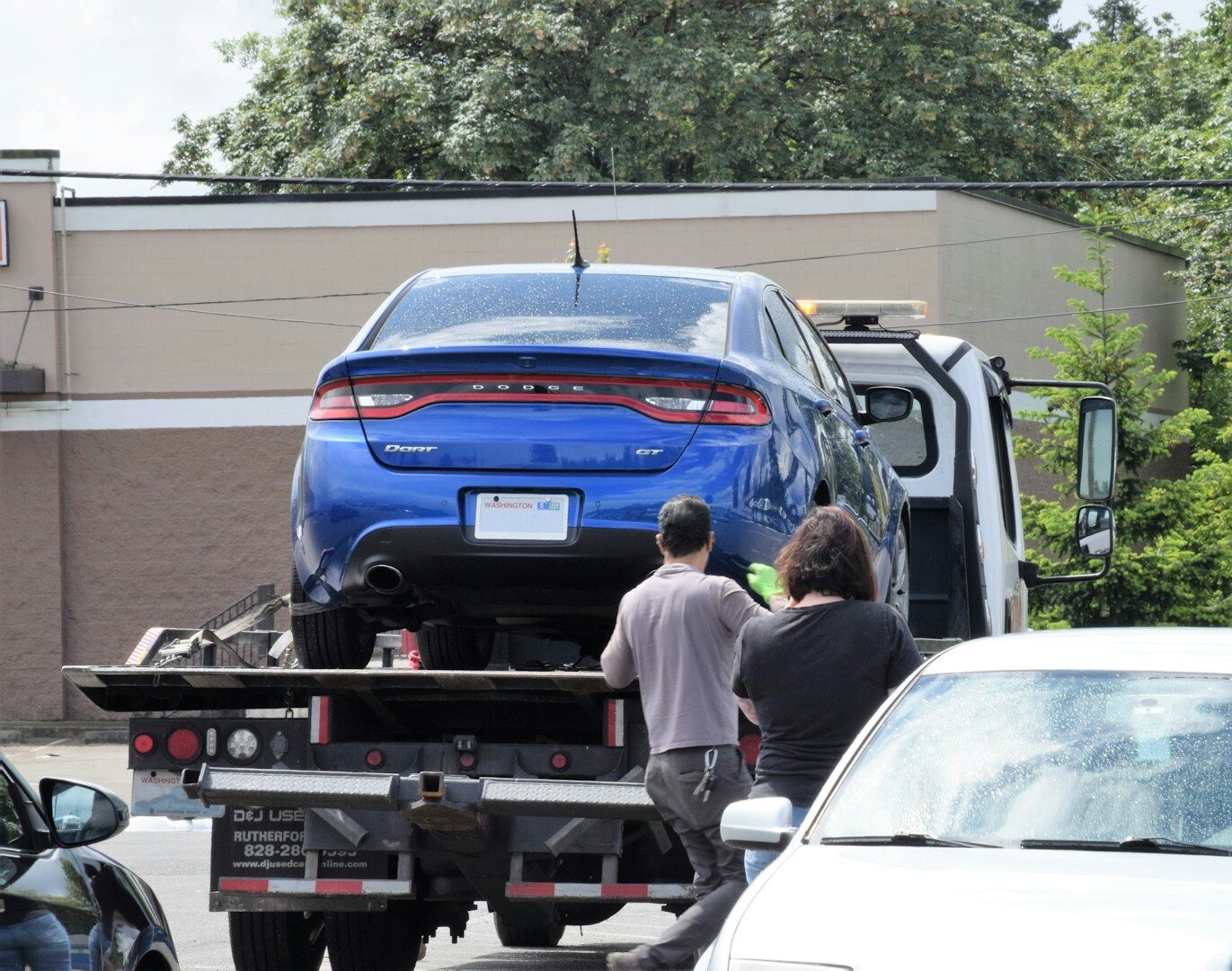
Over Labor Day weekend, more than 150 Los Angeles Police Department officers, backed by the California Highway Patrol and the Los Angeles County Sheriff’s Department, converged on the Harbor Gateway area for what the department called “Operation Street Sweeper.” Using drone surveillance and advance intelligence, officers tracked four planned street-takeover gatherings before they converged into a single mass event at Figueroa Street and Alondra Boulevard, where an estimated 700 people had gathered to block the intersection and run burnouts and donuts. By the time it was over, police had made 69 arrests, issued 570 citations, recovered seven firearms, and impounded roughly 200 vehicles. Children found at the scene were taken to a nearby station so parents could collect them.
It is tempting to read all of that as a story about police tactics: more officers, more drones, better planning. It isn’t. Compare Operation Street Sweeper to LAPD’s own past enforcement actions and the gap is enormous. A 2022 countywide sweep netted 23 arrests and 14 impounds. A 2023 joint operation by LAPD’s Task Force for Regional Auto Theft Prevention and its Street Racing Task Force produced 19 citations and 17 impounds. A single-location takeover response in January 2024 resulted in 24 arrests and 14 impounded vehicles. Those are the normal numbers for this kind of enforcement. Two hundred impounds in one night isn’t a bigger version of the same operation. It’s a different legal regime.
The Law Behind the Number
That regime changed on January 1, 2025. Four bills signed by Governor Gavin Newsom rewrote the mechanics of how California police can take a car away from a street takeover. Assembly Bill 3085 created warrant-based authority to seize and impound a vehicle used in a speed contest or exhibition, including aiding or abetting one, and allowed impound notices to be served electronically instead of in person. Assembly Bill 1978 let officers impound the vehicle of someone arrested, but not taken into custody, for blocking a road or placing a barricade to facilitate a takeover, codifying the idea that a car can be seized even when its owner walks free. Assembly Bill 2186 extended impound authority to exhibitions of speed staged in off-street parking facilities, closing a loophole that had pushed some takeovers off public streets. And Assembly Bill 2807 legally defined a “sideshow” and a “street takeover” as the same event, erasing a distinction defense attorneys had used to argue over which statute applied. None of that made headlines the way a 200-car bust does. All of it is why a 200-car bust is now possible.
California’s underlying impound law, Vehicle Code Section 23109.2, caps the hold at 30 days and guarantees the registered owner a storage hearing to contest it. But the exceptions are narrow: a vehicle only comes back early if it was stolen, if the driver had no permission to use it, if the registered owner didn’t know what it was being used for, or if the charges are dismissed outright. If none of that applies, the car sits in a tow yard for a month, regardless of what happens in court.
That thirty-day hold is where the real punishment lives, and it has little to do with a judge. Towing and storage fees accrue daily under California’s civil lien statutes, and if an owner can’t or won’t pay to redeem the car once the hold ends, the tow yard has the legal right to sell it in a lien sale to recover its money, no criminal conviction required. For a built race car, that’s an expensive inconvenience. For the aging Civic or Charger that actually shows up at most takeovers, a month of storage fees can exceed the car’s resale value outright. Insurance is unlikely to help, since policies routinely exclude coverage for impound and storage costs tied to illegal racing or exhibition driving. The vehicle code doesn’t have to take your car. The invoice does it instead.
A Statewide Pattern, Not a One-Night Raid
Los Angeles isn’t fighting this alone, and it isn’t fighting it as a one-off. The CHP has run its own parallel campaign for years, funded first by $5.5 million in state money that the agency credits with a 40% drop in sideshow incidents between 2021 and 2022, and more recently by a $2 million federal grant for what it calls the Sideshow, Takeover, Racing, Education, and Enforcement Taskforce. In the Bay Area alone, CHP officers have logged more than 1,100 arrests, seized over 100 illegal firearms, and recovered more than 2,000 stolen vehicles since a single February crackdown began. Governor Newsom’s own warning to would-be spectators is blunt: show up to a sideshow, he has said, and “you also risk the potential loss of your vehicle.” That isn’t a metaphor. It’s current statute.
Auto Wire has tracked this shift as it plays out on the ground. Some cities, tired of waiting on the courts, have started banning public gatherings outright rather than policing the cars themselves. And the danger that justifies all of it is not theoretical: a stolen Camaro plowing into a sideshow crowd is exactly the kind of outcome this entire legal framework is built to prevent.
The drone-led, multi-site coordination behind Operation Street Sweeper also says something about what a street takeover has become. These aren’t spontaneous burnout sessions that a patrol car happens across anymore. LAPD says it identified four separate planned locations before they converged on one intersection, the kind of choreography that points to social-media coordination, not chance. Law enforcement has had to respond in kind, trading random patrol for the same surveillance and intelligence-gathering playbook used against organized retail-theft rings. The sideshow has scaled up. So has the response to it.
Forget the 200 for a moment. The number worth remembering is four: the new laws that quietly rewrote what a California police department can do to a car connected to a street takeover, whether that car was doing donuts, blocking traffic to protect someone who was, or simply parked at the wrong intersection at the wrong time. The sideshow’s price tag isn’t set by a judge anymore. It’s set by a tow yard’s daily rate, and by a legislature that spent 2024 making sure that rate would matter.