
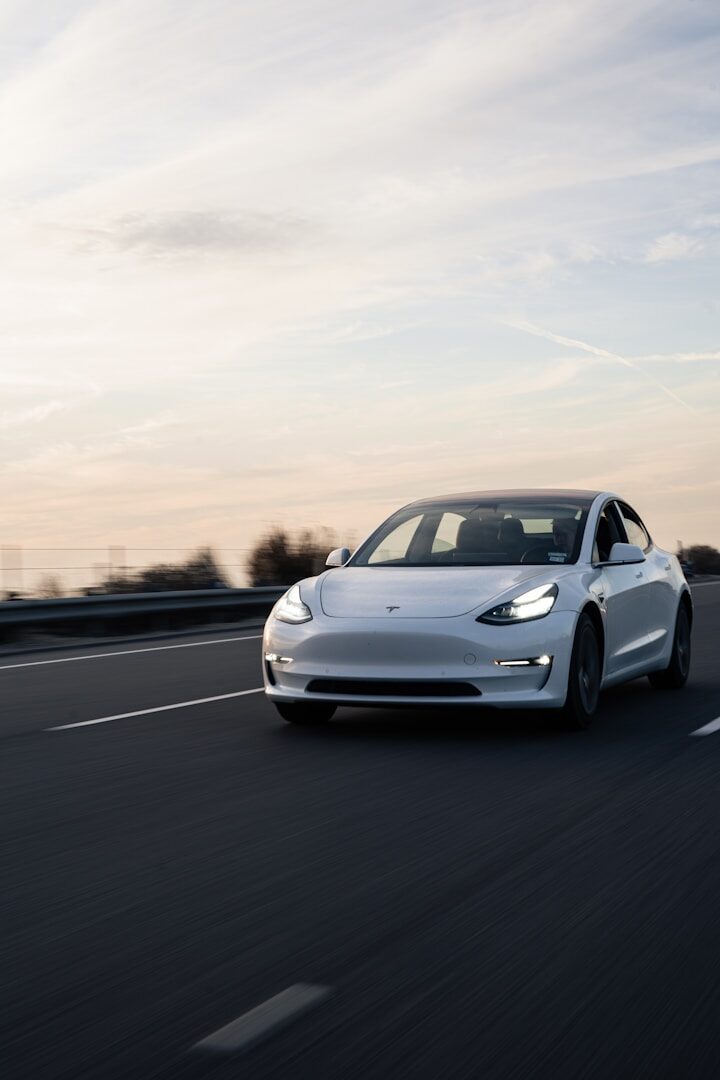
Tesla’s AI account posted on September 4 that FSD Supervised v14.3.9 is rolling out with something new: the driver-assistance software can now activate “on your behalf” when a collision looks imminent and automatic emergency braking might not be enough. It can also switch itself on, per that same post, if the car decides you’re heavily distracted or that you knocked FSD off by accident.
The internal name floating around is Automatic Collision Evasion. Whatever it ends up being called on the touchscreen, the concept is a genuine break from how every driver-assistance system on the American market has worked until now, and it creates a set of legal and insurance consequences that nobody selling this feature is talking about.
Why the word “evasion” is the whole story
Open your own Tesla’s owner’s manual and read the automatic emergency braking section. Tesla has said the same thing for years, and it still says it today: AEB reduces the severity of an impact, and “It is not designed to avoid a collision.”
Related Articles
- A Brick Doesn’t Know Your Windshield Has A Camera Behind It. Richmond Just Found Out The Hard Way
- Honda’s Cost Overhaul Explained: What It Means for Future Hybrids and Repairs
That sentence isn’t corporate hedging. It’s an accurate description of what braking-only intervention can do. AEB is a scalar problem: apply deceleration in a straight line and hope the math works. If closing speed and available friction don’t cooperate, you hit the thing, just slower.
Steering is a different animal entirely. An evasive lane change is a path-planning problem with a lateral acceleration budget, and getting it wrong doesn’t just fail to prevent a crash — it can create a worse one. You can trade a rear-end impact at 20 mph of delta-V for a side-swipe with a semi, an off-road excursion, or a rollover. That’s the reason every mainstream automaker has kept automated steering intervention limited to gentle lane-keeping nudges and narrow “evasive steering assist” systems that only amplify steering the driver has already started. Tesla is proposing to do the maneuver itself, from scratch, while your hands are on the wheel and the system is nominally off.
The regulation that exists, and the one that doesn’t
Here’s the asymmetry worth understanding. There is a federal performance standard for automatic braking. FMVSS No. 127 requires AEB, pedestrian AEB and forward collision warning on all light vehicles, with NHTSA projecting at least 360 lives saved and 24,000 injuries prevented a year. Compliance is required by September 1, 2029, with small-volume manufacturers, final-stage manufacturers and alterers getting until 2030.
There is no equivalent federal standard for automated evasive steering. None. No test procedure, no minimum performance threshold, no false-activation ceiling. A carmaker can ship a system that yanks the wheel at highway speed and the only federal backstop is NHTSA’s defect authority after the fact.
That’s not a Tesla-specific criticism. It’s a description of a regulatory gap that this feature is the first mass-market product to walk into.
The part that should actually get your attention
NHTSA’s Standing General Order on crash reporting says a Level 2 ADAS crash must be reported if the system was engaged at any point within 30 seconds before the crash through its conclusion, and the crash involved a vulnerable road user or produced a fatality, a tow-away, an airbag deployment, or anyone transported to a hospital. The third amended order took effect June 16, 2025.
Now think about what Automatic Collision Evasion does to that clock. A crash you caused entirely on your own, driving manually, with FSD switched off, becomes an ADAS-engaged crash the instant the software activates itself in the final seconds. The 30-second window is generous enough that essentially any intervention followed by an impact lands inside it.
Tesla has just created a category of crash that was previously invisible to federal reporting and made it reportable. Depending on how often the system fires, that could push Tesla’s SGO numbers up substantially, and those numbers are the raw material for every comparison anyone makes about FSD safety. It also means NHTSA will now receive telemetry on situations where a human driver was about to crash and the machine tried to save them. That’s a genuinely valuable dataset. It’s also going to look terrible in aggregate without careful reading, because the population is pre-selected for imminent crashes.
Keep in mind the agency is already deep into this software. PE25012, opened October 2025, covers an estimated 2,882,566 Teslas over FSD running red lights and driving against the proper direction of travel. In March 2026 NHTSA escalated a separate probe into EA26002, an Engineering Analysis spanning roughly 3.2 million vehicles that examines whether FSD reliably detects its own degraded vision in glare and airborne obscurants. That document lists nine crashes including one fatality, notes Tesla’s own view that a software update might have affected three of them, and says internal data limitations may have caused under-reporting.
A system that intervenes on your behalf is only as good as the vision stack underneath it, and the vision stack is what the agency is currently examining.
Mechanical reality, and what owners should do
Evasive steering asks the chassis for things braking never does. Peak lateral load, weight transfer at highway speed, and a rapid unwind on the far side of the maneuver. The planner is making assumptions about available grip, and it doesn’t know what you’ve done to the car.
If you run half-worn all-seasons on a Model Y in the rain, the friction budget the software is banking on may not exist. If you’ve lowered the car, changed spring rates, fitted a staggered setup, or you’re running summer tires in 30-degree weather, you’ve moved the limit without telling anyone. None of that stops the system from committing to a maneuver. Tire condition and alignment quietly became active-safety components the moment a computer got permission to steer.
Related Articles
- Ford Recalls 10,001 Vehicles Over Cracked Pistons in an Engine Shared By Five Very Different Cars. The Fix Isn’t Coming Until December.
- Congress Filed a Bill Called the ‘Flock-Off Act.’ It Won’t Take Down a Single Camera.
Camera cleanliness matters more too. A salted forward camera or a road-filmed B-pillar repeater degrades exactly the perception the evasion depends on. Wash the pillars, not just the windshield.
On insurance and liability, be realistic about your position. You are legally the driver. If the car changes lanes to avoid a stopped vehicle and clips someone in the adjacent lane, you are the operator on the police report, and your carrier handles the claim first and argues later. An airbag deployment or tow-away also puts the event straight into the federal reporting stream, which means Tesla will have telemetry that you probably won’t see without asking. If you’re ever in a crash where the car intervened, request your event data recorder download early and in writing.
The honest caveat
Tesla has not published owner’s-manual documentation for this feature. There’s no official page defining the speed range, the road types where it operates, whether it’s opt-in, whether it requires a purchased FSD license, or exactly how the pedals behave mid-maneuver. Numbers are circulating. Tesla hasn’t confirmed them.
For a feature that can steer a two-ton car without being asked, that documentation gap is the most notable thing about the launch. Until it exists, the correct posture is the one Tesla’s own manuals have always recommended for AEB: don’t drive like something is going to catch you.