
Hyundai and Kia don’t make steel. They buy it, like every other automaker, from mills that answer to no one but their own shareholders and whatever the market pays that quarter. That’s changing on a bend of the Mississippi River in Louisiana, and the reason has less to do with steel than with how nervous the two companies are about everything else.
On September 4, Hyundai Steel, POSCO, Hyundai Motor Company, and Kia broke ground on HYUNDAI-POSCO Louisiana Steel, a $5.8 billion mill on more than 1,700 acres at the RiverPlex MegaPark in Ascension Parish. The partners call it the first electric-arc-furnace steel mill in North America built specifically to roll automotive-grade sheet — the hot- and cold-rolled coil that becomes hoods, doors, and frame rails. It’s expected to produce 2.7 million metric tons a year once it opens in 2029, supporting more than 1,300 direct jobs, averaging close to $95,000 a year according to Louisiana Economic Development, plus roughly 4,100 more indirectly.
None of that steel touches a car for at least three years. That gap is the story.
Automakers usually stay out of the steel business on purpose. Steel is a commodity, and commodities are supposed to be somebody else’s headache: you sign supply contracts, you shop around, you let mills compete for your business. Hyundai and Kia are doing the opposite, taking direct equity stakes in the plant meant to feed Hyundai’s Alabama assembly line and the Georgia operations building the company’s newest US-bound trucks, instead of leaning harder on factories already stretching toward 800,000 cars a year and hoping outside suppliers keep pace. That’s not a cost play. Owning a mill costs more up front than buying from one. It’s an insurance policy against a decade in which steel tariffs and trade retaliation get treated as normal weather instead of a passing storm.
There’s a second reason this groundbreaking happened now. The project counts toward South Korea’s pledge to invest $350 billion in the United States under the 2025 trade agreement that also eased tariffs on Korean-built vehicles — the same deal behind Hyundai’s move to raise its total US investment commitment to $26 billion. A steel mill is a five-year construction project. A trade agreement runs on a political calendar. Tie the two together and a groundbreaking date starts answering to Washington and Seoul as much as to the engineers in Ascension Parish. It’s the same reshoring math behind Honda’s own Alabama expansion, just aimed one level further up the supply chain, at the metal instead of the finished car.
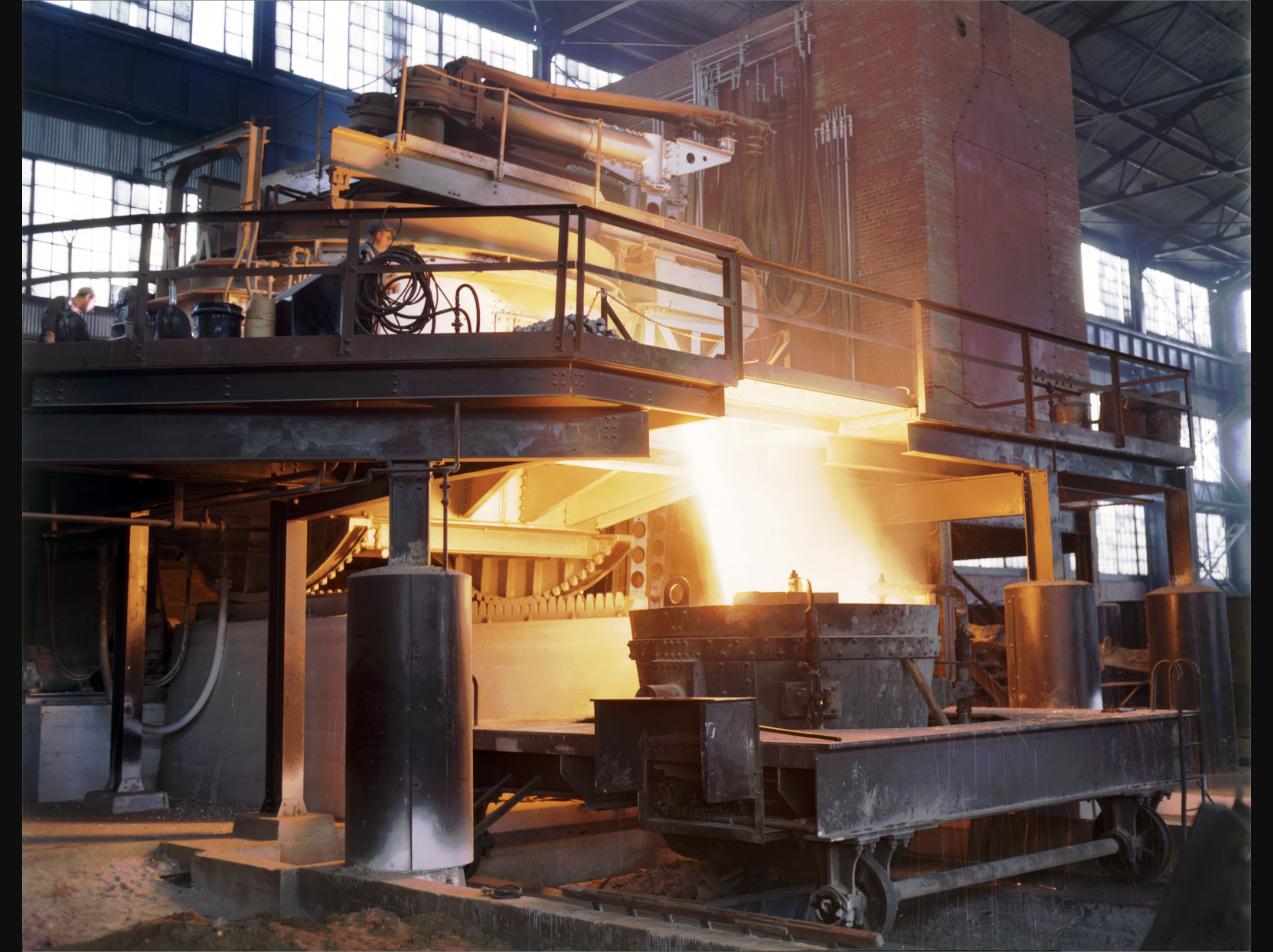
The engineering bet underneath it is the more interesting part. Nearly all the sheet steel in an American-built car today still comes from a blast furnace, a design that hasn’t fundamentally changed in a century. Blast furnaces melt iron ore and coke together at enormous scale and essentially never shut off, because relighting one can take months and can ruin the furnace lining. Electric arc furnaces work differently: they melt scrap and refined iron with electricity and can start and stop like ordinary machinery. For decades, that flexibility came with a tradeoff. EAF steel was good enough for rebar and structural beams, not the defect-free sheet that has to stretch into a car door without cracking. HPLS is trying to close that gap with an on-site Direct Reduction Process unit, turning raw iron ore into purified sponge iron before it reaches the furnace, chasing blast-furnace-quality metal without a blast furnace’s coal bill or, the partners say, about 70% of its carbon output. If the quality holds at automotive scale, it becomes a template every other manufacturer chasing tariff protection will want to copy.
The part that won’t make a press release is the workforce bet underneath the metal one. River Parishes Community College is building a dedicated Hyundai Steel training center in Donaldsonville, targeted to open in 2027 — two years before the mill needs a single operator. Hyundai Steel has also lined up a research partnership with LSU covering metallurgy, materials science, and the robotics that will eventually run the plant floor. Automakers building assembly lines is routine. Automakers underwriting a community college wing is not. It’s what a company does when it expects to need trained workers in that parish for a very long time.
None of this changes the price of a Hyundai or Kia sitting on a dealer lot today. But a parts shortage can idle an assembly line for a week. A steel supply chain you don’t control can idle one for a lot longer than that — and that’s what it looks like when two automakers decide they’d rather own the risk than keep renting it.
Do you think more automakers should be buying their way into raw materials like this, or is a $5.8 billion steel mill a bet that only pays off if the trade war keeps escalating?