
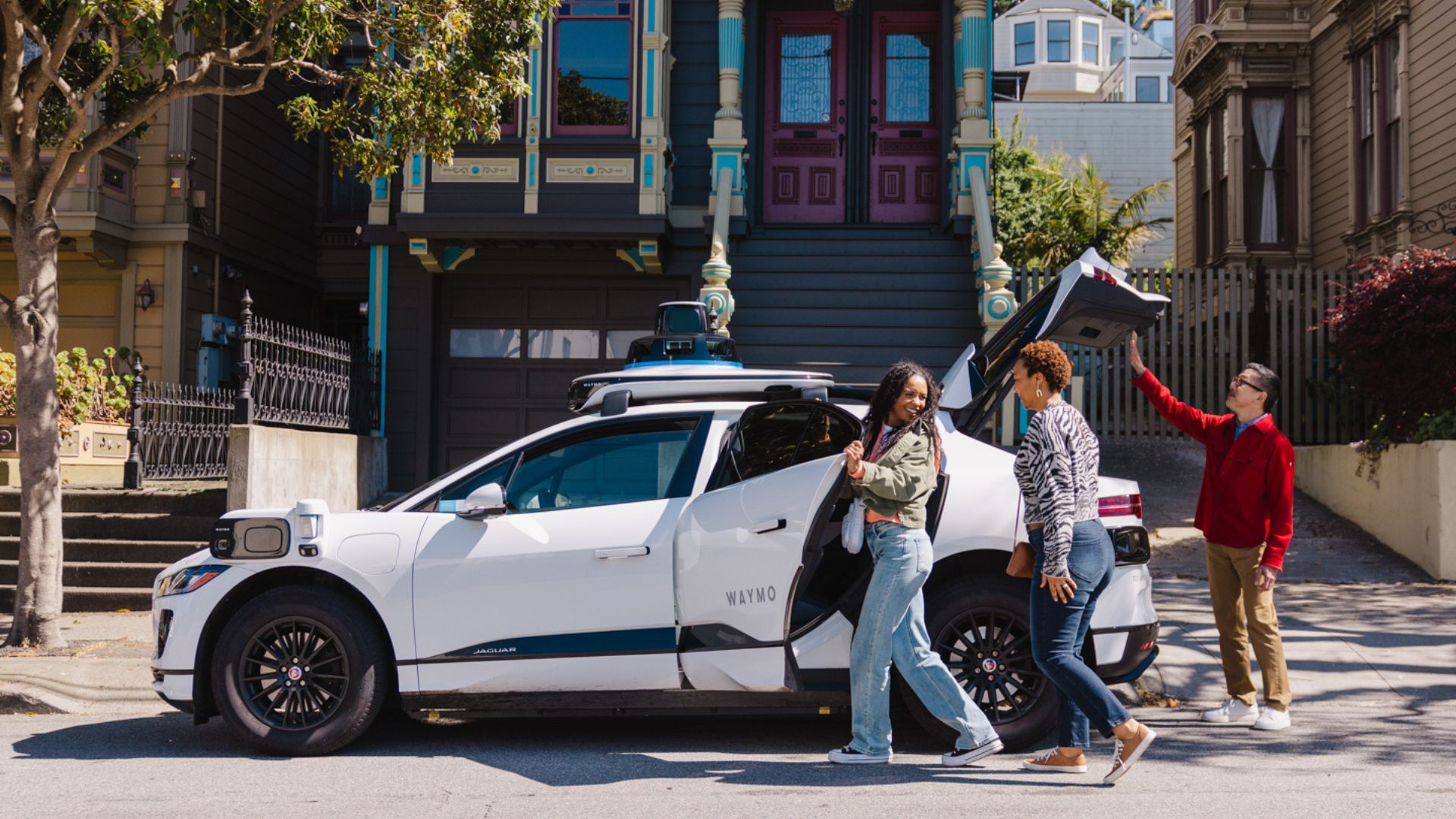
Waymo’s driverless cars have logged tens of millions of rider-only miles in Austin without generating anything close to the headlines a fatal crash would produce. So there’s something almost funny about the story that actually broke through this month. It isn’t about a crash. It’s about parking.
According to citation data reported by The Wall Street Journal, Waymo’s Austin fleet has picked up 83 parking tickets worth $9,325 since the company launched driverless rides there in March 2025. That includes $7,433 already paid and another $1,892 still working through the city’s court system. The fines range from a $20 slap on the wrist to a $519 citation for parking in a spot reserved for drivers with disabilities. Sixty-four tickets were for sitting in a tow-away zone. Thirteen were for ignoring a parking meter. Nine were for double-parking. A few of the stranger ones involve blocking a railroad crossing and blocking the entrance to a church.
Waymo’s response was almost defiantly boring. “We do not expect different treatment in regard to ticketing,” a company spokesperson said. Waymo says it reviews every citation with the city and will contest the ones it believes were issued in error.
Here’s the question nobody seems to be asking: why can’t a fleet of cars bristling with lidar, radar, and enough onboard compute to navigate downtown traffic reliably recognize a curb painted red? The answer has almost nothing to do with the sensors. It has to do with money.
The Parking Lot Nobody Wants to Pay For
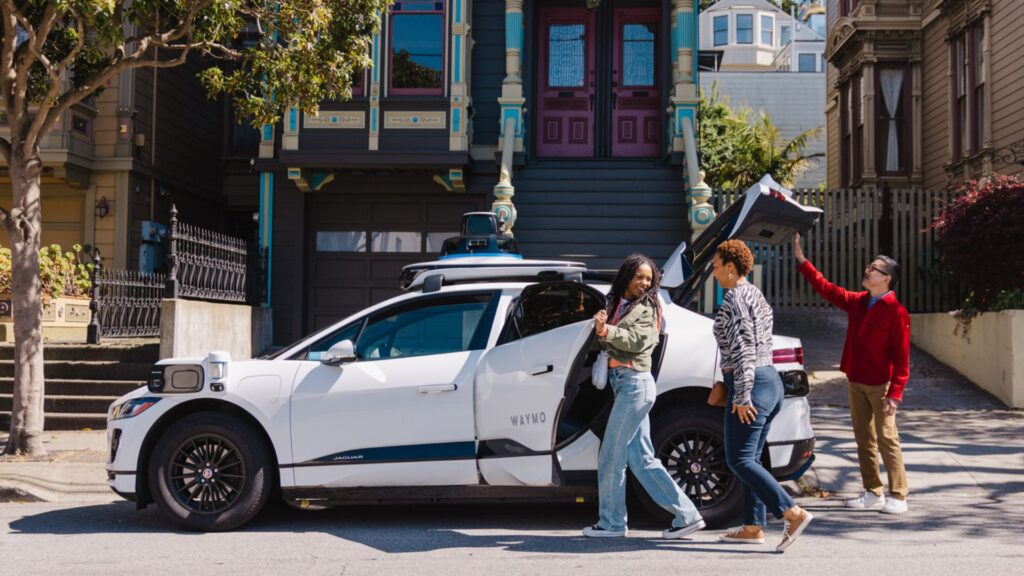
Every robotaxi has downtime. Between rides, a car has to go somewhere. Waymo has an actual answer for that: an operations depot in Austin, run in partnership with Uber, where cars can charge and get cleaned. Most idle Waymos, though, don’t go there. They sit in ordinary public parking spaces, waiting to get hailed again.
That’s not a bug. That’s the business model. Sending a car back to a depot between every ride burns battery, adds unpaid miles, and ties up a limited number of charging bays and staff. Parking on a public street costs nothing, until it doesn’t. A city curb is, functionally, free real estate for a company that needs somewhere to stage a few hundred idle vehicles at any given moment. The ticket is simply the toll for using it, and right now that toll is cheap.
Set $9,325 against a company running more than 200,000 paid trips a week nationally as of last year, and the number stops looking like an accident. Waymo has already shown it’s willing to treat certain costs as strategic tools rather than mistakes. It looks like a rounding error somebody happens to have receipts for.
The One Ticket Designed to Actually Hurt
The single largest fine on Austin’s list, $519 for parking in a disabled space, is worth sitting with for a second. Cities set ADA parking fines deliberately high, specifically so the penalty functions as a real deterrent rather than a cost of doing business. It’s the one violation category engineered to sting. Waymo’s mapping systems are supposed to encode curb regulations block by block, and the fleet still ran afoul of the country’s strictest parking rule more than once.
That’s not really an indictment of Waymo’s engineers. It’s a window into a bigger, uglier problem: there is no national, standardized, machine-readable database of curb regulations for any company’s mapping team to check against. Every city paints its own curbs, hangs its own signs, and updates its own loading zones on its own schedule, with no requirement to tell anyone, let alone a robot, when a rule changes. Waymo has to encode this information by hand, city by city, then keep it current as municipalities repaint, repermit, and rezone. It is a genuinely unglamorous problem, and it does not scale cleanly. Every new city Waymo enters means redoing a meaningful chunk of that work almost from zero.
A Ticket That Doesn’t Feel Like a Ticket
There’s a deeper issue buried in this story, and it has less to do with Waymo than with what a parking ticket is actually supposed to accomplish.
A citation only works as a deterrent if somebody feels it. For a human driver, that means points on a license, real money out of a real paycheck, and the minor humiliation of finding a slip of paper under the wiper. None of that applies to a fleet vehicle with no driver behind the wheel. There’s no license at risk, no insurance premium creeping up at renewal, nobody standing on the sidewalk feeling embarrassed. The fine gets paid by an accounting department, logged as an operating cost, and the same car can be back in the same spot within a week if the math still works.
None of this is actually new. Bird and Lime ran an almost identical playbook with scooters back in 2018: drop thousands of them onto sidewalks, treat the public right-of-way as free storage, and treat the occasional fine or impound fee as cheaper than renting real estate. Cities eventually caught up, with permits, corrals, and per-vehicle fees. Robotaxi operators are running the same experiment now, a few years behind schedule and driving cars instead of scooters. San Francisco has already begun writing rules about where robotaxis are allowed to idle, and Austin, which has separately accused Waymo of illegally passing stopped school buses, is unlikely to be the last city that decides its curbs are worth defending.
Why This Story Exists At All
Part of the reason we know any of this comes down to Texas’s public records law, generous enough that a reporter could actually pull real citation data. Waymo also runs driverless service in San Francisco, Los Angeles, Phoenix, Atlanta, Dallas, Houston, Miami, Orlando, Nashville, and San Antonio. There is no public, standardized tally of parking fines across those cities. Nobody outside Waymo currently knows what the real number looks like once you multiply Austin’s math across ten-plus metro areas and a fleet that keeps growing. NHTSA tracks crashes and safety complaints involving automated vehicles, and has even pushed for changes like steering wheel requirements for robotaxis, but it has no mandate over parking enforcement, because that’s a municipal matter, not a federal one.
None of this means the underlying technology is failing. Years of driving data across multiple cities suggest the actual act of driving, staying in a lane, yielding to pedestrians, not running red lights, is something Waymo’s software does reasonably well. Parking, it turns out, is a policy problem wearing an engineering costume.
The car isn’t confused about the rules. It’s done the math, and the math says a parking ticket is cheaper than a parking garage.