
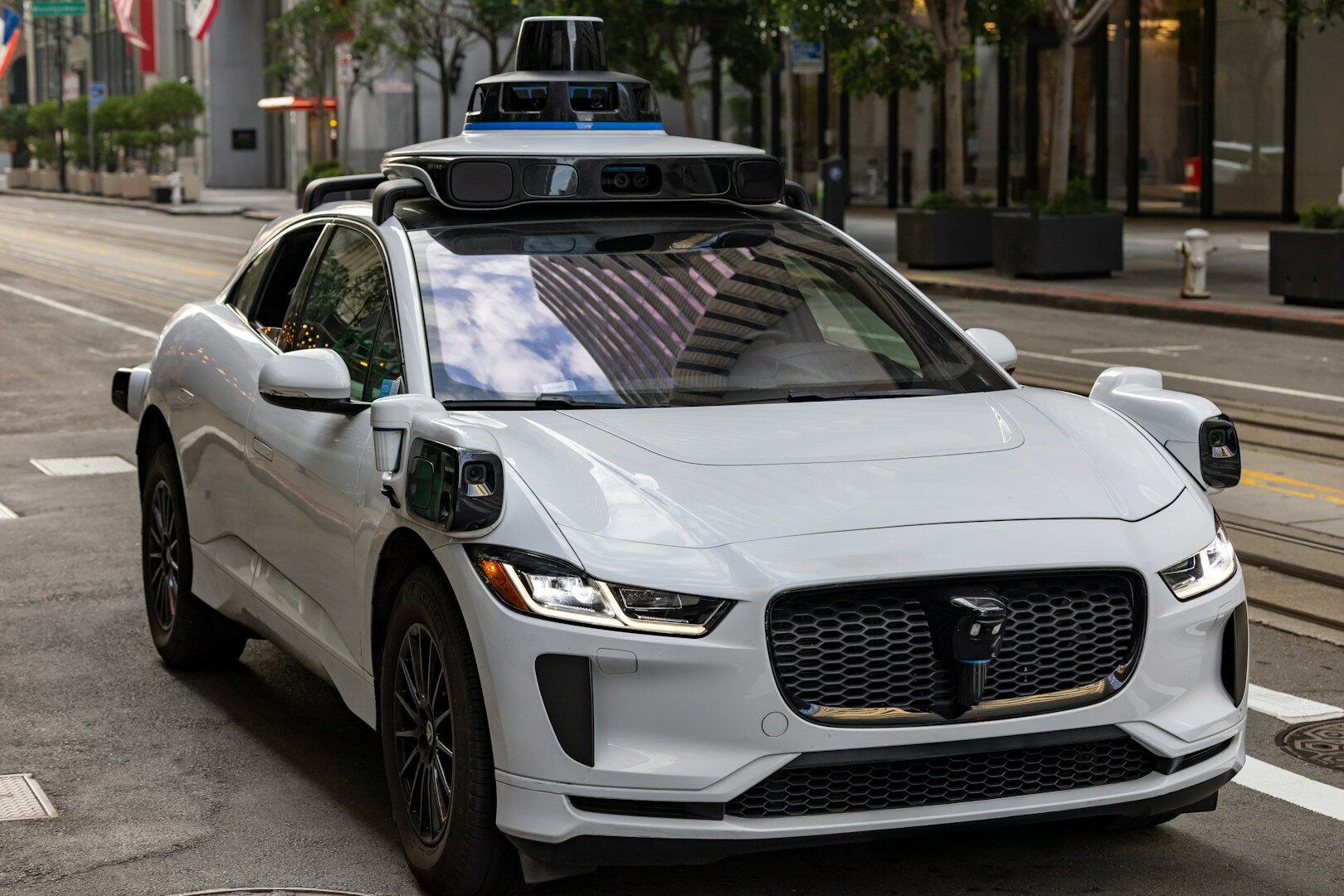
Waymo wants you to believe the free rides in its new robotaxi are a nicety. The company’s own blog calls it a “Trusted Tester” rollout, a chance to gather feedback before charging full fare. That’s technically true. What the blog does not mention is that Waymo currently has no legal way to charge for those rides even if it wanted to. That’s because California’s utility regulator hasn’t approved it yet. The free ride isn’t a gift. It’s a company waiting out a timeout it didn’t call.
Since late May, select riders in San Francisco, Los Angeles, and Phoenix have been able to hail the Ojai. It’s Waymo’s first vehicle built from scratch to be a robotaxi, rather than a retrofitted production car. It keeps a steering wheel and brake pedals, but no driver ever touches them. Instead it leans on 13 cameras, six radar units, and four lidar sensors running Waymo’s sixth-generation self-driving software. The shell comes from Zeekr, a Chinese automaker owned by Geely; the sensors and computers go in afterward at a Waymo facility in Mesa, Arizona. Ride in an older Jaguar I-Pace Waymo and you pay the standard fare. Ride in the new Ojai, and for now, it’s free.
Why California Is Different
The reason has nothing to do with hospitality. California is the only state that makes autonomous vehicle companies clear two separate regulatory hurdles before they can run a commercial service. The Department of Motor Vehicles decides whether a company’s cars are safe enough to be on the road at all. The California Public Utilities Commission decides whether that company can charge passengers for the privilege. Texas and Arizona, by contrast, let robotaxi companies launch paid service with comparatively little oversight. Waymo applied to the CPUC in January to add the Ojai to its fleet and to expand deep into Northern and Southern California. Nearly six months later, the agency still hasn’t signed off, and it has extended its review through September 25.
That’s not bureaucratic foot-dragging for its own sake. In December, a power outage in San Francisco knocked out traffic signals and left dozens of Waymo vehicles frozen mid-intersection. It’s an episode The Auto Wire covered in detail at the time. It wasn’t the first time a driverless fleet had gone still at the worst possible moment. Cruise’s robotaxis did much the same thing when a storm knocked out signals in Houston back in 2023. That was less than a year before California pulled Cruise’s driverless permit entirely. The CPUC now wants proof of exactly how Waymo’s remote operators respond when the grid fails. That’s the moment a fleet of cars with no driver suddenly has no idea what a dead traffic light means.
The Complaints Piling Up
The second sticking point is harder to explain away. A labor union representing ride-hail drivers filed a complaint alleging Waymo vehicles have carried unaccompanied minors. That’s a direct violation of California transit law. Regulators are now demanding proof the Ojai can detect and refuse that kind of ride. It’s a genuinely hard problem. A human cab driver can glance in the rearview mirror and tell a solo ten-year-old to go find a parent. A robotaxi has no equivalent instinct, only whatever age verification the app itself provides. Waymo has already drawn scrutiny for how its cars behave around stopped school buses in Austin.
None of this is happening in a vacuum. Waymo also just recalled thousands of vehicles in California. That followed one blowing through an active construction zone with the Highway Patrol in pursuit. That’s not the kind of headline that speeds up a regulatory review.
The Free Rides Serve Waymo’s Own Timeline
Here’s the detail that should catch a car person’s attention. Waymo spokesperson Ethan Teicher said the company won’t start charging for Ojai rides until California approves the application. Even then, it plans to hold off “until we are satisfied with the progress made through our Trusted Tester” period. Translation: a green light from the state might not actually end the free rides. The regulatory delay happens to line up neatly with a data-collection timeline Waymo would probably want anyway. Free rides generate enormous amounts of real-world driving data with none of the customer-service liability that comes with a paid product. A stalled application is annoying. A stalled application that also serves your own R&D calendar is a lot easier to live with.
Why the Steering Wheel Stayed
The steering wheel is its own quiet tell. Amazon’s Zoox and GM’s Cruise Origin were both purpose-built robotaxis designed with no manual controls at all. That required a separate federal exemption from the National Highway Traffic Safety Administration, since existing crash standards assume a human sits behind a wheel. Waymo could have gone that route with the Ojai. It didn’t. Keeping a wheel and pedals lets the Ojai qualify under existing federal vehicle safety standards, instead of waiting on its own NHTSA exemption. That’s a process that has taken other companies years to clear. That’s a design decision shaped as much by a regulatory calendar as by engineering.
Then there’s the matter of where the Ojai actually comes from, which matters more than it sounds. The United States is set to restrict Chinese-made connected-vehicle hardware and software starting next year. That rule squarely targets cars with foreign-controlled computing systems riding around American streets. Zeekr, one of several Chinese brands racing upmarket right now, builds the Ojai’s body. Waymo installs all the cameras, sensors, and computing hardware afterward, domestically. The company says that keeps the finished vehicle on the right side of the coming ban.
What This Means for the Road Ahead
Free rides are a good deal for early riders and a bad omen for everyone else in the transportation business. Taxi and rideshare drivers see the CPUC’s slow walk as their last bit of leverage. It’s the last thing standing before Waymo can legally undercut every human-driven fare in the state. Waymo, meanwhile, gets a legally mandated beta test that doubles as marketing. And it can blame the delay on regulators instead of admitting it wanted the runway anyway.
None of this is unique to Waymo, and that is the bigger point. California’s two-agency approval process is likely to become the model other states borrow as robotaxi complaints pile up elsewhere. It’s not a quirk they’ll avoid. Waymo has already flipped the switch in Seattle and says Denver, Las Vegas, and San Diego are next. Every one of those markets will eventually ask the same three questions California is asking right now. What happens when the power goes out? Who is actually riding in the back seat? And whose hands built the computer that is driving?
Retrofitting sensors onto a Jaguar proved Waymo’s engineers could build a self-driving car. Scaling up to tens of thousands of purpose-built Ojais a year at its Arizona plant proves the company can build a car business. What it hasn’t proven yet is that a state regulator trusts it to run that business without a chaperone. Until the CPUC says otherwise, the free ride isn’t a perk. It’s homework Waymo hasn’t finished.