
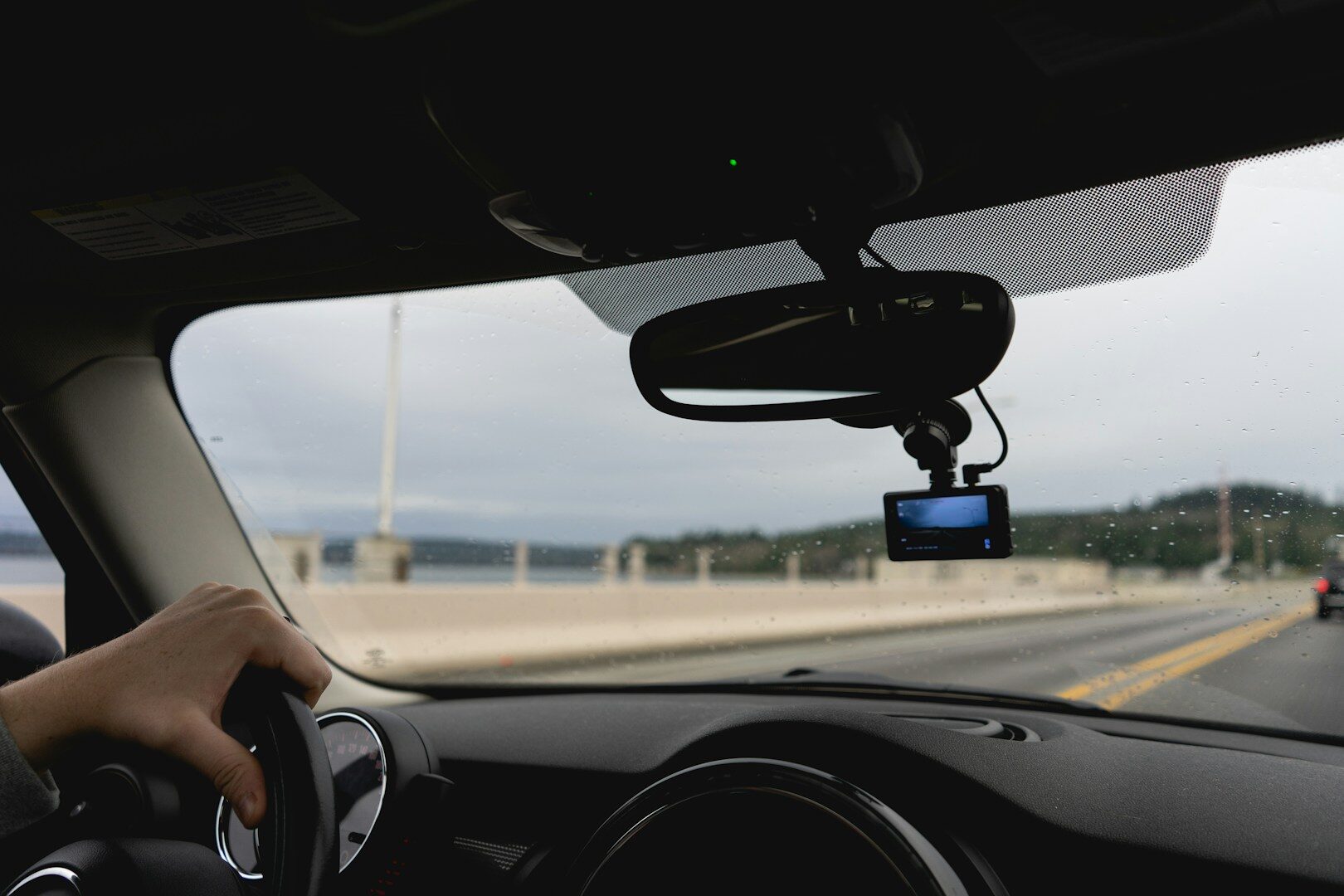
For the better part of a decade, the sales pitch behind putting an AI camera on a semi’s windshield has been simple: it protects the driver. When something goes wrong, the footage is supposed to back up the trucker, not the shipper’s insurance adjuster or a plaintiff’s attorney. Motive Technologies has built a nearly 100,000-fleet business on that pitch. A federal lawsuit filed last week in California argues the same camera has a second, unadvertised job: quietly cataloguing the identity and location of everyone who happens to drive near the truck, whether they signed up for it or not.
On July 24, drivers Adam Dean and Christian Erickson filed a proposed class action against Motive in the U.S. District Court for the Northern District of California, case No. 3:26-cv-07675. Erickson drove for a FedEx Ground contractor in California; Dean drove for an Ohio-based carrier. Neither is arguing that Motive violated his privacy in the way most people picture when they hear “AI dashcam.” The complaint’s real target is what the camera does to everyone else on the road: it argues Motive’s dashcams function as Automated License Plate Readers, quietly logging plate numbers, vehicle images, and timestamped GPS coordinates on every vehicle that passes through frame, then routing that data to Motive’s servers.
That distinction matters because California has regulated this exact category of technology since 2016. Civil Code sections 1798.90.5 through 1798.90.55 were written to police license-plate scanning vans operated by repo companies and law enforcement, and they require anyone running an ALPR system to publish a usage and privacy policy explaining what is collected, how long it is stored, who can access it, and why. The lawsuit’s central claim is that Motive never published one, despite what plaintiffs describe as surveillance conducted, in the complaint’s words, “on a massive scale.”
Here’s the detail that should worry every company in this category, not only Motive: California’s law does not care why a system captures a plate. It only cares whether the system is capable of identifying plate characters automatically and cataloguing them. A forward-facing AI dashcam built to flag tailgating and lane drift uses essentially the same computer-vision pipeline that reads a plate. Motive did not need to design a license-plate database on purpose for the cameras to arguably become one. That’s a structural problem for the entire fleet-safety camera business, not a rogue feature at one vendor. Samsara, Lytx, and Netradyne all sell systems built on the same underlying capability.
The complaint doesn’t stop at plates, either. Dean and Erickson allege that Motive’s inward-facing camera, the one pointed at the driver to catch drowsiness and distraction, collected biometric identifiers and sent them to Motive’s servers without consent. That’s worth sitting with, because driver-facing safety cameras are the fastest-growing part of this industry, sold to fleets explicitly as a way to lower insurance premiums by proving fatigue monitoring is in place. If a court eventually treats facial geometry captured for a safety score the way biometric privacy statutes treat a fingerprint, the economics behind pitching these systems to insurers gets a lot more complicated.
The math behind this case is not small. California’s ALPR statute carries statutory damages, and the complaint seeks $2,500 per class member on top of punitive damages and an injunction. Motive advertises roughly 1.3 million drivers on its platform. Even a modest slice of that number certified as a class would produce exposure closer to what an automaker faces in a safety recall than what a software vendor typically budgets for litigation. Fleet telematics companies have quietly taken on automaker-scale legal risk while pricing themselves like SaaS subscriptions.
This also isn’t happening in a vacuum. The Auto Wire has covered a West Virginia man now facing felony charges for tearing down license-plate cameras he says the county doesn’t even own, and small Connecticut towns pulling out of Flock’s camera network within weeks of a Georgia crime-center employee getting caught misusing that same network to track her partner’s car. The pattern across all of it is the same: plate-reading systems get deployed first, and the legal disclosure obligations that come with them get discovered later, usually in a courtroom.
The part fleet owners should pay attention to is who else gets named if a case like this survives a motion to dismiss. Trucking companies didn’t design these cameras, but they ordered the installation, and drivers were never asked to opt in. If a court finds Motive’s system operated as an undisclosed ALPR, the carriers that mandated it as a condition of employment don’t automatically get to point at their vendor and walk away. Insurance discounts earned by installing these systems could end up weighed against a new category of employment liability nobody underwrote for.
None of this means AI dashcams are going away, and commercial fleets have real, defensible reasons to run them. But an evidence machine built to prove a trucker’s innocence doesn’t stop recording once he’s cleared. It keeps rolling on everyone else who happens to share the road with him, and this lawsuit is the first serious attempt to make somebody answer for that. Whatever a jury eventually decides about Motive specifically, the definition of a “safety camera” in a commercial vehicle just got a lot more expensive to get wrong.