
Paige Forte did not chase a stolen Charger across three counties, crack a gang case, or find a missing child. According to Rockdale County Jail records, the 30-year-old supervisor at the Conyers Police Department’s Real-Time Crime Center used one of the most powerful vehicle-tracking databases in the country to keep tabs on her domestic partner’s car. Over four months. More than 30 times.
That is the entire scandal, as scandals go. Forte was arrested last Wednesday and charged with prohibited use of retained license plate data, a Georgia offense that treats personal snooping through an automated license plate reader system as a crime rather than just a firing offense. The Georgia Bureau of Investigation is handling the criminal side after Conyers PD requested outside review, and says Forte accessed the system for non-law enforcement purposes. She is on administrative leave. Conyers Police Chief Scott Freeman said the department would continue to hold itself to the highest standards of accountability.
Here is the uncomfortable math: Forte is not rare, and she is not even the interesting part of this story anymore. Georgia has produced so many of these cases in the past year that they blur together.
Three Fayetteville officers were fired this spring. Three Cherokee County deputies were disciplined. A DeKalb County deputy voided the warranty on an 18.9 million dollar surveillance contract in under nine months. A Greene County deputy was removed. Five Albany officers faced charges in June. Add Forte and the documented count of Georgia officers disciplined or charged over personal Flock searches in the past year climbs to twenty.
Forte did not get caught by a jealous ex or a nosy coworker. She got flagged by software. In April, Flock Safety rolled out a tool it calls Audit Assistance, part of a broader Trust and Compliance suite the company built after years of stories just like this one. The tool does not stop an officer from typing a plate into the search bar. It reviews searches after the fact, using AI to flag activity that looks like it falls outside a department’s policy, then routes the flagged searches to a supervisor for review. Conyers ran that audit, found Forte’s pattern, and called the GBI. Flock’s own compliance materials describe the tool as designed to surface atypical activity early so it can be reviewed through a documented workflow, which is roughly what happened here.
Here is the part most drivers never think about: a Flock camera does not just belong to the department that bolted it to a pole. Agencies routinely share access across county and even state lines, so a supervisor in Conyers can, with the right permissions, search plate captures from cameras her own department never installed. The database is not a local filing cabinet. It is a shared network, and the search bar does not know or care whether the person typing a plate is investigating a burglary or checking on a partner.
Here is the twist nobody at the podium mentions. The same audit trail that catches officers like Forte has also gotten harder for the public to check independently. After the wave of misuse cases, Flock began stripping officer names out of audit logs shared across agencies, replacing them with anonymized ID numbers, and dropping license plate numbers from those records entirely. The company says roughly 200 law enforcement leaders pushed for the change after activists used public audit logs, obtained through open records requests, to identify undercover officers by name next to active investigations. Flock’s position is that nothing was deleted, only that fewer details are visible to outside requesters by default. That may be a reasonable trade for officer safety. It is also, functionally, a smaller window for anyone outside a police department to catch the next Paige Forte before the vendor’s own software does.
An audit log is only as honest as what it is willing to show you.
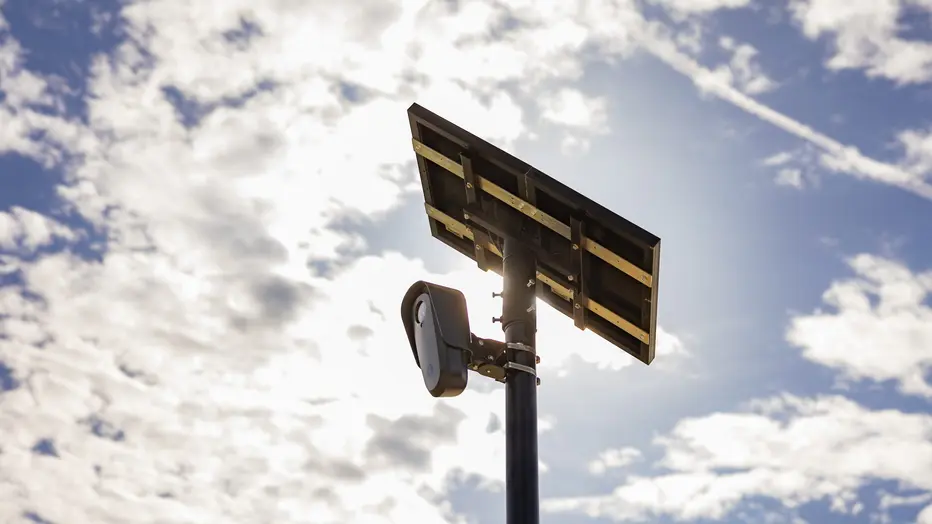
None of this requires anyone to be a suspect, or even a person of interest, before ending up in the system. Flock’s own retention policy holds plate captures for 30 days by default before automatic deletion, which sounds reassuring until you realize that is 30 days in which any officer with access, anywhere on the shared network, can pull up a car’s movements without a warrant, so long as the software accepts the case reason typed in. For most owners, this has been an invisible cost of driving through a Flock-covered county: your plate gets read and logged every time you pass one of those solar-powered poles, whether you are the victim of a crime, a witness, or somebody’s ex.
A pending Fourth Circuit case, teed up by a recent Supreme Court ruling on cellphone-location tracking, could eventually decide whether searches like these need a warrant in the first place. Until then, the only real check on an officer’s curiosity is a log built and edited by the same company selling the cameras.
Forte will have her day in court, and Conyers PD gets to point to her arrest as proof the system polices itself. In a narrow sense, it did. But the bigger story here is not a supervisor who could not stop checking a partner’s location. It is a surveillance network that got better at catching misuse internally in the same year it made that misuse harder for everyone else to independently verify. The camera on the pole was never the part worth worrying about. It is the log of who looked, and how much of that log you are actually allowed to see.