
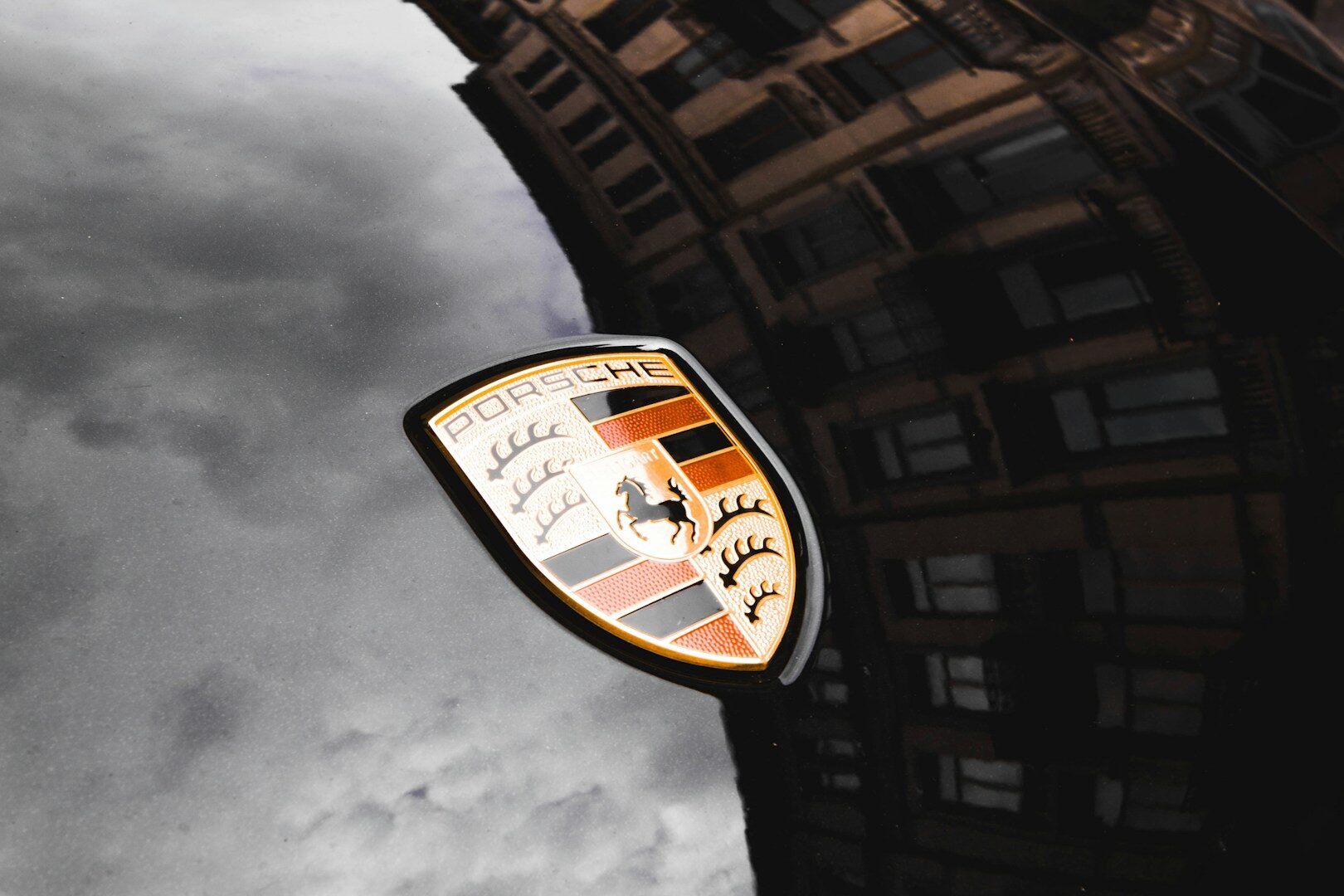
Porsche’s supervisory board didn’t just approve another 5,000 job cuts this week. It quietly admitted that the company’s own turnaround math, barely four months old, was already wrong.
Garage Deals: Nowell Leather’s Hand-Stitched EDC Gear Belongs in Every Gearhead’s Glovebox
Start with the number that should stop you before any talk of China or tariffs. In March, when new CEO Michael Leiters unveiled the first wave of layoffs tied to his Strategy 2035 overhaul, the figure on the table was 3,900 positions eliminated by 2030. That already qualified as severe for a company with roughly 40,000 employees. This week, the total became 8,900. Nobody trimmed the plan. They more than doubled it, in less time than it takes to move a new engine from clean-sheet design to production.
The Official Reason Isn’t the Real Reason
The stated cause is weakening demand in China and declining earnings, and that part is true. Porsche’s own first-half figures show China deliveries down 32 percent, and the company has said plainly it won’t chase volume there with discounts. But a bad China quarter explains a bad year. It doesn’t explain why a four-month-old restructuring plan needed to grow by more than 100 percent.
Read next: 10 Best Automotive Scanners in 2026: Top OBD2 Scan Tools Reviewed
It helps to see the scale of what preceded this. Porsche’s operating margin collapsed from 14.1 percent in 2024 to 1.1 percent in 2025, with operating profit falling from 5.64 billion euros to 413 million, according to the company’s own annual results. Extraordinary charges of roughly 3.9 billion euros did most of the damage: about 2.4 billion tied to the realignment itself, 700 million from unwinding battery investments, and 700 million from new U.S. tariffs. Leiters took over as sole CEO in January, inheriting a company that had spent four years being run part-time by Oliver Blume, who was also running Volkswagen Group at the same time. That dual arrangement drew criticism from analysts for years before the numbers finally forced a change.
What Porsche Actually Spent This Year Burying
The real story sits in what Porsche has quietly dismantled since the spring. In May, one announcement shut down three subsidiaries at once: Cellforce Group, the in-house battery cell venture it broke ground on in 2021; Porsche eBike Performance; and Cetitec, a software developer that wrote in-car data code. Weeks earlier, Porsche had already agreed to sell off its stakes in Bugatti and Rimac Group entirely. Every one of those businesses was built in the same window, roughly 2021 to 2023, when a newly public, cash-flush Porsche believed its future was a vertically integrated technology and lifestyle company, one that made its own battery cells and sold e-bikes alongside 911s.
That bet is over. The 8,900 jobs are what it costs to bury it.
Cellforce is worth sitting with, because it explains something bigger than one company’s misstep. Battery cells are a scale business. They only turn a profit when built by the millions, and a company producing a few hundred thousand cars a year across a dozen different powertrains was never going to reach that volume on its own. No amount of engineering talent changes that arithmetic. It’s the same expensive lesson several automakers have learned trying to build their own cell supply: owning production sounds like control, but it’s really a bet that you can out-scale companies whose entire business model is scale.
Why Layoffs Like This Never Arrive All at Once
Here’s the detail most coverage of this story will skip past: restructuring isn’t free, and in Germany it’s especially not free. Porsche’s own CFO told shareholders in March that its recalibration measures would keep weighing on 2026 earnings by hundreds of millions of euros before any savings materialize. Layoffs at a German industrial company don’t happen with a same-day notice and a box for your desk photos. They’re negotiated, role by role, through a severance framework worked out with the works council, inside a supervisory board that German codetermination law requires to be half-elected by employees. That’s exactly why a number like this arrives in installments instead of all at once. Management proposes a figure it can defend publicly. Labor negotiates. The real scope gets found later, at the table. The jump from 3,900 to 8,900 isn’t Porsche panicking. It’s the negotiation catching up to a plan that was undersized from the start.
The Reshoring Irony
The other tell is what Porsche is doing at the exact same time it’s cutting German jobs: it’s reportedly weighing whether to pull Cayenne production out of Slovakia and bring it back to Germany. A company trying to escape expensive German labor doesn’t bring work home while laying off German workers. A company that’s decided its real problem was organizational, not geographic, does exactly that. These cuts aren’t chasing cheaper hands. They’re chasing a smaller org chart.
None of this means Porsche is abandoning what makes it Porsche. Leiters has already ruled out a fully electric 911, and the combustion Macan is still outselling its electric replacement by thousands of units despite the expense of keeping two separate platforms alive at once. The product side of this story is a company relearning what its customers actually wanted. The layoff side is the invoice for the years it spent building a company for customers who never showed up.
Watch the number, not the news cycle. Porsche didn’t go from 3,900 to 8,900 because five thousand more jobs suddenly became unnecessary in four months. It grew because the first number was never the real one. If that pattern holds, 8,900 won’t be either.