
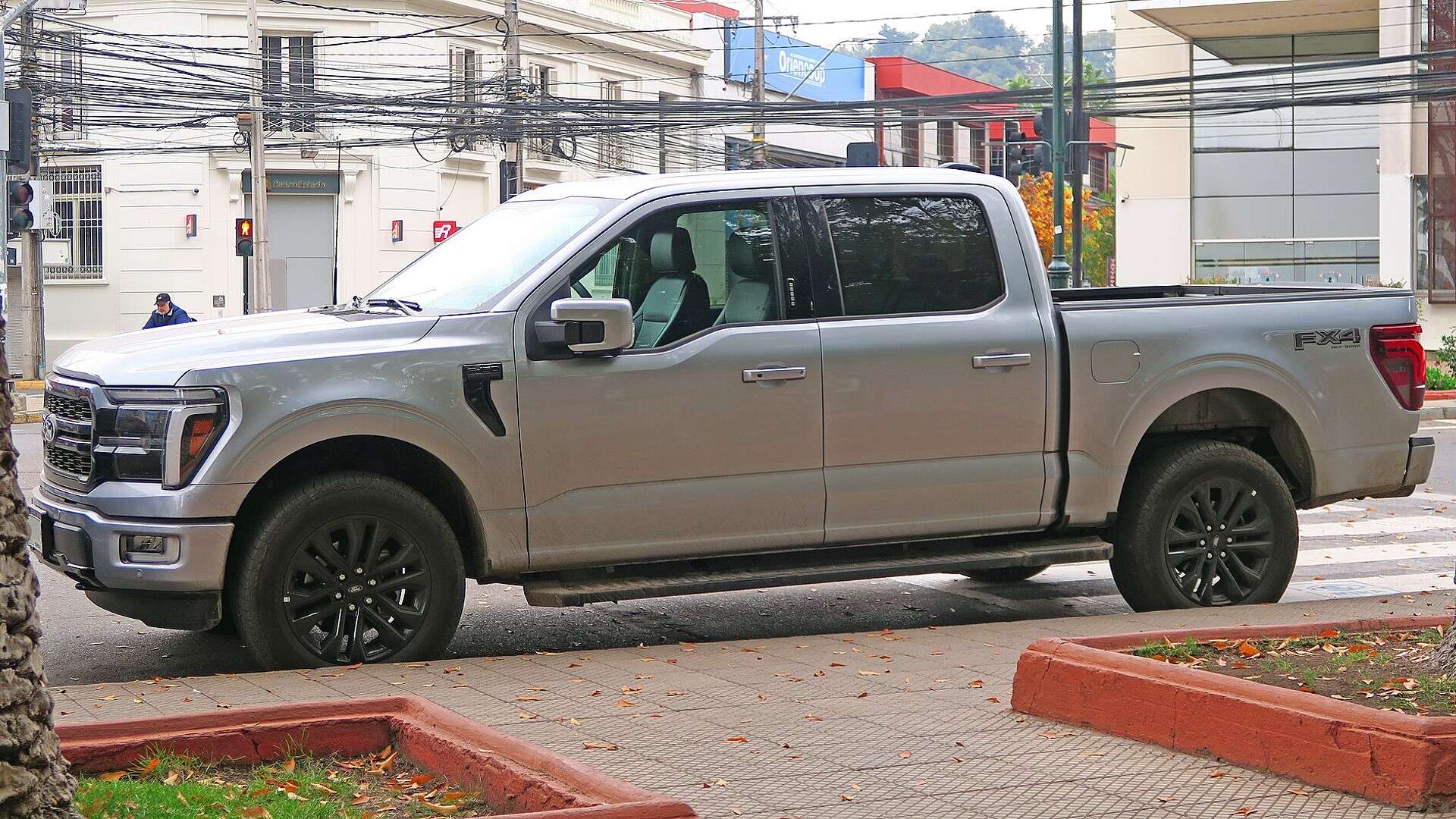
Ford is pulling auto start-stop from 2027 F-150s with the 5.0-liter V8 and keeping cylinder deactivation. Start-stop lost its EPA greenhouse-gas credit in February. Cylinder deactivation never had one, because its fuel savings already show up on the government test that sets the window-sticker number.
According to Pickup Truck Talk, Daniel Peake, Ford Blue utilities communications manager, confirmed the changes in writing on Tuesday, Oct. 13. The outlet had reported on Oct. 1 that the V8 would lose cylinder deactivation, then corrected that story after asking Ford. Peake’s email, as the outlet published it, settles both features:
“Cylinder deactivation aka Variable Displacement Engine (VDE) technology remains for 2027.”
“Auto Start-Stop has been eliminated from 2027 model-year trucks equipped with the 5.0L engine.”
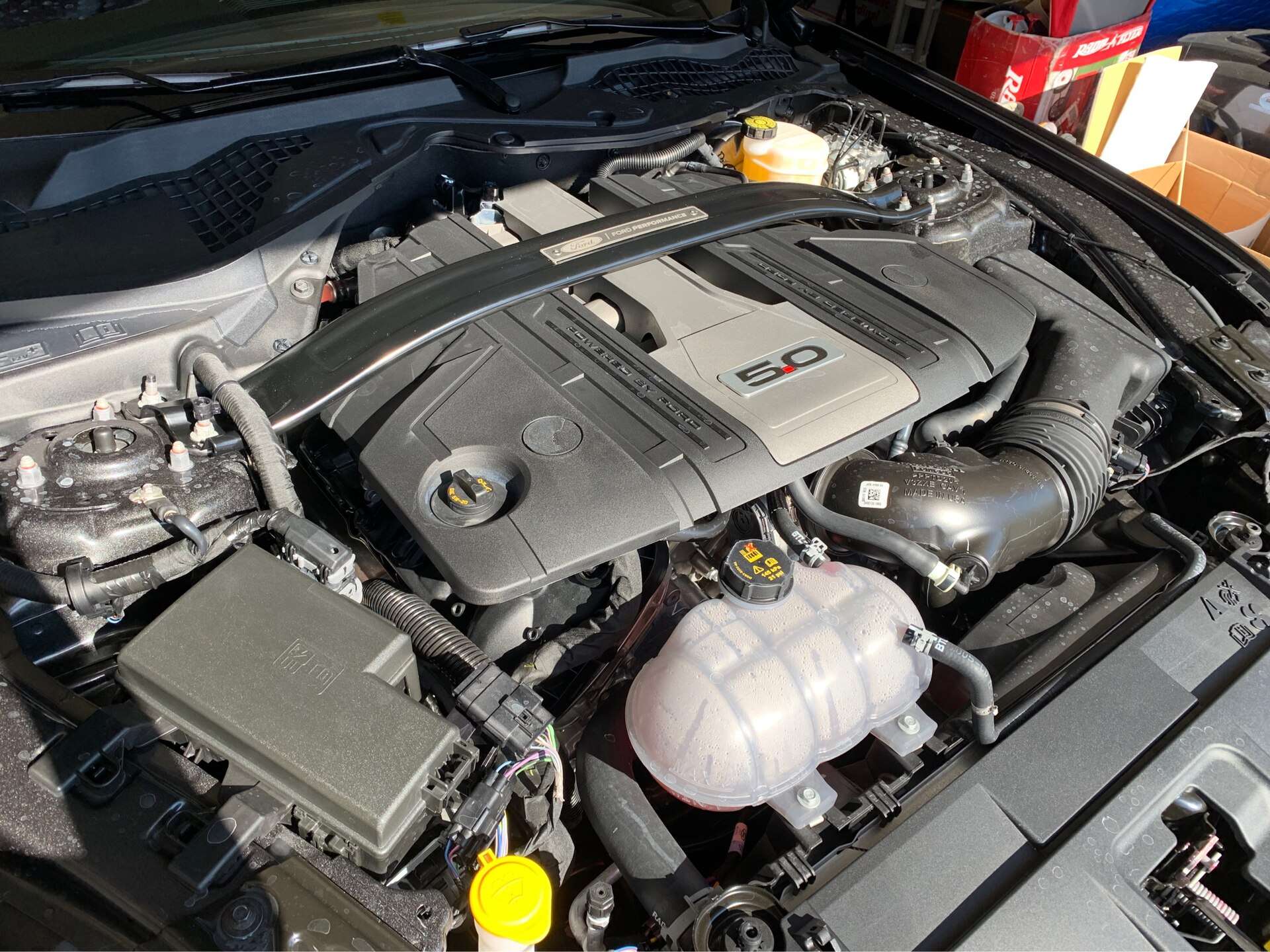
Peake also told Pickup Truck Talk that the Coyote V8 “receives minor emissions-related updates, including a new 350-bar direct-injection fuel system and revised engine sensors.” Ford didn’t put a number on any fuel-economy or power change, and the statement covers only 5.0-liter trucks. It says nothing about the EcoBoost V6s.
Start-stop was worth 4.4 grams a mile on a truck
By EPA’s own account, start-stop spread largely because of a compliance credit. Under 40 CFR 86.1869-12, EPA kept a “menu” of off-cycle technologies, meaning features whose real-world savings the agency’s lab test doesn’t fully capture. An automaker could claim a fixed credit for each one without proving it on a dyno. For engine idle start-stop, the light-truck credit is 4.4 grams of CO2 per mile if the truck also has an electric heater circulation system, or 2.9 grams without one. Cars get 2.5 and 1.5.
Multiply 4.4 grams a mile by F-Series volume and it stops being a rounding error. The credit made start-stop one of the cheapest ways for a truck maker to close a gap to the federal CO2 target, which goes a long way toward explaining how it reached V8 pickups whose owners never asked for it.
On Feb. 12, 2026, EPA Administrator Lee Zeldin signed the final rule rescinding the 2009 greenhouse-gas endangerment finding, along with every federal GHG emission standard for highway vehicles that followed from it. In the agency’s announcement, EPA said the action eliminates the start-stop credit and all other off-cycle credits. Zeldin said automakers shouldn’t be rewarded for technologies that are “merely a climate participation trophy with no measurable pollution reductions.” The release put start-stop on about 60 percent of new cars. That’s EPA’s figure, and the release doesn’t say where it came from. Zeldin had promised to go after the feature nine months earlier.
The menu didn’t vanish entirely. The section was still in the eCFR as of Oct. 8, recast around how off-cycle technologies feed into Corporate Average Fuel Economy calculations through model year 2032. CAFE no longer carries a fine, though. NHTSA’s SAFE III final rule, published Sept. 30 and effective Nov. 30, puts the civil penalty for a shortfall at $0, as the One Big Beautiful Bill Act (Public Law 119-21) requires. The same rule removes off-cycle fuel-consumption values from NHTSA’s standard-setting analysis starting with model year 2028. We covered the rest of that rule here. A truck maker still has to report its CAFE figures. It just doesn’t pay for missing them.
With no GHG credit and no CAFE fine, start-stop’s compliance value is close to zero. What’s left is a feature that many V8 buyers turn off with a dash button, plus extra cost and work in the starter and battery. Ford didn’t say whether 2027 V8 trucks keep the heavier-duty starter and battery that start-stop systems usually need. That’s worth asking at the parts counter once the trucks are out.
Why the off-cycle menu never covered cylinder deactivation
Cylinder deactivation never appeared on the menu, and the regulation spells out why. Section 86.1869-12 says off-cycle technologies “must not be integral or inherent to the basic vehicle design, such as engine, transmission,” and similar systems. Cylinder deactivation is part of the engine. It cuts fuel to some cylinders and shuts their valves at light throttle, which is how a pickup spends much of a steady highway cruise. EPA’s city and highway lab cycles include plenty of that kind of driving, so the savings show up in the measured result itself. That result feeds the window sticker and the CAFE figure Ford reports.
For 2026, fueleconomy.gov lists the 5.0-liter F-150 at 16 mpg city, 24 highway and 19 combined, in both two- and four-wheel drive. Removing cylinder deactivation would hurt those numbers on every 5.0-liter truck. Start-stop mostly helps in stop-and-go city driving, so dropping it is likely to cost less on the sticker, if anything. The EPA site had no 2027 F-150 listings when I checked on Oct. 13, so the actual 2027 numbers aren’t public yet.
Engineering cost points the same way. Cylinder deactivation is built into this engine’s hardware and calibration. Ford’s own accessories store sells a Ford Performance set of 55-lb. port injectors “for 5.0L Variable Displacement Engine,” listed for 2021-2027 F-150s and flagged as needing a custom calibration. Start-stop, by comparison, is an add-on the engine already runs without whenever a driver presses the defeat button. Taking out cylinder deactivation would mean reworking an engine that has been in production since 2021, then certifying it again.
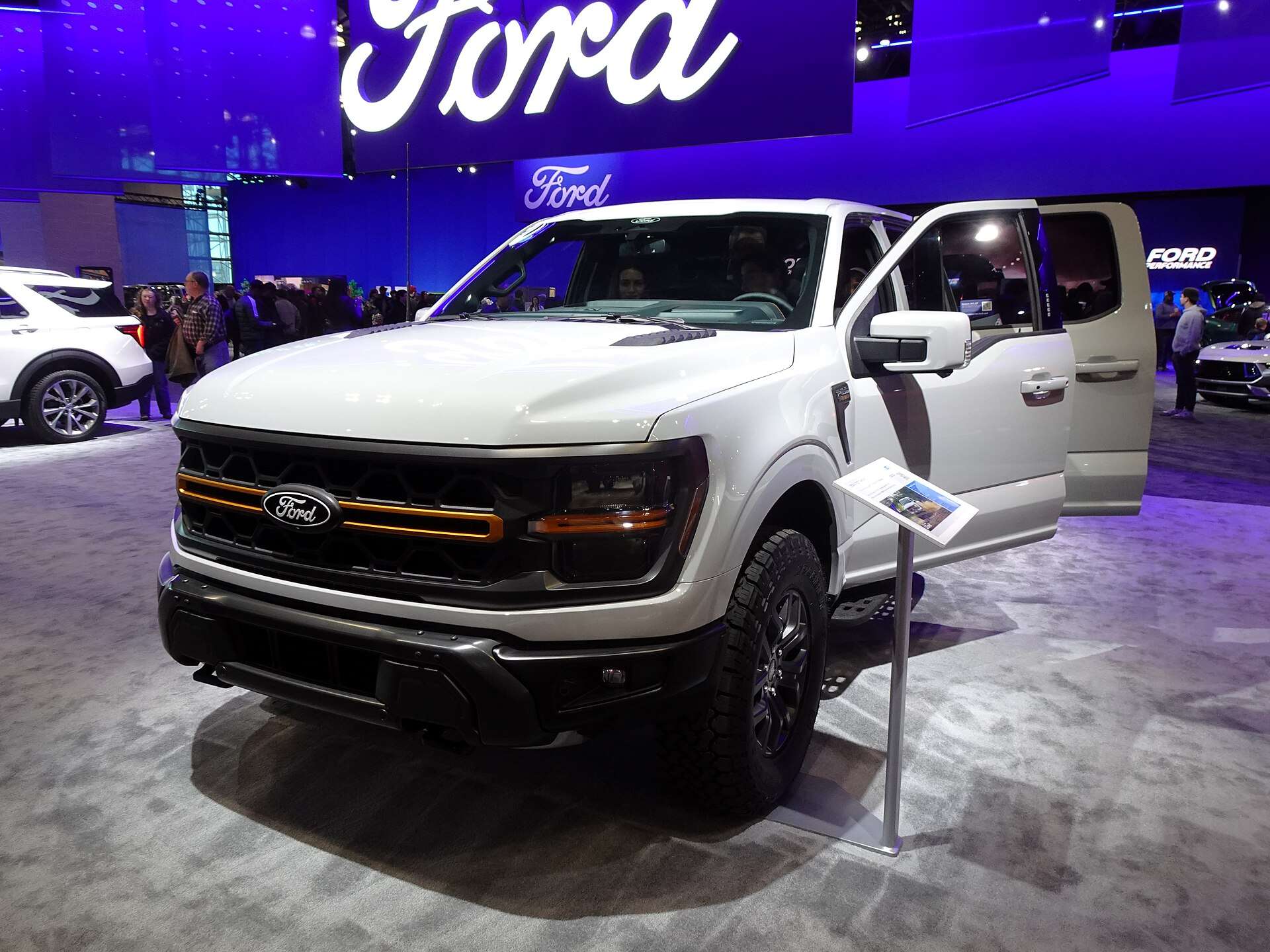
A 350-bar injection system while the soot rule is still pending
The third change involves the other half of federal emissions law, the half that hasn’t gone away. When the current F-150 launched for 2021, Ford’s technical specifications listed the 5.0-liter at 400 hp and 410 lb-ft, fed by both port and direct injection. Ford hasn’t said what pressure the old direct-injection system ran, or whether output changes for 2027.
Fuel sprayed at higher pressure breaks into finer droplets and evaporates faster, so less of it lands on piston crowns and cylinder walls. That wetted fuel is a main source of soot in direct-injected gas engines, and soot is particulate matter.
Particulate limits are criteria-pollutant rules, and the February rescission left them in place. EPA’s 2024 Tier 4 rule lowers the light-duty particulate standard from 3 milligrams per mile to 0.5, with a phase-in that starts in model year 2027. In May, EPA proposed keeping Tier 3 in place through model year 2028 and starting Tier 4 in 2029 (Docket EPA-HQ-OAR-2025-3297). That is still a proposal, not a final rule, as we reported in our Tier 4 coverage. For trucks rated at 6,001 to 8,500 pounds GVWR, the current rule’s default path doesn’t require Tier 4 until 2030, though it offers an earlier optional schedule. Ford didn’t name the rule the 2027 updates are meant to meet. An engine program gets locked years before Job 1, though, and the stricter soot standard has been final since April 2024.
Each of Ford’s three changes matches the status of a different rule. The feature tied to a rescinded GHG credit is gone, the one that counts on the standard test stays, and the new fuel hardware addresses a pollutant standard that is still law. Ford hasn’t explained its decisions in those terms, and Peake’s statement doesn’t either. That reading is mine, based on the federal documents.
What 2027 V8 buyers and owners should check
Anyone ordering a 2027 5.0-liter truck should compare the EPA city rating with the 2026 truck’s 16 mpg once it posts. That figure is where start-stop’s absence would show up. Cylinder deactivation stays, so anyone hoping a new V8 would run on all eight cylinders all the time will still be shopping the aftermarket.
The bigger question is whether start-stop survives on the 2.7- and 3.5-liter EcoBoost trucks. The same credit math applies to them, and Ford’s statement didn’t mention them. If other truck makers start removing start-stop from their 2027 and 2028 order guides, that will point back to February’s rescission. I’d also watch the final Tier 4 decision, since the new fuel system arrives before that decision does.
V8 owners: do you hit the start-stop button every time you get in? And with cylinder deactivation staying, are you living with it or tuning it out?