
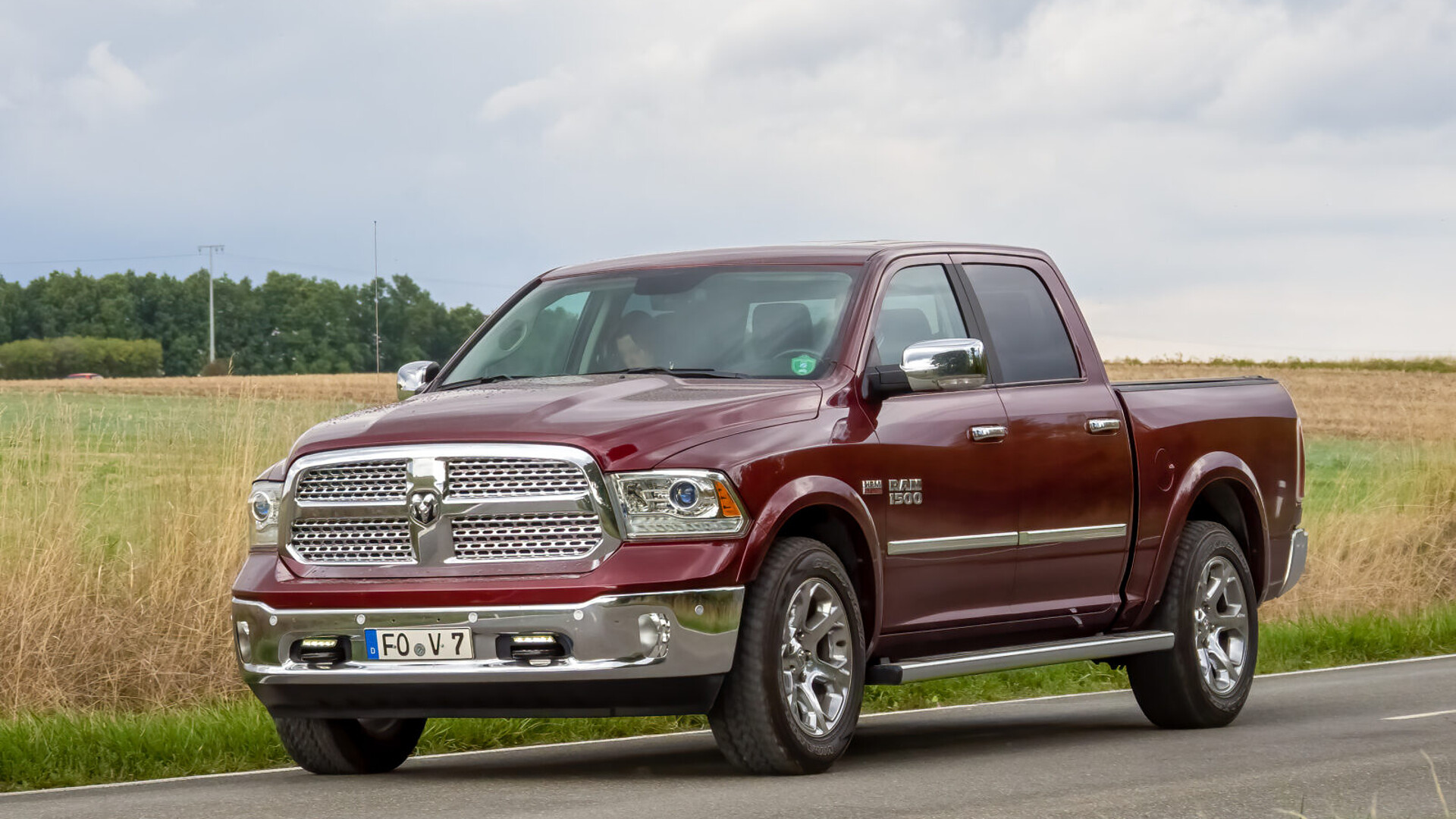
Ram has a track record of recalling its pickups to fix software, and the newest one covers 82,843 Ram 1500 Classic trucks from the 2022 through 2024 model years whose anti-lock brake module can lose track of where the brake pedal is. FCA US, the Stellantis unit based in Auburn Hills, Michigan, filed its Part 573 safety recall report with the National Highway Traffic Safety Administration on Nov. 19, and the company’s own count of service records tied to the problem goes back to May 2023.
The push to investigate came from outside the company. According to the chronology in the filing, NHTSA told FCA US’s safety and regulatory office on Feb. 5, 2026, about seven vehicle owner questionnaires, the complaint forms anyone can file with the agency, reporting brake lights that stayed on and a loss of electronic stability control. The filing says those complaints came from a fleet, which the company contacted between February and March to inspect the trucks. It doesn’t name the fleet.
The recall, NHTSA campaign 26V-756 and Chrysler recall A9D, covers Classics built from Sept. 12, 2022, when the suspect software went into production, through Oct. 2, 2024, when Classic production ended. FCA US estimates every one of the 82,843 trucks has the defect.
What the ABS software gets wrong
A brake pedal doesn’t sit in exactly the same spot for the life of a truck. It drifts slightly with wear, and the ABS module is supposed to adapt to that drift using the brake pedal position sensor. The report says the suspect software, in ABS control modules supplied by Aumovio Systems Inc. of Auburn Hills under Ram part numbers 68627430AA and 68469507AC, doesn’t adapt to normal pedal drift over time.
Once the module misreads the pedal, the filing lists three results: brake lights that come on with no one braking, a truck that can be shifted out of Park without a foot on the brake, and, eventually, the loss of electronic stability control, AutoPark and forward collision warning. FCA US says there is no warning before the failure. Afterward, a driver may see cruise control stop working, a service brake system message, or warning lights for ESC, forward collision warning, AutoPark and traction control. The driver behind may notice first, because the brake lights are lit.
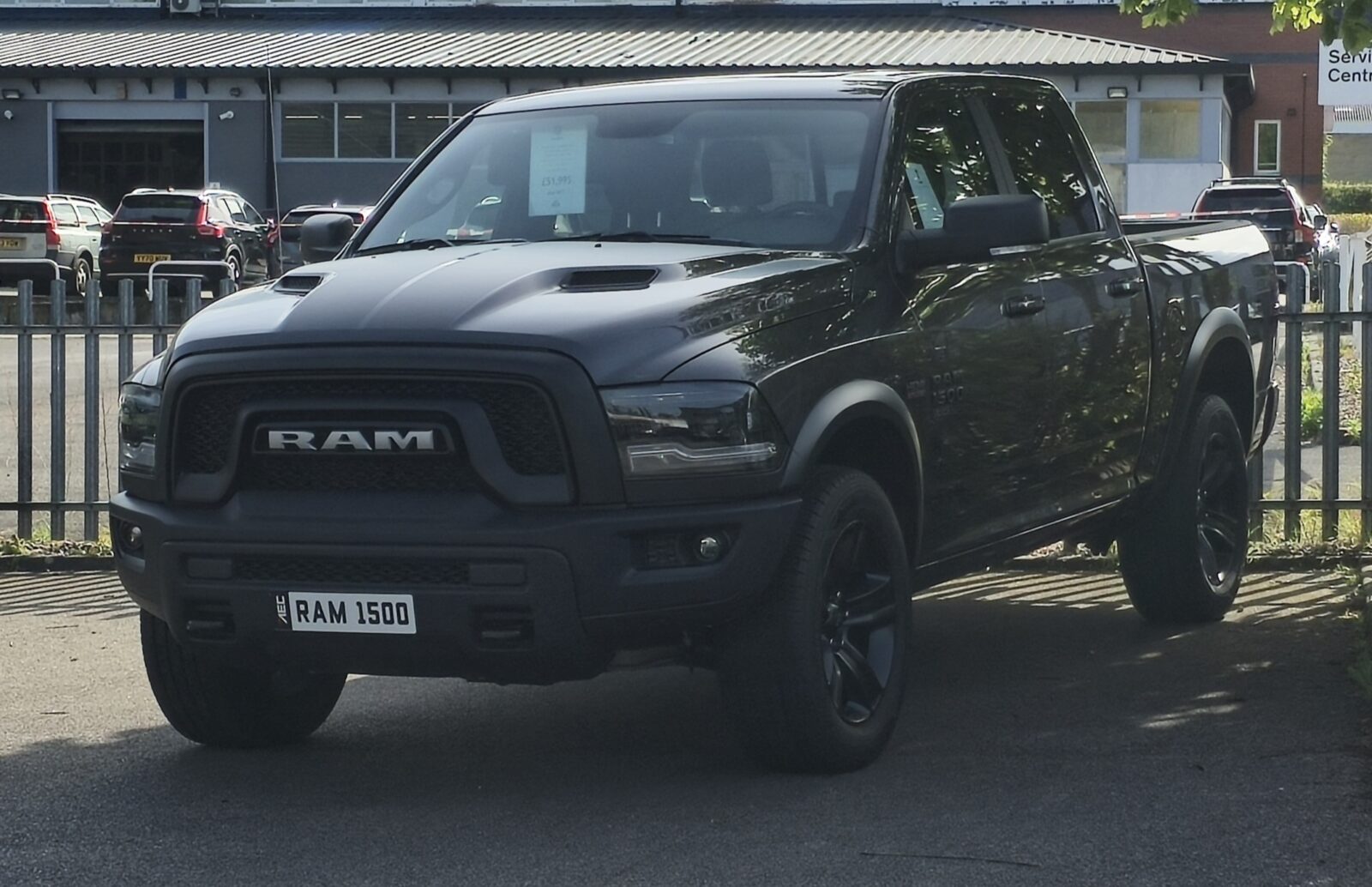
Two federal safety standards sit on top of this fault
The Park symptom runs into a rule Congress wrote. The Cameron Gulbransen Kids Transportation Safety Act of 2007 ordered a brake transmission shift interlock on vehicles with an automatic transmission and a Park position, and NHTSA put it into Federal Motor Vehicle Safety Standard No. 114, section S5.3, which requires the service brake to be depressed before the shifter can leave Park. NHTSA’s 2009 rulemaking notice explained the purpose: small children usually can’t reach the brake pedal, so the interlock keeps them from knocking a parked vehicle into gear. A module that thinks the pedal is pressed when it isn’t defeats that logic.
Stability control is federally required too. NHTSA’s FMVSS No. 126 final rule made ESC mandatory on new light vehicles by Sept. 1, 2011. The system brakes individual wheels to keep a skidding vehicle pointed where the driver is steering, and NHTSA’s statisticians estimated it saved 1,580 lives in 2014, 899 of them people riding in light trucks and vans. A half-ton pickup with an empty bed is the kind of vehicle that leans on it.
Even so, the FMVSS lines in the new report are blank. FCA US filed this as a safety-related defect, not as a failure to meet either standard. The company handled the last Ram stability-control recall differently.
Ram recalled 1500s for ABS software and stability control in 2024, too
In September 2024, FCA US recalled 2019 and 2021-2024 Ram 1500s under campaign 24V-653 because a software malfunction could let the ABS control module disable electronic stability control. NHTSA’s summary of that campaign says the trucks failed to comply with FMVSS No. 126. Reuters reported nearly 1.23 million U.S. trucks at the time; NHTSA’s record now lists 1,025,432 after the company amended its filings. That campaign’s recall report covered trucks built from Oct. 31, 2017, through Feb. 14, 2024.
The 2026 defect is a different one, on a different truck, with a different cause in the filing. The result for the driver is the same in both: the module that runs the anti-lock brakes also decides whether stability control is allowed to work, and a software error in that module can take the system away.
Service records on the problem date to May 2023
As of Oct. 21, 2026, FCA US counted 6,001 warranty claims, 5,310 other service records, 48 field reports and 12 customer assistance records potentially related to the issue across all markets, with receipt dates from May 18, 2023, to Sept. 29, 2026. It also knew of one crash without injury that may be connected. The company’s word is “potentially,” and a warranty claim for a stuck brake light doesn’t prove this software caused it. But the earliest record in that count predates NHTSA’s February tip by nearly three years.
From the tip, the filing lays out the pace. FCA US engineering started a vehicle flagging campaign in March 2026 to find trucks with similar complaints. Engineers and the supplier analyzed returned parts from March to July. The safety office opened a formal investigation on Sept. 24. The company’s Vehicle Regulations Committee decided on Nov. 12 that a safety defect exists, and the report reached NHTSA on Nov. 19.
That last gap is the only one the law times. Under 49 CFR 573.6(b), a manufacturer has five working days to file once it has determined a defect is safety-related, and Nov. 19 was the fifth working day after Nov. 12. The deadline runs from the company’s decision, not from its first warranty claim, so the months between a tip and a determination don’t count against it.
Those 5,310 other service records also matter to anyone who paid out of pocket. Federal rule 49 CFR 573.13 requires automakers to keep a plan for reimbursing owners who paid for a repair before the recall notice, and FCA US says it is using the general reimbursement plan it has on file. The minimum window the rule sets ends 10 days after the last owner letter is mailed, and NHTSA has noted that manufacturers generally cover a longer period than the rule requires. Owners who paid a shop for brake-light, park-interlock or ESC trouble on a 2022-2024 Classic should hold on to the repair order.
When Ram 1500 Classic owners get the fix
The remedy is a free ABS module software flash at a dealer that corrects the brake pedal adaptation algorithm, according to the report. NHTSA’s record lists it as a dealer repair, not an over-the-air update. FCA US plans to notify dealers on or about Nov. 26 and mail owner letters Jan. 14 and 15, 2027, within the 60 days that 49 CFR 577.7 allows after a recall report is filed. Vehicle identification numbers become searchable on NHTSA’s recall lookup starting Nov. 26. The filing does not put a “Do Not Drive” or “Park Outside” advisory on the trucks.
Reuters also reported that the action covers 669 Mopar ABS control modules sold as parts, which matters for any Classic that already had its module replaced. Owners can reach Chrysler customer service at 800-853-1403 and reference recall A9D. For fleets running dozens of these trucks, the symptoms in the filing are the ones to log now: brake lights lit with no foot on the pedal, a shifter that leaves Park without the brake, and an ESC or traction control light with cruise control gone. More recent recalls are in our recall roundup, and Stellantis’s broader warranty spending is covered in our look at its quality push.
FCA US filed this recall on Nov. 19 and won’t mail owner letters until mid-January. Classic owners: has your truck ever lit up its brake lights at a red light with your foot off the pedal, or slid out of Park without the brake? Fleet managers, how many of your trucks are on this list?