

Stellantis booked €4.1 billion in 2025 to cover defects in vehicles it had already shipped, and €3.3 billion of that was for North America. The company disclosed the charge in its annual report on Form 20-F, filed with the SEC on Feb. 26, and it is the most specific price Stellantis has put on the quality slide that CEO Antonio Filosa says he is now reversing. The scorecard Stellantis uses to show that reversal looks at a vehicle’s first three months on the road. The bill is for the years after that.
Filosa has started to describe the repair effort in public. At an industry conference in Detroit last week, he was reported to have said Stellantis now runs close to 50 quality “war rooms,” teams of engineers, plant staff and supplier specialists each assigned to a problem component or system. I could not find that count, or any description of those teams, in a Stellantis press release, SEC filing or investor presentation, so treat it as the CEO’s description rather than a documented figure. What the company has put on paper is more specific.
A €5.4 billion change of estimate
The 20-F explains the charge in its note on provisions. During 2025, it says, Stellantis saw increased volatility in warranty spending, particularly in North America and Europe, driven by cost inflation, “quality issues associated with new powertrains and platforms, and the impact of prior operational decisions.” The model it had been using to forecast warranty costs was judged “insufficiently responsive to rapid changes in experience,” so the company switched to a new actuarial model that gives more weight to recent claims.
The switch produced €5.4 billion in charges. Of that, €4.1 billion related to vehicles shipped before 2025, which Stellantis excluded from its adjusted operating income and reported among the unusual charges in its full-year 2025 results. North America took €4.2 billion of the total and Europe €1.2 billion. Elsewhere in the filing, Stellantis attributes the €4,130 million pre-2025 portion to cost inflation and “a deterioration in quality, as a result of operational choices, which did not deliver the expected quality performance.” The same report says the company decided to recall approximately 13.4 million vehicles in 2025.
How a warranty reserve turns old defects into this year’s loss
Automakers do not wait for a part to fail before they count the cost. When a vehicle is sold, the company books an estimate of what it will spend fixing that vehicle under warranty. Stellantis says its estimates rest on assumptions about the lifetime warranty cost of each vehicle line and each model year, plus its historical claims experience. If trucks from one model year start coming back more often, or costing more per visit, than assumed, the company cannot reopen the original sale. It raises the reserve for every one of those trucks still under coverage, and the expense lands in the current year’s results.
The provision table in the 20-F shows how large that adjustment was. Stellantis’ reserve for product warranty and recall campaigns started 2025 at €9.31 billion and ended it at €14.12 billion. The company added €11.65 billion to the reserve during the year, compared with €6.33 billion in 2024. The cash it paid out of the reserve barely moved: €6.26 billion in settlements in 2025, against €6.21 billion the year before.
So most of the 2025 charge is a forecast. Stellantis now expects to spend billions more than it had planned on repairs that have not happened yet. The long-term portion of the reserve, money not expected to go out within 12 months, rose from €5.57 billion to €9.56 billion, and the filing says that cash will mainly be spent through 2029. Those repairs will be done in dealer service bays over the next four years, on vehicles that are already in customers’ driveways.
What a three-month scorecard can measure
Stellantis has been reporting its progress with a different number. A slide in its second-quarter 2026 results presentation of July 30 reads “Focus on quality, driving 3MIS improvement of 38% in NA and 24% in EE,” and the appendix defines 3MIS as “3 months in service.” On the earnings call, Filosa said, “Our execution on quality in the past was not what it needed to be, but we have come a long way already in the last year.” He said the company’s FaSTLAne 2030 plan gives its quality organization what it needs to reach the top quartile in every region and segment where Stellantis competes by 2028. In February, the company said issues reported in a vehicle’s first month of service had fallen by more than 50% in North America and more than 30% in Europe since the start of 2025.
Early-service metrics are a plant’s report card, and a useful one. Problems that show up in the first 90 days tend to be things that were built wrong: a connector that was not fully seated, a water leak, a rattle, a module loaded with the wrong software, a part from a new supplier that arrived out of spec. Those numbers respond within weeks of a fix on the assembly line, which is why a CEO who needs to show movement quickly reports them. At the company’s May 21 investor day, Filosa described AI tools that trace a warranty claim back to the plant workstation where the problem originated and pull up root causes and fixes already found for similar issues, so the same defect stops recurring.
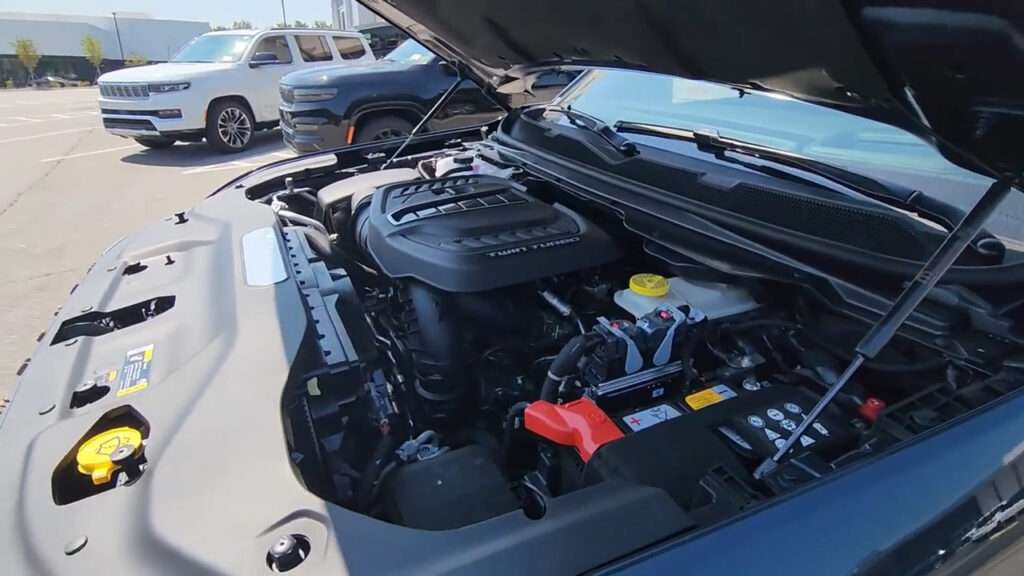
A three-month window cannot see a part that was built to the drawing and still fails at 40,000 miles. Design and durability failures of that kind are what the 20-F points toward when it names new powertrains and platforms, and they are what determine the size of a reserve that runs to 2029. The Auto Wire has followed one new powertrain’s run of recalls and service bulletins in the Ram 1500. A 38% improvement in 3MIS tells you the plants are building more cleanly in 2026. It tells you much less about how the engines, transmissions and electrical systems launched over the past few years will hold up as they age.

Who pays for the vehicles already on the road
For owners, the reserve is money Stellantis expects to spend on their vehicles. Those repairs are covered while the factory warranty lasts. Once it runs out, the owner pays, unless Stellantis extends coverage for a specific failure, as it did when it agreed to cover failed engine valve seals for seven years in certain states. The 20-F does not break the €4.1 billion down by model, only by region and by the fact that it covers vehicles shipped before 2025.
For shoppers, the gap between the two numbers matters at the dealership. The 3MIS gains describe vehicles built this year. A used Jeep, Ram, Dodge, Chrysler or Fiat shipped before 2025 comes from the population behind the €4.1 billion charge. Before buying one, run the VIN through NHTSA’s recall lookup, ask the dealer for the vehicle’s warranty repair history, and check how much factory coverage remains.
The filings that will show whether the fix is working
Chief financial officer Joao Laranjo told analysts on the first-quarter call in April that warranty costs should begin improving as 2026 goes on, because of the adjustments taken in 2025. The second-quarter presentation credited part of the year-over-year improvement in industrial costs to not repeating 2025’s recall-campaign costs in Europe, and The Auto Wire looked at the rest of that quarter in its analysis of Stellantis’ margins. Those are early readings. The decisive ones will come in the 2026 annual report, expected early next year: whether additions to the warranty reserve fall back toward 2024’s €6.33 billion, whether the long-term balance starts shrinking as claims are paid, or whether Stellantis has to take another change of estimate.
The 2028 top-quartile goal also needs a referee. The investor materials I reviewed do not say whose survey or which benchmark will decide whether Stellantis has reached it. If the war rooms Filosa described are doing their job, the evidence will appear in the warranty provision table of a future 20-F, a few years after it appears on a 3MIS slide.
If you own a Jeep, Ram, Dodge or Chrysler built before 2025, has it spent more time at the dealer than you expected, and would a 38% improvement on new models be enough to get you to buy another one?
Top photo: Stellantis’ North American headquarters and technology center in Auburn Hills, Michigan, photographed in 2021. Photo: ajay_suresh / Wikimedia Commons, CC BY 2.0.
.jpg)