
CarMax made $111 less on each used car it retailed this summer than it did a year earlier, and $116 more on what it sold alongside the car. That swap, from the sticker to the extended service plan, the service department and the in-house loan, is most of how the country’s largest used-car retailer turned a price cut into an 81% jump in earnings per share.
It worked for the quarter. Whether it keeps working depends on a group of borrowers CarMax is now lending to directly, and on the company’s ability to buy enough cars to keep selling at this pace.
A 13% sales gain after a year of declines
In its second-quarter report released September 29, CarMax said it retailed 227,391 used vehicles in the three months ended August 31, up 13.8%. Sales at stores open more than a year rose 13.0%. Revenue climbed 19.5% to $7.9 billion, net earnings rose to $165.3 million from $95.4 million, and diluted earnings per share came in at $1.16 against $0.64.
The comparison is a soft one. In the same quarter a year ago, according to the tables in the results CarMax filed with the SEC, retail units fell 5.4% and comparable-store units fell 6.3%. Three months ago, in its first-quarter report, CarMax’s comparable-store sales were still down 0.8%. The turn came fast.
It also came under a new boss. Keith Barr, the former chief executive of hotel company IHG, took over CarMax on March 16 after the board named him in February, following several months of interim leadership. Barr credited the quarter to a four-part plan he calls Shift into GEAR and said the company had “strengthened our price competitiveness, increased Extended Protection Plan margins, expanded CAF’s share of Tier 2 originations.” Those three items account for most of the quarter.
The per-car math: $111 off the car, $116 back on everything else
CarMax’s gross profit per retail used unit fell to $2,105 from $2,216, a decline the company attributed to “the continuation of pricing actions” meant to support sales. That followed a $230 cut in the first quarter, which The Auto Wire covered when CarMax was trimming corporate staff to help pay for it.
Measured against the selling price, CarMax kept 7.6% of each retail sale as gross profit, down from 8.4%. Shoppers should not read that as cheaper cars. The average retail selling price rose about $1,600, or 6.3%, to $27,623. CarMax didn’t say how much of that came from the mix of vehicles it sold versus market prices, but the result is a buyer paying more for the car while CarMax keeps a smaller slice of it.
The slice came back in a line CarMax calls “other gross profit,” which it divides by retail units sold. That figure rose to $806 per car from $690. Add it to the vehicle margin and CarMax earned $2,911 per retail car in gross profit, compared with $2,906 a year earlier. That is The Auto Wire’s arithmetic from the company’s tables. Counting the extras, the price cut cost CarMax nothing in gross profit per car, and it sold 27,662 more cars than a year earlier.
Two things drove the increase. The first is the Extended Protection Plan, CarMax’s extended service contract. Margin on those plans rose $46 to $623 per retail unit, and plan revenue rose 23.0% to $141.6 million. CarMax sells plans backed by outside providers, a dependence it lists among its risk factors, and those plans can be canceled. When a buyer cancels, CarMax gives back part of what it earned, so it sets aside a reserve. The provision for those cancellation reserves rose to $53.3 million in the first half of the fiscal year from $41.9 million, according to the cash-flow statement. More plans sold means more money that could flow back out.
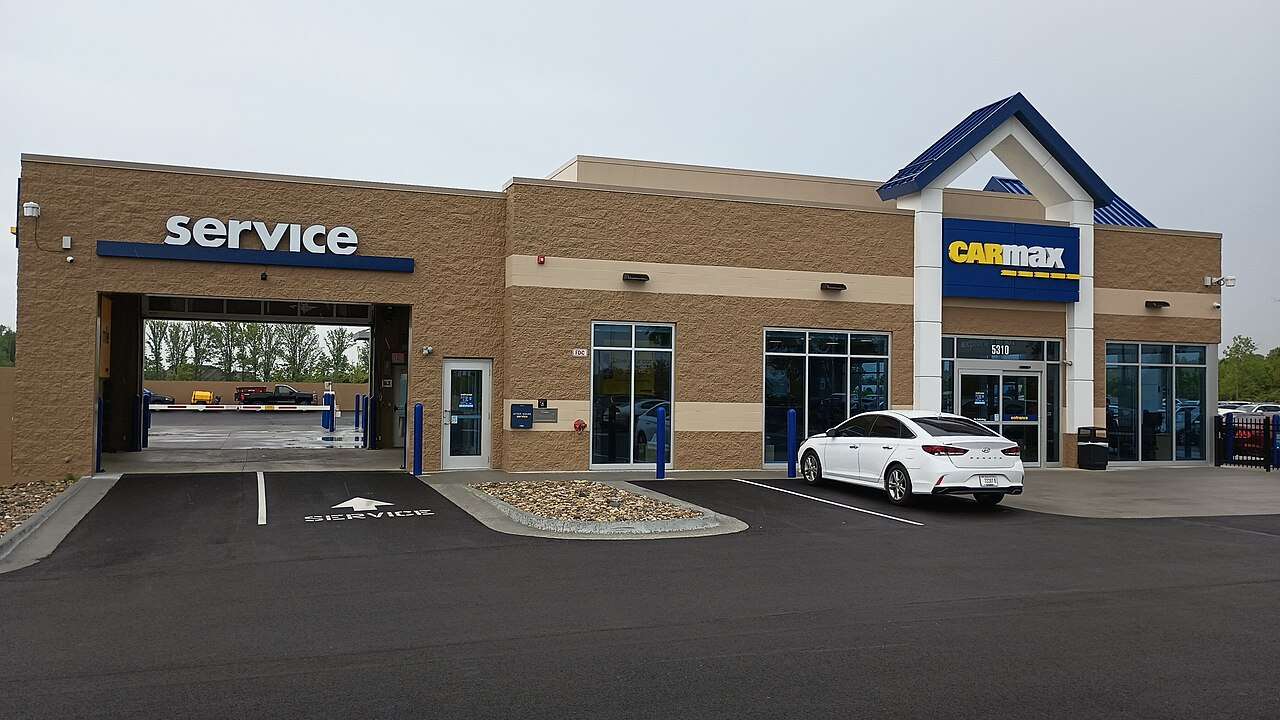
The second is the shop. CarMax said service margin rose $22.0 million, mostly from efficiency in cost of sales and from spreading the work over more cars. Barr’s plan names lower reconditioning costs as a goal, so the shop is where more of the savings are supposed to come from.
CarMax is now the biggest lender to Tier 2 buyers on its own lots
CarMax sorts car buyers who need a loan into tiers. Its footnotes define them by who gets paid. Tier 2 lenders are outside finance companies that “generally pay us a fee or to whom no fee is paid.” Tier 3 lenders are ones “to whom we pay a fee,” meaning CarMax pays a lender to take those borrowers. CarMax Auto Finance, its in-house lender, makes most of its loans to buyers with stronger credit.
That is changing. CAF financed 22% of the Tier 2 volume on CarMax lots in the quarter, up from 10% a year earlier, and the company said it was the largest lender in that tier. CarMax says CAF’s Tier 2 and Tier 3 loans together still amount to less than 5% of the used cars it sells. The company’s weighted average contract rate on CAF loans rose to 11.8% from 11.2%.
Keeping those loans means keeping the interest spread an outside lender would have earned. It also means keeping the losses. Under current U.S. accounting rules, a lender has to book the losses it expects over a loan’s entire life when the loan is made, so a quarter of fast Tier 2 growth costs CarMax money up front and pays it back over years of interest. CarMax said this quarter’s loan-loss provision included “provisioning related to Tier 2 originations.” Its allowance for loan losses rose to 3.07% of loans held for investment on August 31, from 2.95% on May 31 and 2.78% on February 28.
The total provision still fell, to $113.4 million from $142.2 million, because a year ago CarMax had to add reserves when older loans performed worse than expected. This year, the company said, performance has been in line with its expectations. That drop is the main reason CAF income rose 32.1% to $135.6 million.
At the same time, CarMax has been moving riskier loans off its own books. It sold the residual interest in two non-prime securitizations, which shrank its receivables by $1.2 billion from a year earlier, and it booked a $16.6 million gain on the sale of auto loans this quarter. Average loans outstanding fell to $16.49 billion from $17.73 billion, and CAF’s interest and fee income fell $33.6 million. CarMax is lending to a wider range of buyers while selling some of the risk to outside investors. How Tier 2 borrowers pay is now more of a CarMax problem than it was a year ago, and The Auto Wire has covered what happens to borrowers when subprime car loans go bad.
How much of the 81% gain comes from the business
Some of the earnings jump came from items that won’t repeat on their own. Besides the $16.6 million loan-sale gain, other income rose to $18.6 million from $3.6 million, mostly from unrealized gains on equity investments. Diluted shares outstanding fell 4.8% to 142.5 million, the result of buybacks made last year, which lifts per-share earnings without any change in the business.
Remove the loan-sale gain and the increase in other income, and pretax earnings would have been about $191.5 million against $127.1 million a year earlier, a gain of roughly 51%. That calculation is The Auto Wire’s, and it still describes a strong quarter.
Cost cuts helped. Selling, general and administrative expenses rose 4.6% to $628.6 million, slower than sales, so SG&A per vehicle fell $157 to $1,621. CarMax said savings from cutting field and corporate payroll were offset by higher incentive pay compared with a year ago, when bonuses were sharply reduced, and by costs that rise with volume. Advertising spending rose 5.0% to $66.9 million. The company said it remains on track for $200 million in SG&A savings, measured at the exit rate, by the end of fiscal 2027, which closes in February.
Sales grew faster than CarMax’s purchases from the public
A used-car retailer can only sell what it can buy. CarMax bought 310,107 vehicles in the quarter, up 5.9%, while its retail sales rose 13.8%. Purchases from consumers, the people who sell or trade in a car at CarMax, were flat at 262,570. The growth came from dealers, which sold CarMax 47,537 vehicles, up 53.7%.
Inventory on the balance sheet stood at $3.85 billion on August 31, about 22% more than a year earlier but down from $4.14 billion at the end of February, so CarMax has been selling down some of what it stocked over the winter. At CarMax’s wholesale auctions, where it sells vehicles it doesn’t retail, unit sales rose 15.9% but gross profit per vehicle fell $135 to $858. One of Barr’s stated goals is “growing saleable inventory.” Flat purchases from the public are the number that goal has to move, especially with used-car values starting to soften.
What to watch on November 3 and December 17
CarMax will hold a virtual strategy update on November 3 at 8 a.m. Eastern, where it said it will give details on initiatives and milestones. It plans to report third-quarter results on December 17 and said it intends to resume share repurchases “at a modest level” this quarter, with $1.31 billion left under its authorization.
Three figures in that December report will show whether this quarter starts a trend: the allowance ratio, which tells you what CarMax expects its newer Tier 2 loans to cost; purchases from consumers, which have to grow for sales to keep growing; and gross profit per retail unit, which tells you whether the price cuts are finished.
For a shopper, the quarter says something practical. CarMax’s posted price now carries a thinner markup than it did a year ago, and the company is earning that money back on service plans and, increasingly, on its own loans. Walking in with an outside loan preapproval gives you a rate to compare against CAF’s, which averaged 11.8% this quarter, and The Auto Wire has explained why preapproval is worth getting now. The service plan is optional, and its price can be weighed on its own instead of folded into a monthly payment.
Would you rather buy a used car with a thinner markup from a retailer that counts on selling you the service plan and the loan, or pay a bigger markup and skip the extras?
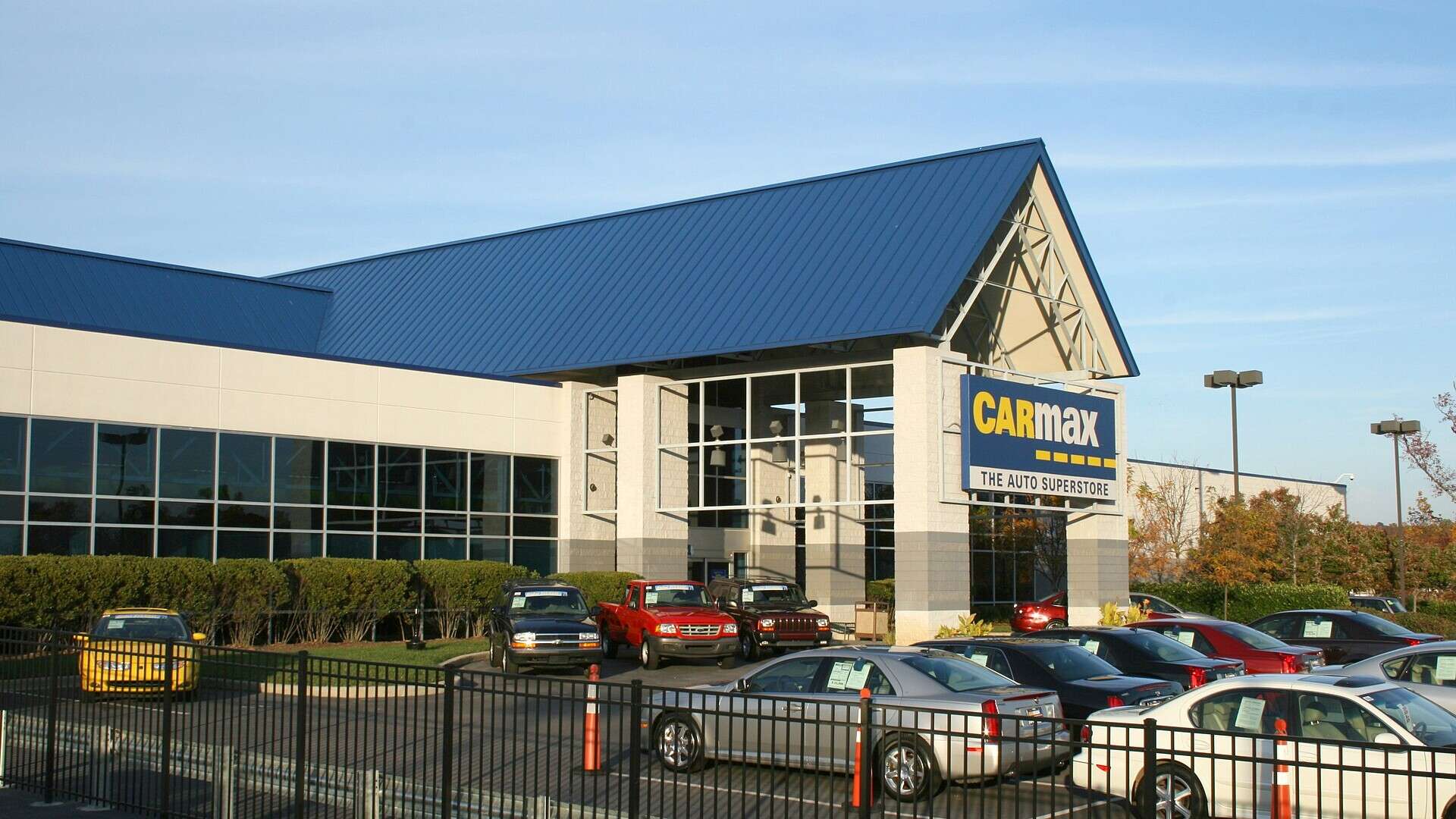
Top photo: A CarMax store in Raleigh, N.C. Photo: Ildar Sagdejev (Specious) via Wikimedia Commons, CC BY-SA 4.0.