
General Motors delivered 25,473 electric vehicles in the U.S. from July through September, according to the third-quarter deliveries table the Detroit automaker posted Oct. 1. A year earlier, GM’s own release put the quarter’s EV total at a record 66,501. The gap between those two numbers, 41,028 vehicles, is larger than the decline in everything GM sold here: total deliveries fell 39,373, or 5.5%, to 670,974.
That makes four quarters in a row of lower year-over-year U.S. sales for the automaker that calls itself America’s top seller, and every one of them has come after Sept. 30, 2025, the day the federal tax credit of up to $7,500 for a new EV stopped applying to new purchases. GM’s securities filings name the credit’s end as a cause of the slump. The people who lost the most are the ones the credit was built for: shoppers looking at a mid-$30,000s Chevrolet, not a Cadillac.
GM’s gas lineup held even while its EV sales fell 62%
GM doesn’t print an EV subtotal in this quarter’s materials, so I added the 11 battery-electric lines in its deliveries table, from the Chevrolet Bolt to the Cadillac Escalade IQ. The Auto Wire’s count, not the company’s, matches GM’s own 66,501 figure for the third quarter of 2025, and it shows a 61.7% drop to 25,473 this year.
Take those vehicles out and GM’s remaining U.S. sales went from 643,846 to 645,501, an increase of 1,655. The company’s Oct. 1 release says much the same in its own words, attributing the 6% decline to “the much smaller EV market and discontinued vehicles,” and its sales presentation describes gas-vehicle sales as in line with a year ago. Light-duty Silverado deliveries rose 13.3% to 100,221. The Chevrolet Trailblazer small crossover jumped 51.1% to 31,075.
The streak in GM’s tables runs like this: down 6.9% in the fourth quarter of 2025, down 9.7% in the first quarter of 2026, down 4.2% in the second and down 5.5% in the third. Through September, GM is at 2,012,299 U.S. deliveries, 6.4% behind last year’s pace.
Duncan Aldred, president of GM North America, didn’t mention EVs in his statement. “Our business is performing very well, the launch of our next-generation full-size pickup trucks is on track, and we are making investments in new vehicles, innovative technologies, and our U.S. manufacturing footprint to drive our next phase of growth,” he said in the release. Twelve months earlier, the EV record had been the second paragraph of the company’s announcement.
How the Sept. 30, 2025, cutoff worked, and why it emptied the following year
The credit ended under Public Law 119-21, the tax-and-spending package President Trump signed on July 4, 2025. The IRS’s wording is short: the New Clean Vehicle Credit “is not available for vehicles acquired after Sept. 30, 2025.” Before that date it was worth up to $7,500, and buyers could transfer it to the dealer at the time of sale and have it applied up front instead of claiming it on a tax return. It had limits that kept it aimed at the middle of the market. The sticker couldn’t exceed $80,000 for SUVs, vans and pickups or $55,000 for anything else, and a buyer’s modified adjusted gross income had to be under $300,000 for a married couple filing jointly, $225,000 for a head of household or $150,000 for everyone else.
Congress gave buyers almost three months’ notice, and the IRS defined “acquired” generously: a binding written contract plus a payment on or before Sept. 30 locked in the credit even if the car was delivered later. That’s how GM got its 66,501 record. The company’s October 2025 release said industry-wide EV sales “continued to surge as customers sought to take advantage of the $7,500 federal tax credit.” Demand that would have been spread over late 2025 and 2026 landed in one quarter, and the year-over-year math now measures against that peak.
The pull-forward doesn’t explain all of it. GM’s EV deliveries were 25,851 in the first quarter of this year and 30,828 in the second, then slipped to 25,473 in the third. Through the first three quarters of 2026, GM’s EV business has run at 25,000 to 31,000 a quarter, less than half the pace of the last quarter the credit was available.
Fleets lost their version too. The IRS says the commercial clean vehicle credit, worth up to $7,500 for lighter vehicles and up to $40,000 for those rated at 14,000 pounds or more, isn’t available for vehicles acquired after the same date. GM’s BrightDrop electric vans fell 43.6% to 1,344 in the quarter, even as GM Fleet overall grew 10%.
Chevrolet’s EVs lost three-quarters of their buyers; Cadillac’s lost a third
Split GM’s EV total by brand and the effect follows price. Chevrolet’s five electric lines delivered 10,031 vehicles, down 74.6% from 39,498. GMC’s Hummer EV and Sierra EV fell 64.2% to 3,084. Cadillac’s four EVs fell 32.8% to 12,358. Cadillac sold more EVs than Chevrolet in the quarter, and the Cadillac Optiq, at 4,550, was GM’s best-selling EV.
A $7,500 credit is a much bigger share of a Chevy’s price than a Cadillac’s. Chevrolet’s site lists the 2027 Equinox EV from $34,995, so the old credit would equal about 21% of that starting price. On a $60,000 Cadillac it would be an eighth. The brand totals line up with that arithmetic.
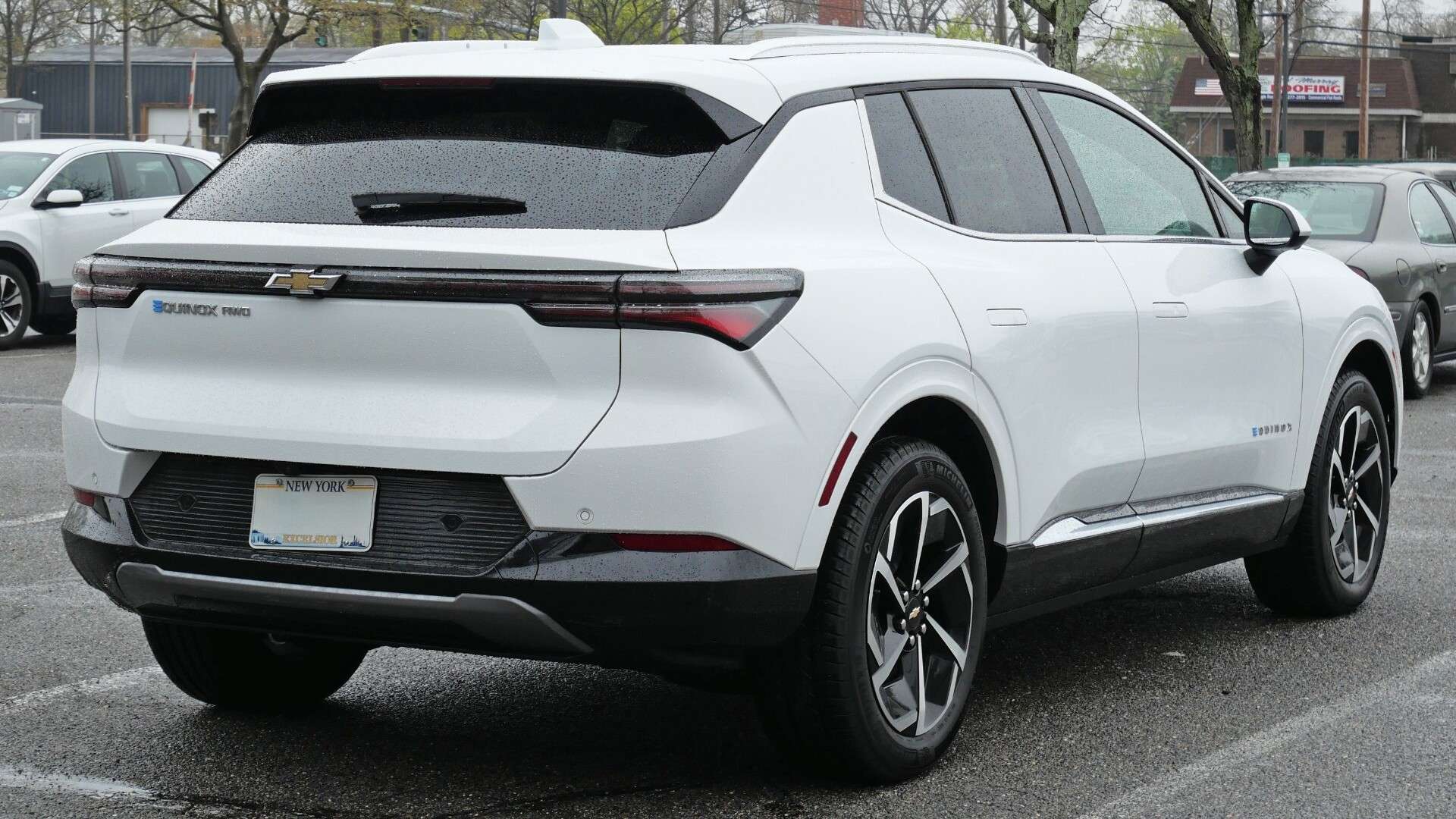
GM delivered 25,085 Equinox EVs in the third quarter of 2025, when the company called the model the best-selling EV in America not made by Tesla. This year it delivered 1,905, a 92.4% decline. The slide kept going after the pull-forward wore off: Equinox EV deliveries were 9,589 in the first quarter and 6,660 in the second, so the third quarter was 71% below the one right before it. GM’s sales release doesn’t explain the drop.
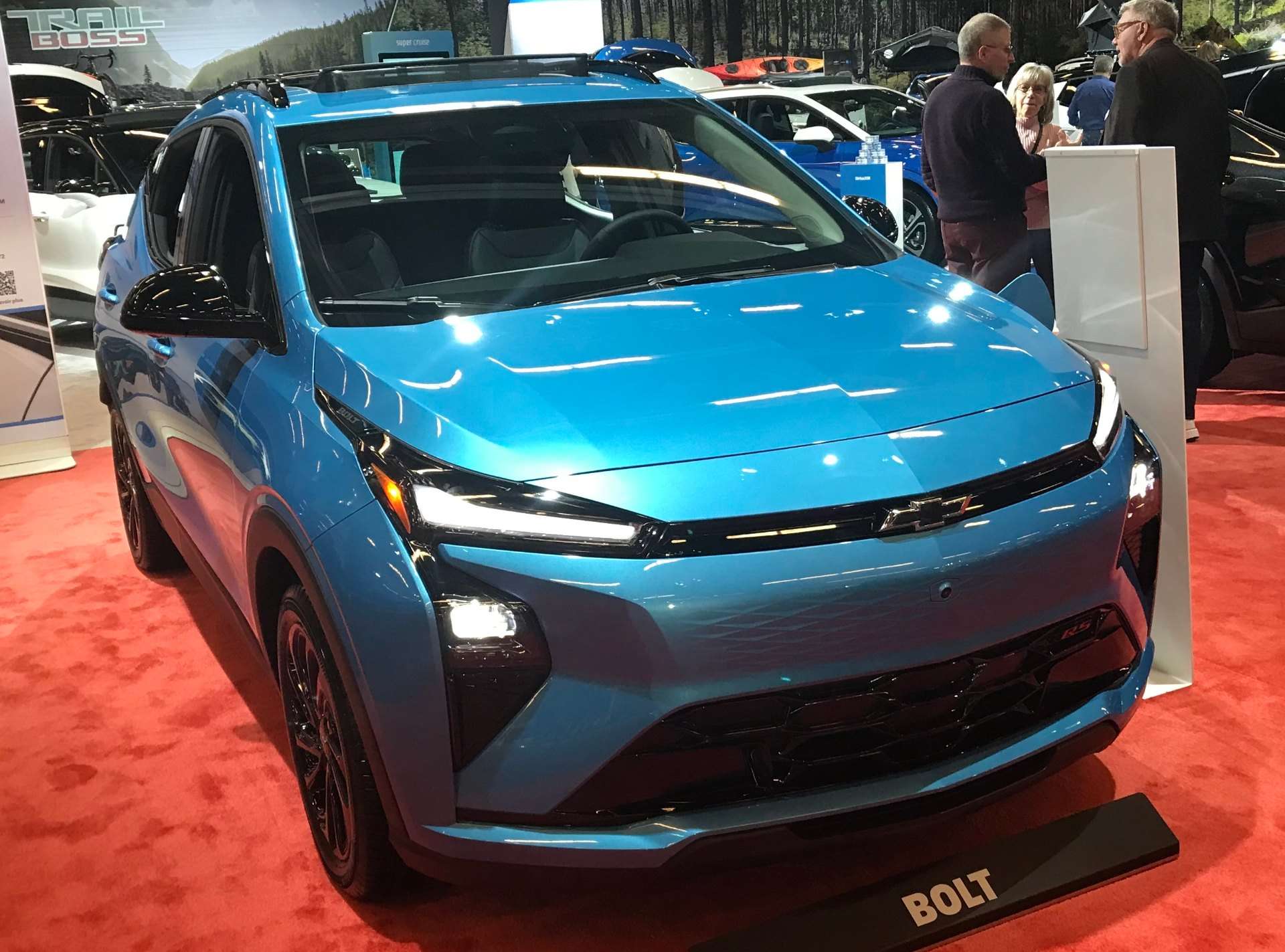
GM’s answer at the low end is the revived Chevrolet Bolt, which Chevrolet lists from $28,995 and which uses lithium iron phosphate cells, the cheaper chemistry GM says it’s using in North America for the first time. It delivered 3,866 in the quarter, up from 3,433 in the second. Respectable for a car that came back this year. It’s also about one-sixth of what the Equinox EV lost.
GM has booked $11.27 billion in EV realignment charges since mid-2025
GM’s earnings statements carry the cost. In an October 2025 filing, GM said it would take $1.6 billion in third-quarter charges for cutting EV capacity, citing the “termination of certain consumer tax incentives for EV purchases and the reduction in the stringency of emissions regulations.” In January it disclosed about $6.0 billion more for the fourth quarter, about $4.2 billion of it for supplier settlements, contract cancellation fees and other charges.
GM’s full-year 2025 earnings release lists $7.914 billion in what it calls EV strategic realignment charges, including $0.3 billion recorded in the second quarter of 2025 for its Ultium battery venture, and its second-quarter 2026 release adds $3.356 billion for the first half of this year, $2.279 billion of it in the second quarter. That’s $11.27 billion by GM’s own accounting. CEO Mary Barra told shareholders in an October 2025 letter that, “with the evolving regulatory framework and the end of federal consumer incentives, it is now clear that near-term EV adoption will be lower than planned.” Nothing in the third-quarter sales numbers contradicts her.
Washington changed more than the credit. The same filings point to looser emissions rules, a shift The Auto Wire has followed in the new fuel economy standards and the EPA’s bid to delay its smog rule.
New Silverado and Sierra pickups arrive in the fourth quarter as EV volume sits near 25,000
GM’s next test comes before year-end. The company says the first next-generation 2027 Chevrolet Silverado and GMC Sierra pickups are scheduled to reach dealers in the fourth quarter, and it ended September with 568,151 vehicles of dealer inventory, which it says puts it on track for a 50- to 60-day supply at year-end. A strong truck launch could end the streak of quarterly declines regardless of what EVs do. GM reports third-quarter earnings on Oct. 20, and that release will show whether the EV charges have stopped.
For a shopper, the federal side of the EV purchase is now simple: there’s no credit to claim, at the dealer or on a tax return, for a new EV bought after Sept. 30, 2025. State rebates, where they exist, are separate programs with their own rules, so the comparison that matters at a Chevy store is one sticker against another. The Auto Wire’s look at the current EV price premium runs those numbers, and on GM’s August list of Chevrolet EVs, the Bolt is the only one under $30,000.
Were you cross-shopping a $35,000 Equinox EV when the credit died? What did you end up buying?
Top photo: A 2025 Chevrolet Equinox EV. GM delivered 1,905 Equinox EVs in the third quarter of 2026, down from 25,085 a year earlier. Photo: Kevauto via Wikimedia Commons, CC BY-SA 4.0.