
Every time fuel prices spike, the same question turns up at the dinner table and in the showroom: is this the moment to buy an EV? This fall the question arrives with a record attached. The national average for on-highway diesel reached $6.529 a gallon in the week of September 21, the highest figure in the Energy Information Administration’s weekly series, which dates to 1994.
It’s a fair question. It’s just aimed at the wrong number, a bit like buying a boat because it’s sunny today.
The case for an electric car right now has less to do with the pump than with what happened on dealer lots over the past year: the price gap between electric and gas vehicles was cut nearly in half. Fuel prices are a reason to run the numbers. They are a poor reason to sign the papers.
Two price tags moving in opposite directions
Start with the overall market. Kelley Blue Book’s August figures, published September 10 by parent company Cox Automotive, put the average transaction price for a new vehicle at $50,089, up 1.9% from a year earlier and back above $50,000 for the first time this year. We dug into who feels that number the most earlier this month.
The bigger change is in discounts. Incentives averaged 6.5% of the transaction price in August, down from 7.2% a year ago. Seven-tenths of a point sounds like a rounding error. On a $50,089 average, it is roughly $350 a car that used to come off the deal and now doesn’t. Buyers aren’t being squeezed so much by stickers as by the slow disappearance of the money that used to be knocked off them.
Electric vehicles went the other way. The average EV sold for $54,813 in August, down 2.7% from a year earlier. Cox’s measure of the EV premium, meaning how much more the average EV costs than the average new vehicle, fell to 9.4% from more than 16% in August 2025.
That drop did not come from bigger discounts. EV incentives actually shrank, to 12% of the transaction price from 14.6% a year earlier. And the federal clean-vehicle tax credit is gone entirely; the IRS says it is not available for vehicles acquired after September 30, 2025. With less help from dealers and none from Washington, EVs still got cheaper. That means the underlying pricing came down. Automakers cut what the cars cost, not just what they advertise.
A lower price is a different kind of savings than a cash-back offer. It doesn’t expire at the end of the month, and it doesn’t vanish when a manufacturer decides it has cleared enough inventory.
The diesel record is real, but it’s the wrong comparison for most drivers
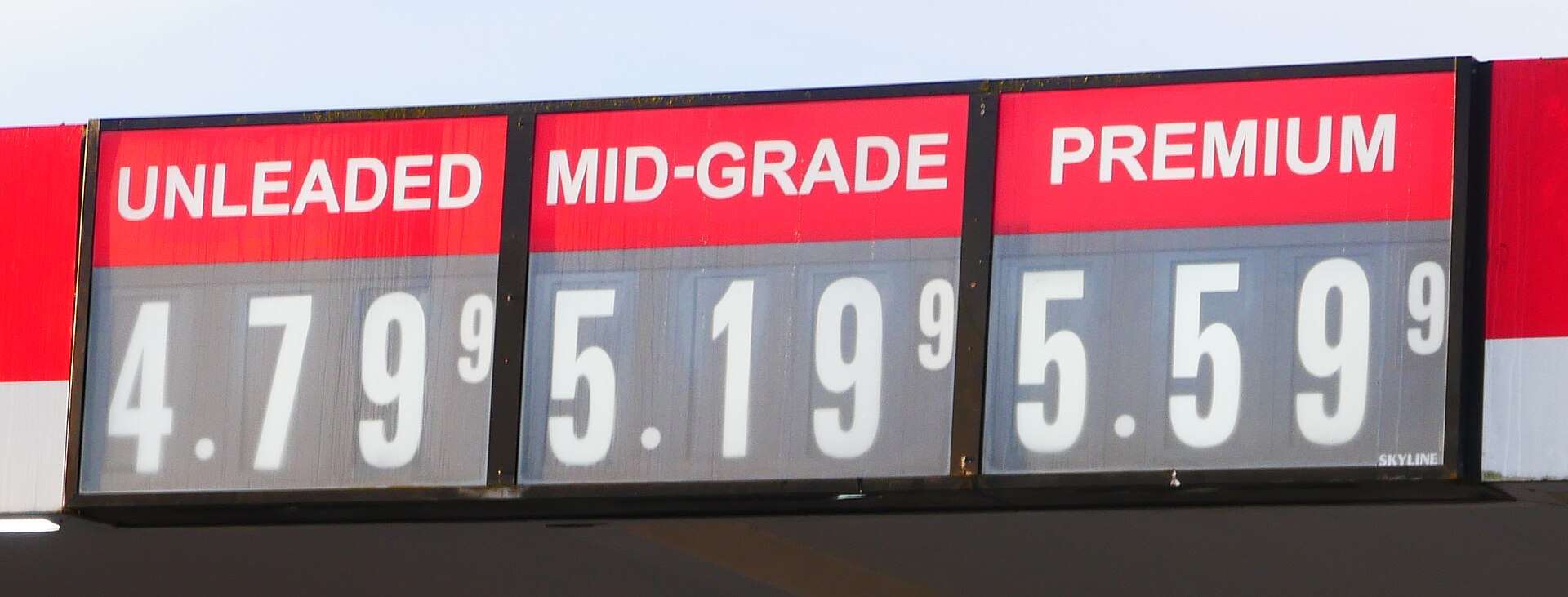
Diesel’s run has been dramatic. The U.S. average was $3.749 a gallon a year ago; on September 21 it was $6.529, according to EIA. In California it hit $8.246. The agency attributes the surge to tight global supplies of distillate fuel, reduced refining activity in Russia, China and the Middle East, high refining margins, and strong U.S. exports that are drawing down domestic stocks. EIA expects U.S. distillate inventories to drop below 100 million barrels in September and stay below their five-year low through much of 2027. Our earlier look at why record diesel output hasn’t brought relief covers the refinery side.
But almost nobody shopping for a $50,000 crossover is choosing between an EV and a diesel. The people paying diesel’s bill are mostly running heavy-duty pickups, work vans and freight trucks, the jobs where a battery-electric vehicle is the hardest substitute to make. For a truck averaging 15 mpg, this year’s increase adds about $185 to the fuel bill for every 1,000 miles. That hurts. It is also not a problem an electric crossover solves. Toyota’s electric Hilux, which can’t tow half of what the diesel version can, is a useful illustration of why.
The fuel most EV shoppers would actually be replacing is gasoline. It is up too: $4.478 a gallon for regular on September 21, $1.305 more than a year ago. But it is not at a record. That still belongs to the week of June 13, 2022, at $5.006.
Run the math at today’s prices, then at next year’s
A simple illustration, with the assumptions up front: Take a gas crossover that averages 30 mpg and an electric one that uses 30 kilowatt-hours per 100 miles. Drive each 12,000 miles a year, and charge the EV at home.
At September’s $4.478 gasoline, the gas model burns about $1,790 a year in fuel. At July’s average residential electricity rate of 18.31 cents per kilowatt-hour, the EV uses about $660 worth. That’s a savings of roughly $1,130 a year.
Now set that against the premium. The gap between the average EV and the average new vehicle in August was about $4,700. At today’s gas prices, the fuel savings would cover it in a little over four years.
Then look at what EIA expects next. In its September Short-Term Energy Outlook, the agency forecasts regular gasoline averaging $3.35 a gallon in 2027, as Brent crude eases from around $90 a barrel in the second half of this year to $74. At $3.35, the annual savings in our example shrinks to about $680, and the payback stretches to nearly seven years. Diesel, EIA projects, will average $4.40 in 2027.
So the same agency reporting the record is forecasting its retreat. A buyer who picks an EV because of this month’s pump price is making a ten-year decision on a ten-week number.
The EV’s fuel advantage has its own headwind, too. Residential electricity cost 4.9% more in July than a year earlier, and a driver who relies on public fast charging will pay considerably more per mile than our home-charging example assumes. Fuel also isn’t the biggest line in the budget: our look at AAA’s 2026 ownership-cost study found depreciation, financing and fees carry more weight. The EV maintenance advantage is real but modest, about $20 a month by AAA’s numbers.
One more caveat: these are averages across very different mixes of vehicles. Tesla alone accounted for 51.7% of EV sales in August, according to Cox, at an average transaction price of $52,616. The real premium on any purchase depends on which two vehicles you’re comparing. Price the specific models, not the national average.
The window that is actually closing
If there is a timing argument for EVs, it lives on the dealer lot, not at the pump.
Even now, EV incentives run nearly double the market average: 12% of the transaction price, against 6.5% overall. Part of the reason is that EVs have tended to sit on lots longer. That gap has nearly closed. Cox’s August EV Market Monitor puts new-EV supply at 78 days, just two days more than gas and hybrid vehicles, the narrowest difference of the year. When inventory normalizes, the extra cash on the hood usually follows it out the door.
New-EV sales, at 78,895 in August, were still down 46.9% from a year earlier, when buyers were rushing to beat the tax-credit deadline, so that comparison flatters nothing. The used market tells a different story. Used-EV sales rose 14.7% year over year, and the average used-EV listing price climbed 8.2% to $37,441. As we noted last week, used EVs moved against the broader used market. That matters to a new-EV buyer, because today’s used prices are a preview of tomorrow’s resale value.
So, is now the time?
For a driver with home charging, a predictable commute and a model they would want anyway, the answer is better than it was a year ago, and not because of diesel. It’s because the price of entry fell while the rest of the market got more expensive. That gap is the durable part of the argument.
For a driver whose calculation only works if fuel stays where it is today, the better move is to wait until the math holds up without it. EIA does not expect prices to stay there.
And for the owner towing a fifth-wheel with a diesel pickup, record prices are a genuine financial problem that an EV purchase is unlikely to fix. No, the electric crossover will not be pulling the camper.
The pump makes the loudest argument for an electric car. The window sticker makes the one that lasts.
So pick a side: is now finally the moment to go electric, with EV prices falling while everything else climbs, or is anyone buying an EV because of this month’s pump prices about to learn an expensive lesson when fuel comes back down?