
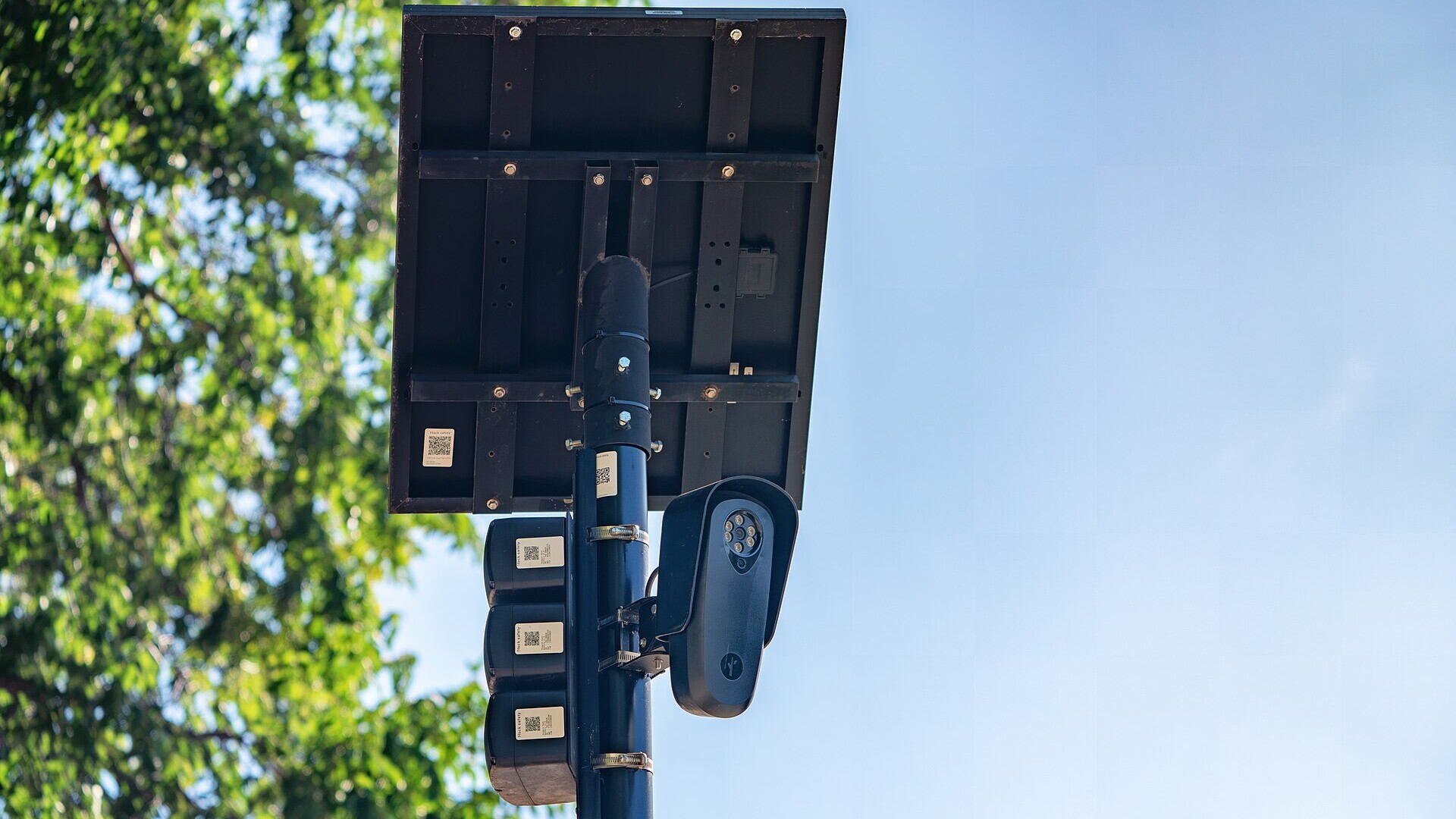
Sharonville, Ohio, police Lt. Walter Cordes searched his department’s Flock license plate camera system 29 times between Dec. 19, 2024, and April 20, 2026, to find out where one person was, and none of it was police business, according to Hamilton County prosecutors. A department audit flagged the searches in June. On Oct. 13, a grand jury indicted him on a felony.
The same Tuesday, Little Rock Mayor Frank Scott Jr. announced that three city police officers had been relieved of duty after a department audit found misuse of the city’s plate readers. One of them ran 28 searches on a single plate over 10 days, KATV reported. Five days earlier, a Heard County, Ga., man filed a federal lawsuit alleging that Coweta County sheriff’s deputies searched his plate five times while his excessive-force suit against the sheriff was pending. That complaint names Flock Safety itself as a defendant.
All three cases came to light the same way: someone reviewed a log of searches that had already been run. The cameras record every passing car the moment it passes. The check on who looks at that record comes weeks or months later, and it is only as good as the reason an officer typed into a box before pressing search. In Coweta County, according to the complaint, the two reasons anyone can see are “info” and “37.”
Sharonville’s 29 searches averaged fewer than two a month
Cordes, 48, is charged with one count of unauthorized use of a computer, cable, or telecommunication property, a fifth-degree felony that carries up to 12 months in prison. Prosecutors say he self-reported during the audit and admitted the searches in an interview, and the Hamilton County Sheriff’s Office investigated. Sharonville Police Chief Jim Nesbit told WCPO that a new Flock feature for spotting potentially suspicious searches helped surface the activity. “He betrayed our trust and the trust of our community, and that cannot be tolerated,” Nesbit said. Cordes is on administrative leave while the department runs its own investigation.
That feature is Flock’s Audit Assistance, which the Georgia complaint says the company introduced in April 2026. Cordes’s last alleged search was April 20. For nearly all of the 16 months covered by the indictment, the tool that eventually flagged him did not exist. When Flock announced in August that Audit Assistance would become mandatory, ABC News reported that about a third of its customers had turned it on. The company’s media FAQ now says it will be required for all law enforcement customers by the end of 2026.
Twenty-nine searches over 16 months works out to about 1.8 a month. A burst of searches on one plate stands out in a log. A search every couple of weeks blends into a working lieutenant’s normal traffic, and it is also exactly the pattern of someone keeping tabs on one person.
Ohio’s statute explains the choice of charge. Section 2913.04 of the Ohio Revised Code has a dedicated provision making it a fifth-degree felony to get into the state’s law enforcement automated database system without authorization. Flock’s network is a private company’s service, not that state system, which as I read the statute is why the indictment relies on the section’s general computer-misuse count. Hamilton County Prosecutor Connie Pillich told WCPO that Cordes is the first law enforcement official charged with misusing this technology since she took office. “Protecting public safety and protecting individual liberties are not mutually exclusive,” her office’s release quotes her as saying.
Little Rock reviewed searches quarterly and is moving to monthly
KATV reported that the Little Rock Police Department found the misuse in its own audit and will now review the system monthly instead of quarterly. Scott said the city will follow its disciplinary process, up to and including termination, and that he expects officers to “use the tools entrusted to them responsibly.” The city has not publicly named the officers or said what the other two did.
On a quarterly schedule, a 10-day run of searches like the one KATV described could be close to three months old before anyone read it. Monthly review cuts that to a few weeks. Neither schedule stops the search from happening, and the person whose car was looked up has no way of knowing in the meantime.
The volume behind those logs is large. Little Rock’s Flock cameras read the plates of 687,332 unique vehicles in 30 days, the Arkansas Advocate reported. The same report counted six Arkansas cities, Centerton, Greers Ferry, Searcy, Mayflower, Farmington and Pea Ridge, that have let their Flock contracts lapse or ended them early since the end of July, while Cabot unplugged its cameras during a review. That matches what happened in Virginia and Texas before Flock announced roughly 270 job cuts.
The Coweta County lawsuit targets Flock’s search design
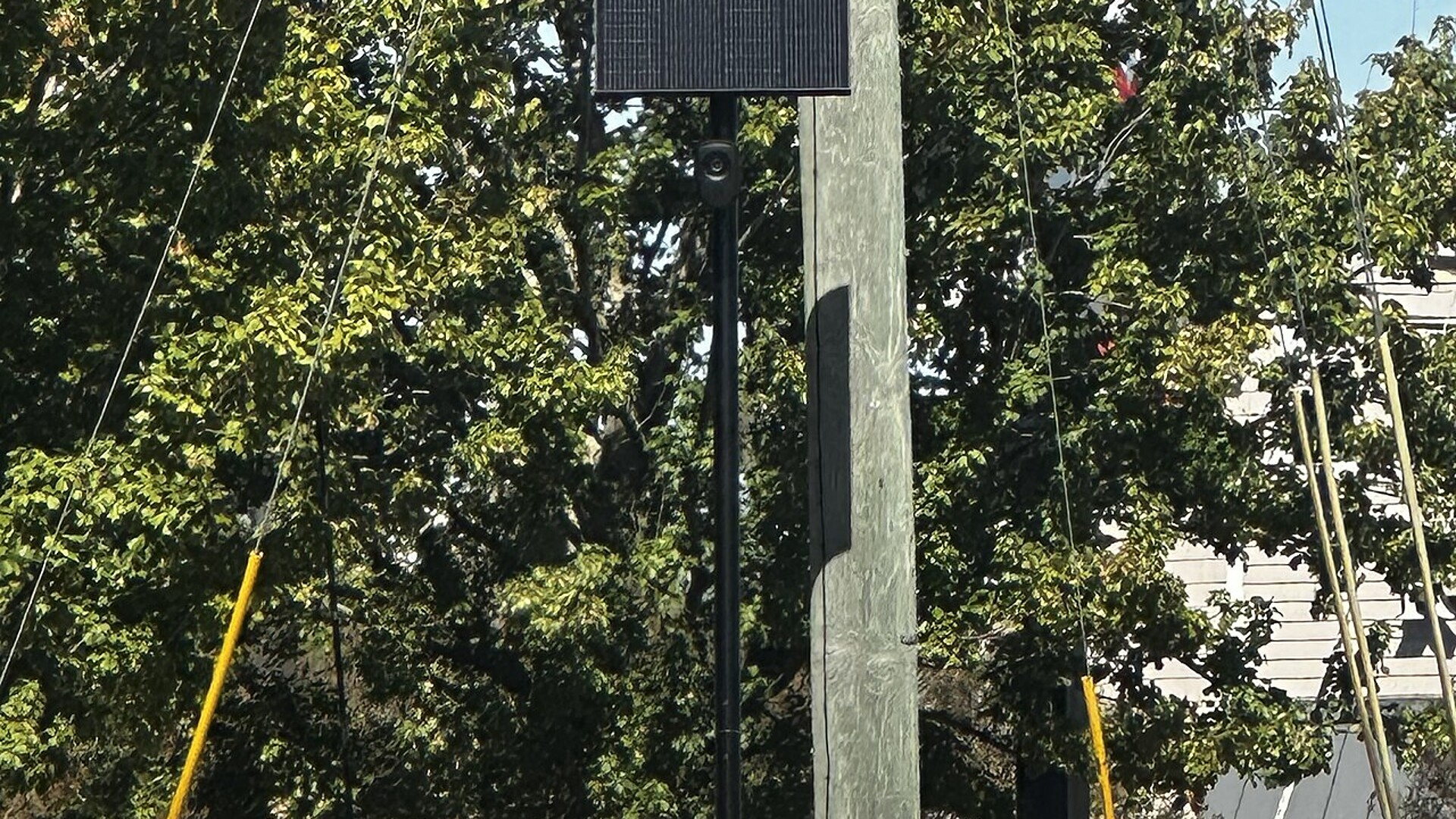
Tyler Murkerson’s complaint, filed Oct. 8 in the U.S. District Court for the Northern District of Georgia (case 3:26-cv-00223), goes back to a Feb. 6, 2023, arrest at a BP station on Georgia Highway 34. The four criminal charges were dismissed that June, and in September 2024 he sued two deputies and Sheriff Lenn Wood. That suit was dismissed with prejudice around August 2026, according to the new complaint, which argues the plate searches are separate conduct.
The complaint says the Coweta County Sheriff’s Office searched Murkerson’s plate five times between May 4 and Nov. 18, 2025. Two of those searches were logged by operators “r.fau” and “w.fau,” whom the complaint identifies as deputies Randall S. Faulkner and William Faulkner. The operator name, date, time and reason for the other three are withheld from the audit record. The two visible reasons were “info” and “37.” The complaint also alleges that William Faulkner entered “37” for most of his searches and attached a case number to only four of the thousands he ran.
Murkerson told WSB-TV he felt followed after the 2023 arrest. The sheriff’s office declined to comment, citing pending litigation, and Flock did not respond to the station. No defendant has answered the complaint, and its allegations are unproven. In August, WSB reported that three Coweta sheriff’s employees resigned after an internal Flock audit and were referred to the Georgia Bureau of Investigation. That report did not name them.
What separates this case from the Colorado Rivian owner’s lawsuit and the Tulsa deputy whose logged reason came before the traffic violation is how squarely it aims at the vendor. Murkerson sues Flock for negligence, invasion of privacy and breach of duties under Georgia’s plate-reader law, on behalf of a proposed class of people whose plates a Georgia agency searched with no matching case or investigation. The argument reads like a product-defect claim. The complaint alleges Flock’s reason field was free text, that an optional case-code field arrived in July 2025 without validation, that an offense dropdown came the week of Dec. 10, 2025, and that Flock removed officer names, searched plates and typed reasons from its Network Audit reports effective Jan. 31, 2026. It lists nine alternative designs, including case-number validation and rate limits, and asks the court to order Flock to validate search justifications in Georgia. A separate class action we covered in September made a similar argument about login security that was optional until this summer.
Georgia law allows 30 months of plate data; Flock’s new default is seven days
Georgia’s plate-reader statute, O.C.G.A. § 35-1-22, allows the data to be used only for a law enforcement purpose, which it defines as the investigation of an offense or activity initiated by a law enforcement agency. Knowingly using it for anything else is a misdemeanor of a high and aggravated nature. The same law lets agencies keep captured plate data for up to 30 months.
Flock’s defaults are far tighter than that. Its standard retention was 30 days until August, when it moved to seven days for new customers; existing customers keep the retention periods they already have, according to the company’s FAQ. In practice, the limit on how long a Georgia driver’s movements sit in the system is a vendor setting, and the statute would let an agency set it much higher. Murkerson’s complaint alleges Coweta’s data was kept past the default. Sen. Josh Hawley’s bill would set a 10-day federal cap, which is still longer than Flock’s own default for new accounts.
Drivers can’t opt out, and the audit trail is all they get
The plate on your bumper is required by your state, and nothing in these systems asks before reading it. In each of these cases, the driver’s only window into who looked was the agency’s audit data. Murkerson’s partial picture came from HaveIBeenFlocked, a site that compiles Flock audit records, WSB reported, and it showed details for two of his five searches. If an officer types a vague reason, that window shows a username and a word.
The same hardware can be pointed the other way. Anthony Sistilli, a software engineer in Brampton, Ontario, described in a YouTube video posted Oct. 7 a homemade plate-reading camera set up to keep records only of police vehicles, and he says two Peel Regional Police officers later came to his door. The Auto Wire has not independently confirmed his account or the visit with Peel police. As he tells it, officers raised privacy concerns about a camera logging their cars, the same concern drivers have raised about Flock’s 120,000 or so cameras across the U.S.
What comes next in Ohio, Arkansas and Georgia
Flock has promised that Audit Assistance will be on every law enforcement account by Dec. 31 and that case-code requirements are being expanded; the open question is whether a case number becomes required and checked before a search runs, or stays a field an officer can fill with “info.” Little Rock’s first monthly audits will show whether three officers were the whole problem. Cordes’s case now moves through the Hamilton County courts. And in Newnan, if a federal judge lets Murkerson’s negligence claims against Flock go forward, the search logs of Georgia agencies on Flock’s network could become evidence in a class case, and the company’s design choices could end up in front of a jury.
Should a plate search be blocked until the system confirms a real case number, even if that slows officers down, or is catching abuse in an audit afterward good enough?