
Standing in Dubuque, Iowa, on Sunday, President Donald Trump told reporters his administration has the “concept” of a new trade deal with Canada and that the Keystone XL pipeline would be part of it. Prime Minister Mark Carney posted on X that the exchange “builds on recent constructive discussions.” Reuters’ account of the two statements includes no tariff rate, no quota and no date.
Carney gave a progress report this week at a Commonwealth leaders’ meeting in Antigua and Barbuda. “They’re asking less, and they’re offering more, but we’re not quite there,” he said, according to The Hub, which reported that he did not say which issues remain open. The Hub also reported that autos are expected to be the main sticking point and that Carney expects to meet Trump at the APEC summit in China later this month.
For anyone who buys or repairs a Canadian-built vehicle, a “concept” changes nothing yet. What is in force is a stack of proclamations, and none of them has been amended since the call.
The 25% tariff and the credit that sets a Canadian-built truck’s price
Since April 3, 2025, the U.S. has charged a 25% tariff on imported automobiles under a Section 232 proclamation signed March 26, 2025. Vehicles that qualify under USMCA get a break: if Commerce approves the importer’s documentation of U.S. content, the 25% applies only to the non-U.S. content. If Customs finds that content was overstated, the proclamation says the tariff applies to the full value of every vehicle of that model from that importer, retroactively. A Canadian-assembled truck full of American-made parts therefore pays 25% on a slice of its value, not on the whole sticker.
Canada’s mirror image has been in place since April 9, 2025: a 25% tariff on non-CUSMA-compliant U.S. vehicles and on the non-Canadian, non-Mexican content of compliant ones. The White House objected to more than the tariff. Proclamation 11048, signed July 20, says Canada also assigns each automaker a tariff-rate quota, smaller for companies that moved production to the U.S., and that U.S. vehicle exports to Canada fell about 22%, from roughly $25.9 billion to $20.3 billion, comparing April 2025 through March 2026 with the year before. Washington’s answer was an extra 50% duty on a list of Canadian goods that runs from honey to toys. Cars are not on it.
The U.S. has also gone past tariffs once already. Proclamation 11063, signed September 8, moved Canadian motorcycles with piston engines over 800 cc from the 50% duty to an outright import ban, effective September 29. The proclamation says that if a court invalidates the ban for any import, the 50% duty applies to that import instead.
The next date that matters for cars is January 1, 2027. As The Auto Wire reported in August, Trump set that date in a Truth Social post for raising tariffs on Canadian cars, trucks, parts and steel to 50%. The post did not say whether a 50% rate would keep the U.S.-content credit, and I found no document that answers it. That detail decides whether the increase lands on the non-U.S. slice of a vehicle or on all of it, which is the difference between a manageable price bump and a nameplate that stops making sense for the U.S. market. The Auto Wire’s earlier look at what the January deadline means for prices and repairs covers the arithmetic.
Keystone XL is on the table, and it isn’t a car
Trump said of the pipeline, “They’re going to build the Keystone Pipeline.” President Biden revoked a key permit for the project in 2021. As designed, it would have carried 830,000 barrels a day from northern Alberta to Cushing, Oklahoma, and on to Gulf Coast refineries. Reuters reported it was unclear how the project would be revived.
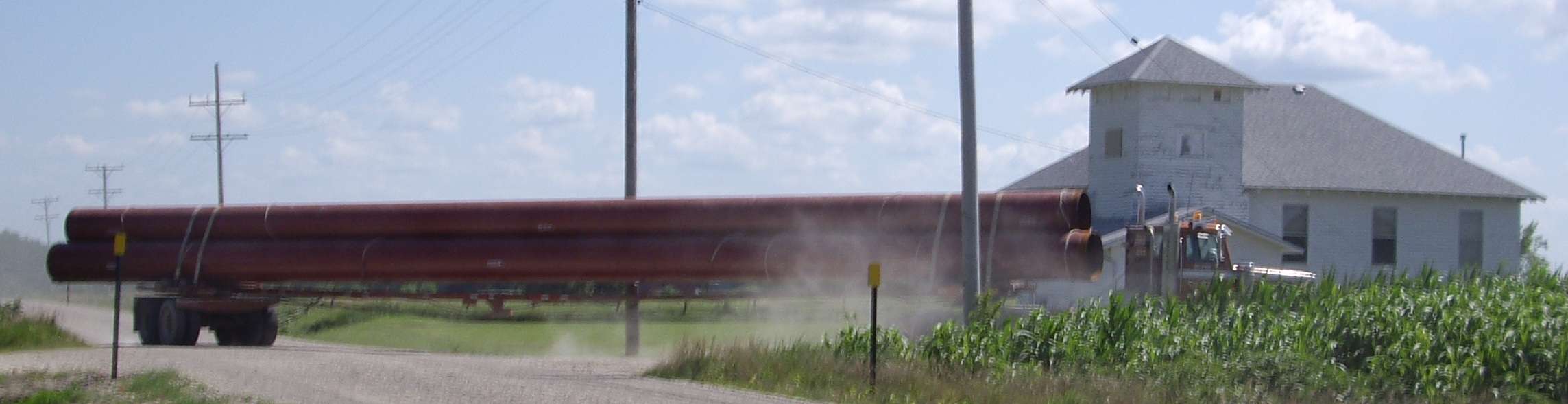
The nearest live project is South Bow’s Prairie Connector, a 550,000-barrel-a-day line from Alberta to Wyoming, developed with U.S. firm Bridger Pipeline, that would reuse some Keystone XL pipe already installed on the Canadian side. Reuters reported that South Bow will decide in 2027 whether to proceed and did not comment on Trump’s remarks. A pipeline sitting inside a car-tariff negotiation means the automakers’ grievances, the quotas and the 25%, are one item among several, and neither government has said what Ottawa would get on autos in return.
Why Tuesday’s election doesn’t move the January date
The Hub reported that Democrats won both chambers of Congress in Tuesday’s midterms. The new Congress will not be seated until January, no legislative vehicle has been identified, and a bill rolling back the steel and aluminum duties would face a presidential veto that Democrats lack the two-thirds majorities to override, according to the same report. Those duties rest on separate national-security authority, not the emergency tariffs the Supreme Court struck down in February 2026. The auto tariff is also a Section 232 action, so a change to it is more likely to arrive as a new proclamation from either capital than as a vote.
What a buyer can check today
A VIN that begins with “2” marks a vehicle built in Canada, and NHTSA’s VIN decoder shows the assembly plant. Dealers cannot price a tariff that no one has written down, so quotes on Canadian-built models for after January 1 are guesses. Trump’s January threat also covers parts, and replacement-part costs are where a higher tariff would eventually reach the repair counter.
The two things to watch are the text of any proclamation that follows the call and whatever Carney and Trump say if they meet at APEC. Until one of them puts a rate and a date on paper, the 25% remains the only number that applies.
Should Washington keep the 25% tariff on Canadian-built vehicles until Canada drops its automaker quotas, or trade it away now for a broader deal that includes things like Keystone XL?