

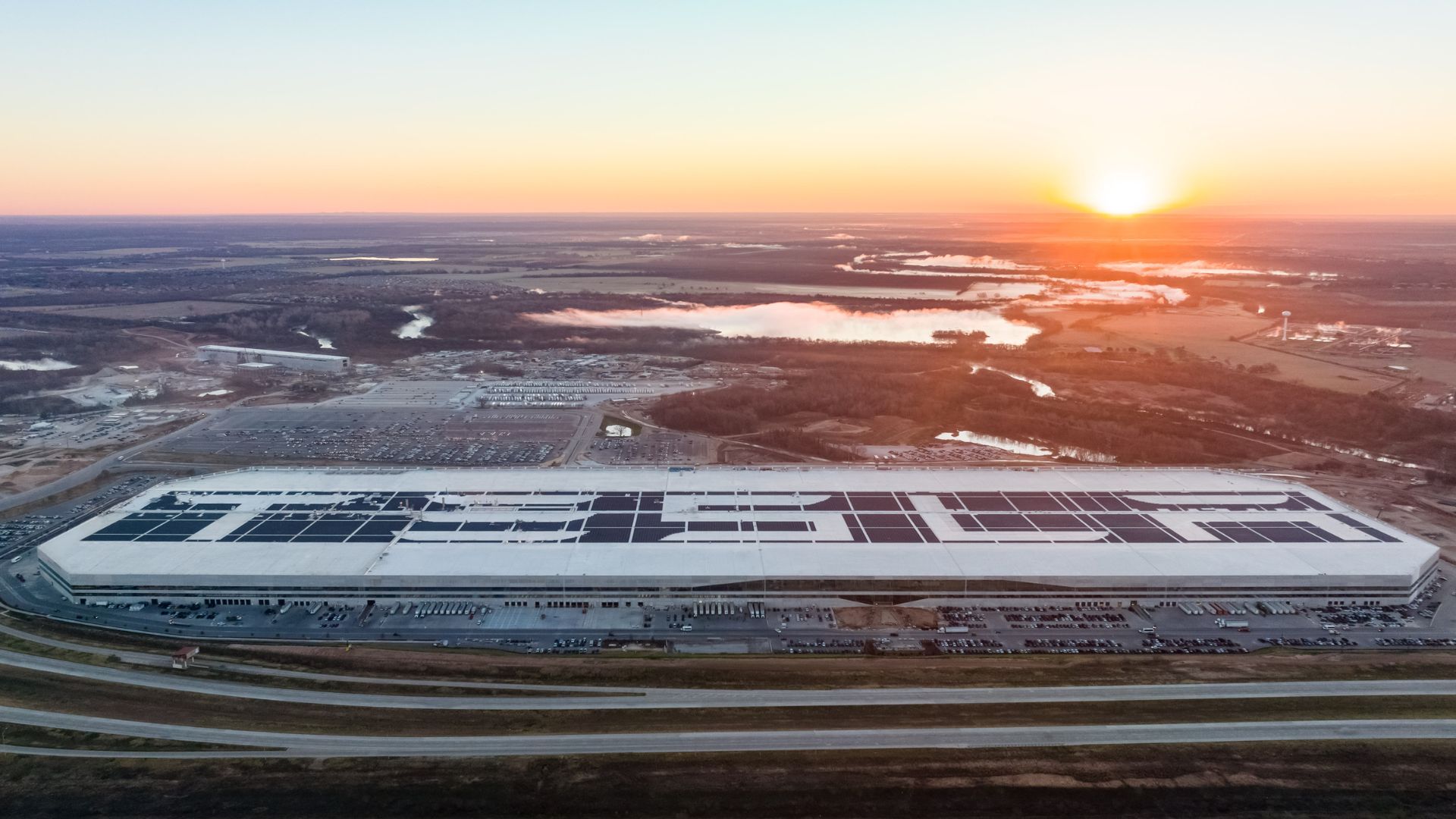
Tesla’s own third-quarter update, dated Oct. 21, shows its “other models” line building 7,004 vehicles in the quarter, down from 13,775 in the first quarter. Sixteen days later, Elon Musk said on X that Tesla will wind down Cybertruck production at Gigafactory Texas around the middle of next year “to make room for increased Cybercab production.” The Auto Wire’s earlier report covered the sales history. The filing shows the line was already shrinking before the announcement, and federal law and Tesla’s warranty terms decide what Cybertruck owners keep once it stops.
What Tesla’s Q3 Update Shows
The update, filed as Exhibit 99.1 to a Form 8-K, splits output into Model 3/Y and “other models.” It does not break out the Cybertruck, and the document does not define the “other models” line. Production in that line ran 11,624 in the third quarter of 2025, then 11,706, 13,775 in the first quarter of 2026, 8,822 and 7,004 in the most recent quarter. Deliveries ran 15,933, 11,642, 16,130, 12,364 and 8,295. That puts third-quarter production 40% below a year earlier and deliveries 48% below, and deliveries exceeded production by 1,291 vehicles, so stock came down.
The same update lists installed annual capacity for the Cybertruck at more than 125,000 vehicles, the same figure it gives for the Cybercab. Spread over four quarters, that is more than 31,250 a quarter, and the entire “other models” line built 7,004. If every one of those were a Cybertruck, the plant ran at about 22% of listed capacity. Tesla does not say how many were, so 22% is a ceiling.
What Owners Keep After the Line Stops
Tesla still owes owners the same coverage after the last Cybertruck leaves the line. Tesla’s warranty page lists Cybertruck battery and drive unit coverage at 8 years or 150,000 miles, whichever comes first, with a minimum 70% battery capacity retention, and basic coverage at 4 years or 50,000 miles. The new-vehicle warranty transfers to the next owner when the transfer goes through Tesla, and the page says the warranty issued with each vehicle is the controlling document. By The Auto Wire’s arithmetic, a truck sold in mid-2027 carries basic coverage into mid-2031 and battery and drive unit coverage into mid-2035, if the mileage limits are not reached first.
Recalls run on a longer clock. Under 49 U.S.C. § 30120(a), a manufacturer must remedy a defect or noncompliance without charge when the vehicle is presented for the fix. The free remedy ends only for vehicles bought by the first purchaser more than 15 calendar years before the recall notice, under § 30120(g)(1). A truck bought in 2027 stays inside that window into the early 2040s, whether or not Tesla still builds it. Our look at the Cybertruck’s federal recall file covers the repairs already in that queue.
Where the Paperwork Goes Quiet
The warranty page does not address parts availability, and parts bought from Tesla carry their own warranty of 12 months or 12,500 miles. That leaves open how long Tesla will stock Cybertruck-specific body and structural parts. The question is tied to equipment that suppliers hold: Tesla’s July suit against Angstrom Automotive Group, covered in The Auto Wire’s tooling lawsuit report, was about tooling used to make these trucks.
Musk’s post puts the wind-down around mid-2027, and none of the Tesla documents cited here gives a parts-support timeline. Tesla’s next quarterly update, covering the fourth quarter, will show whether the “other models” line fell again.
If an automaker stops building a vehicle, should federal law require it to keep stocking replacement parts for a fixed number of years, or are the warranty and the 15-year free-recall rule enough protection for owners?