
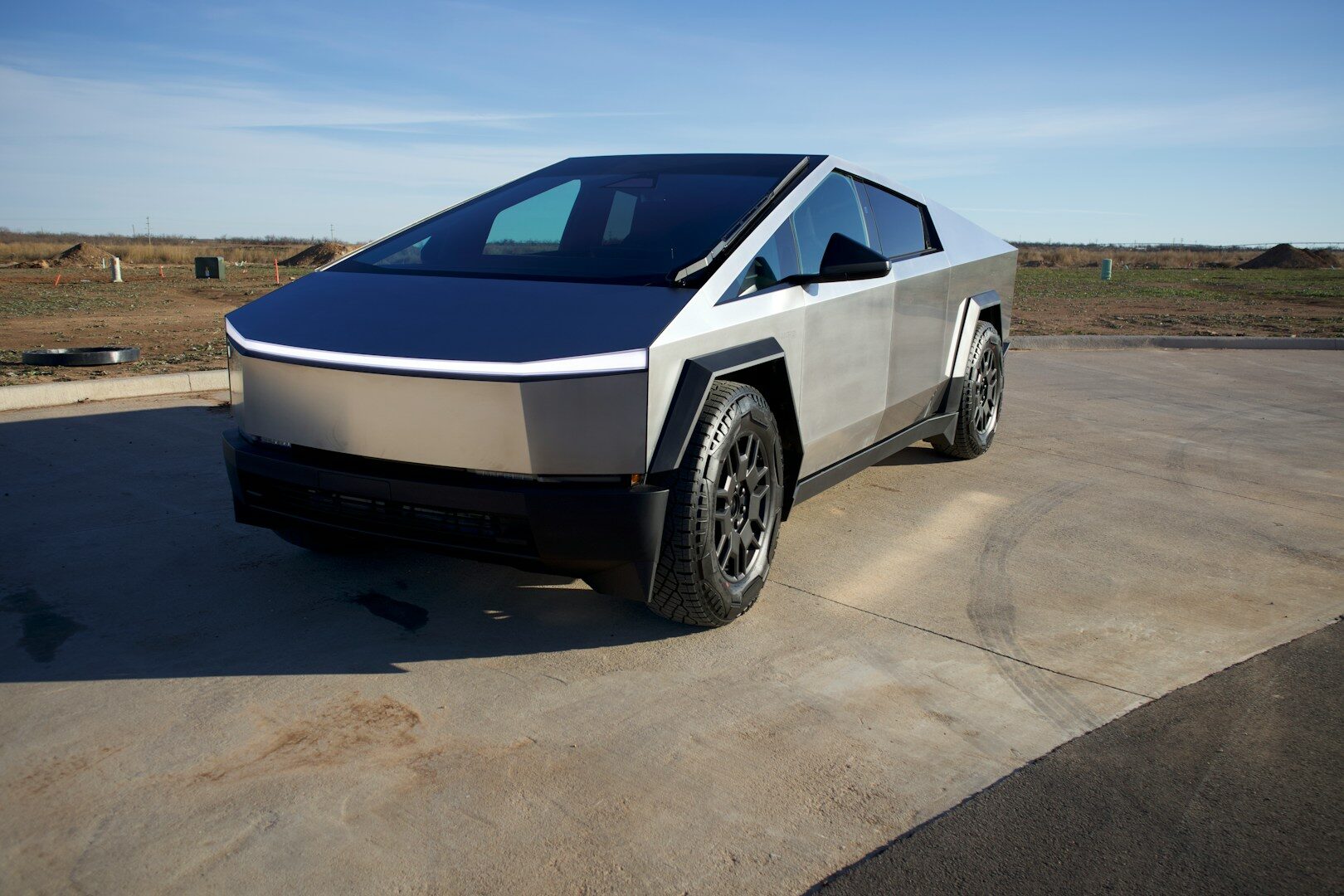
Elon Musk has been saying a version of the same thing for six years, and the Cybertruck is the receipt.
Back in September 2020, he posted that scaling production of new technology is poorly understood, and put a number on it: “It’s 1000% to 10,000% harder than making a few prototypes.” He’d already compressed the idea into a six-word reply on the same platform: “Prototypes are easy, production is hard”. XX
Then, on September 8 of this year, he posted that Tesla had redesigned Cybercab production to run “over 5 times faster than conventional automotive manufacturing”. X
Both things can be true. But if you want to understand why the second claim deserves a hard squint, the Cybertruck‘s public paperwork is the best free education in manufacturing you’ll find.
Prototypes don’t have process variation
Here’s the thing a prototype physically cannot show you: what happens when you build the same part ten thousand times with real people, real suppliers and real tolerances stacked on top of each other.
Take the recall that put the truck on the evening news. NHTSA campaign 24V-276 covered every 2024 Cybertruck built from November 13, 2023 through April 4, 2024. The defect was an accelerator pedal pad that could slide off under heavy pressure and wedge into the interior trim above it. The cause, per Tesla’s own filing, was residual lubricant left behind during assembly of the pad onto the pedal, which reduced retention force.
Related Articles
- Today at The Auto Wire: Full Recap (September 12, 2026)
- EPA Pulls Scope 3 Emissions Guidance: What It Means for Automakers and Car Buyers
Lubricant. Not a design flaw. Not a materials failure. A process step on the line left a film where it shouldn’t be, and the retention force fell below spec. You will never find that in a prototype shop, because in a prototype shop a skilled technician assembles the part once, carefully, and it works.
That pattern repeats through the file. Campaign 24V-718 was an FMVSS 111 noncompliance on rearview camera display timing, caught by Tesla during an internal compliance audit almost a year into production. Campaign 24V-832 covered trucks with a specific MOSFET part number inside the drive inverter, where a fault could cut torque and leave you coasting with no warning. That’s a semiconductor lot traced down to a part-number family. Again: invisible at prototype scale.
And this April, campaign 26V255 pulled in 2024 through 2026 Cybertrucks built between March 2024 and November 2025 that were fitted with 18-inch steel wheels, either on the line or afterward in service. Road impacts and cornering loads could strain the stud hole in the wheel, propagating cracks until a stud separated from the hub. Losing a wheel stud is a controllability problem, and it’s a fatigue problem, which means it only surfaces after real customers put real miles on real roads.
The stainless problem, explained properly
The most instructive document in the pile is the cant rail recall, campaign 25V-170. Tesla‘s filing describes the cant rail as an assembly made of an electrocoated steel stamping joined to a stainless steel panel with structural adhesive, fastened to the vehicle. On affected trucks the stainless panel could delaminate at the adhesive joint and depart the vehicle, becoming a hazard for whoever was behind you. Tesla logged 151 warranty claims it believed were related.
Unpack what that tells you. You have two dissimilar metals bonded with adhesive rather than welded, because welding stainless to coated carbon steel in a body shop is its own nightmare, and because a weld would show through on a panel with no paint to hide it. Adhesive bonding solves the cosmetic and metallurgical problems and creates a new one: adhesive performance depends on surface prep, cure temperature, cure time and humidity. Miss any of those on a moving line and the bond strength you validated in the lab isn’t the bond strength leaving the building.
That is the whole argument in one part. Bare stainless is unforgiving because there’s no filler, no primer and no paint to absorb the sins of the process. Every dimensional variation shows. Every bond has to be right the first time.
What it means when you own one
This is where the story stops being about Musk and starts being about your wallet.
A painted steel fender with a crease gets pulled, filled, primed and sprayed. A bare stainless exterior panel does not. Cosmetic damage generally means panel replacement, and the cant rail campaign shows the remedy path Tesla itself chose: replace the assembly.
Body shops that work stainless also have to isolate it. Carbon steel particles from grinding or sanding elsewhere in the shop will embed in stainless and rust, leaving orange freckles across a panel that is itself corrosion-resistant. That means separate tooling, separate abrasives and ideally separate work areas, which is why the pool of shops willing to touch one of these trucks is smaller than it is for an F-150.
Smaller shop pool means longer repair cycle times. Longer cycle times mean bigger rental and loss-of-use claims. Insurers price all of that, and they price panel replacement over panel repair. If you’re shopping used, run the VIN through NHTSA’s recall lookup before you hand over money, and specifically confirm that the cant rail and the 18-inch steel wheel campaigns were completed. A road-hazard trim panel and a cracking wheel stud are not optional fixes.
Where the numbers actually land
Tesla has never broken out Cybertruck volume. It sits inside a bucket the company labels “Other Models” alongside the Model S, Model X and Semi, which makes the truck’s individual performance a matter of inference rather than record.
What is on the record is the bucket. Per Tesla’s own quarterly operational summary, other-models production ran 17,161 units in Q1 2025 and 13,775 in Q1 2026, a 20% year-over-year decline. In the second quarter of this year, Tesla built 8,822 of those vehicles and delivered 12,364 of them.
Related Articles
- Your Recall Check Came Back Clean. Your Airbag Might Still Be Fake.
- Recycled Carbon Fiber Is Forecast to Nearly Double by 2033 — BMW Just Cut It From the Car That Made It Famous
Delivering more than you build is inventory burn. It is not, by itself, a crisis. But it’s a long way from the volumes the truck was once discussed in, and it’s worth holding next to the “5x faster” claim about Cybercab.
The uncomfortable synthesis
Musk isn’t wrong that manufacturing is the hard part. The recall file is a six-year-long argument in his favor, written by his own engineers and filed with the federal government.
What the file also shows is what happens when you innovate on the product and the process at the same time. A new material, a new joining method, a new body architecture and a new plant all arriving together means every problem is a compound problem, and you can’t tell whether the panel came off because of the adhesive, the surface prep, the fastener torque or the design until you’ve built enough of them to find out.
Cybercab is the same bet, doubled. Assembling modules in parallel and framing the car in one operation at the end is a genuine departure from a century of body-in-white practice. If it works, it’s a real advantage. If it doesn’t, the failure modes will be novel ones nobody has a playbook for.
Ask again in eighteen months, when the Part 573 filings start coming in. That’s when you’ll know whether the machine that makes the machine got easier, or just different.
Is the Cybertruck’s recall record just the normal cost of building something genuinely new, or proof the thing went to market half-baked? And would any of it stop you from being an early buyer on the next one?
Top photo: Somalia Veteran on Unsplash.