
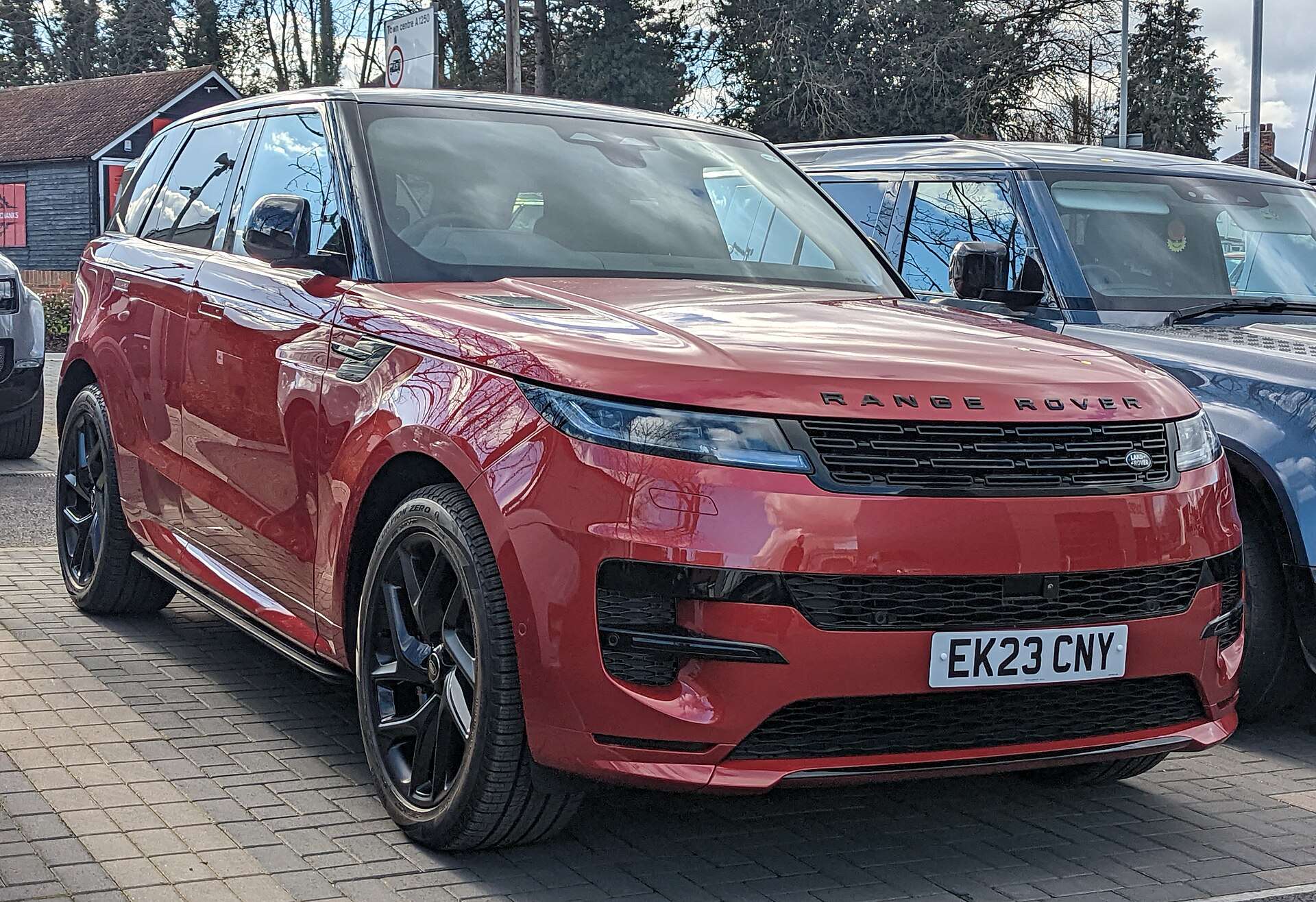
Jaguar Land Rover has recalled 121,509 Range Rover and Range Rover Sport SUVs in the United States over cracking front steering knuckles. The investigation NHTSA opened into the same part now covers 331,559 of them. By The Auto Wire’s arithmetic, that leaves 210,050 vehicles inside the probe and outside the recall.
A recall’s scope is the manufacturer’s bet on which parts are bad. This investigation is the regulator testing that bet, and the paperwork shows the bet has already been revised twice: the recall grew from 16,759 vehicles to 121,509 in nine months, and the investigation now reaches model years the recall never mentioned.
How 16,759 vehicles became 121,509
The first filing came on Nov. 7, 2024. In recall 24V-840, JLR reported that the front suspension upper knuckle joint on 16,759 Range Rovers from model years 2014 to 2016 could crack. The affected cars were identified by build window, Oct. 1, 2014 to March 31, 2015 and Nov. 2, 2015 to March 16, 2016, with the second window narrowed further by knuckle batch codes. The report names the knuckle supplier as SuperAlloy Industrial Co. Ltd. of Taiwan.
Then the net widened. According to the chronology in JLR’s August 2025 recall report 25V-514, Transport Canada told the company the same condition appeared to exist on the Range Rover Sport. JLR’s recall committee met on May 1, 2025, and on May 15 it decided to recall affected vehicles in Canada. NHTSA opened a preliminary evaluation on June 27, 2025, after 12 owner complaints about fractured knuckles, according to the agency’s investigation resume. On July 31 the committee decided to recall in the U.S. as well. At NHTSA’s request, the new campaign absorbed 24V-840 on Aug. 7.
The result was 54,720 Range Rovers and 66,789 Range Rover Sports, all built at Solihull, England. JLR said 100 percent of them are estimated to have the defect. The report lists 96 U.S. claims and field reports on the Range Rover, the earliest dated Sept. 17, 2015, which is more than nine years before the first recall filing, and 14 on the Sport, starting July 16, 2021. JLR reported no U.S. accidents, injuries or fires at the time.
What the upgrade to an engineering analysis means
NHTSA’s Office of Defects Investigation upgraded the preliminary evaluation to engineering analysis EA26003 on April 24, 2026. The resume covers 2014 to 2022 Range Rover (L405) and Range Rover Sport (L494) models, a population of 331,559. It says the 2018 to 2022 vehicles share a substantially similar knuckle design with the earlier ones, and it describes the data JLR supplied as contradictory enough to need deeper analysis. Two of the newer complaints involve a 2020 and a 2021 Range Rover.
The first information request, dated Sept. 18, 2026, shows how deep the agency intends to go. ODI reported 41 crack complaints by then, up from the 12 that opened the case. It asked JLR for the root cause and the justification for each recall’s scope, every knuckle design version by part number and supplier, and warranty claims, parts sales and repair-kit sales. Answers were due Nov. 11. The public file I reviewed does not include JLR’s response.
A bracket is not a new knuckle
The remedy in 25V-514 splits vehicles two ways. Technicians inspect both front knuckles. A knuckle with a visible crack is replaced. If there is no crack and a bracket is available, they fit a retaining bracket to the upper joint instead. JLR states the bracket’s purpose is to keep the component from completely separating if a fracture develops.
That wording matters for owners. The crack starts at the upper clevis, the forked mount where the upper control arm attaches to the knuckle, and the danger is that the arm detaches and the driver loses control of the wheel. A bracket that holds the pieces together limits that outcome, but it leaves a cracked part on the car. In the information request, NHTSA asks JLR to show the bracket’s development and testing, with evidence that it prevents crack growth and separation from the upper control arm. A bracket is the cheaper fix to build and install, and the agency is asking the company to prove it is enough.
Why model years 2018 to 2022 are the open question
JLR’s 25V-514 report treats the 2018 model-year knuckle as handling operating stresses differently, and the recall stops at the 2017 model year. NHTSA’s resume treats the later knuckles as substantially similar. Those two positions cannot both hold, and the information request is built to find out which does. Request 19 asks JLR to assess the split and flash lines, the design versions and the failure characteristics in owner photos of the 2020 and 2021 fractures, compared with the 2014 to 2017 parts. Those marks come from the tooling that made the part, so they can show whether a 2021 knuckle is the same design as a 2016 one.
Recall boundaries in this case have followed batch dates and build windows, which depend on when parts left a supplier and when they reached the line. The report notes that some at-risk parts were held at a Tier 1 supplier and released later, creating a mixed build condition. Drawing a line through that is difficult, and each earlier line moved outward when new data arrived.
What Range Rover owners can check now
Owners of 2014 to 2017 Range Rovers and Range Rover Sports can enter their VIN at NHTSA’s recall lookup to see whether 25V-514 or 24V-840 is open on their vehicle. The repair is free under the filing, and 24V-840 describes a reimbursement route for owners who paid for the work themselves. Owners of 2018 to 2022 vehicles are not named in either recall, and the investigation is where any change would start. Anyone who finds a cracked knuckle, on any of these years, can file a complaint with NHTSA, which is how this case began.
JLR has had other recent NHTSA filings, including a Range Rover tailgate camera recall and an expanding DC-DC converter recall, and our recall roundup tracks the rest. This one differs because the part sits between the wheel and the car.
If your Range Rover got a bracket instead of a new knuckle, would you trust it, or would you push the dealer to replace the part?