
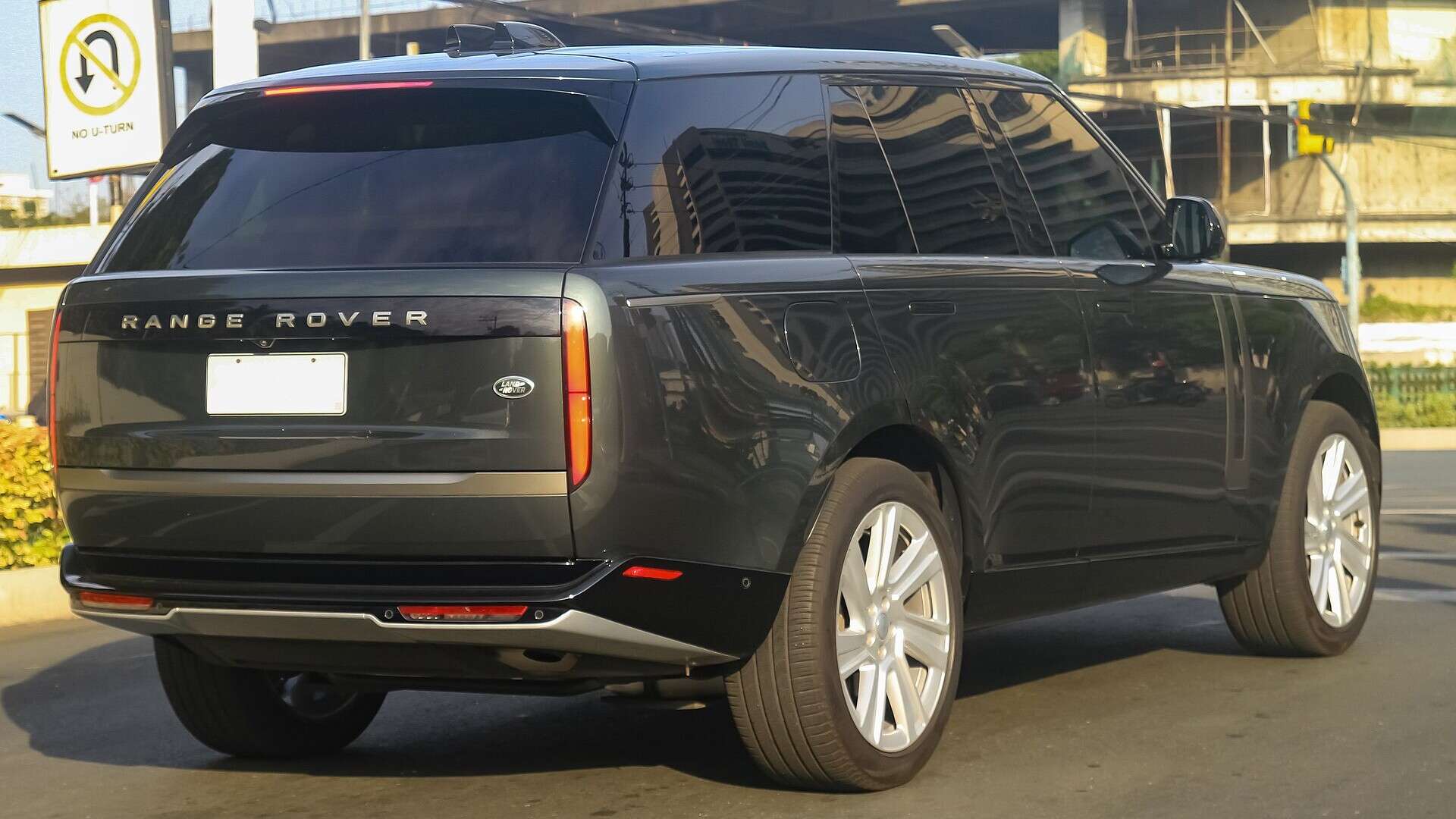
Jaguar Land Rover North America told NHTSA on Oct. 15 that the tailgate of every 2022 through 2026 Range Rover it sold in the United States may fail to drain water away from the rearview camera. The Part 573 report for recall 26V678 covers 93,997 vehicles and puts the estimated defect rate at 100%. The remedy is not a new camera. Dealers will drill additional drain holes in the underside of the tailgate trim that holds the camera, then check the camera and replace it if the water has already done its work. The repair is free.
What JLR filed
The affected Range Rovers were built at the Solihull plant between July 8, 2021 and June 4, 2026. According to the filing, water that pools around the camera can damage it over time, producing a distorted image or none at all on the touchscreen. JLR says it knows of no U.S. accidents, injuries or fires tied to the problem. Dealers were notified Oct. 29, and the company says owner letters will go out on or before Dec. 11 in what the filing calls a phased recall.
A revised seal on the camera’s tailgate trim piece went into production on June 4, 2026, the same date the affected build range ends.

A claims spike, then a gate on claims
Read the timeline for what JLR did between July and October. On July 31, 2026, a JLR safety committee opened an investigation because rear camera replacements in the U.S. and Canada were running unusually high compared with other markets. On Aug. 8, after reviewing a separate Discovery recall, the committee’s decision forum asked for more field evidence to confirm that the replacements were genuine failures.
On Sept. 18, JLR began requiring evidence before approving camera replacements. The filing says claim rates then appeared to drop significantly. On Oct. 6, supplier analysis of the first batch of returned cameras found that most had failed from water ingress, and on Oct. 8 the forum ordered the recall. JLR counts 2,295 claims and field reports involving camera replacement between Aug. 3, 2022 and Sept. 28, 2026, which works out to about 2.4% of the recalled population by The Auto Wire’s math.
Claims are how carmakers spot a defect early. Asking owners for proof before approving a camera swap is a defensible way to screen out junk claims. It also made the numbers look better: claim rates dropped after Sept. 18, and less than three weeks later the supplier reported most returned cameras had water damage. The filing says the gap between the U.S. and Canada and other markets was not fully explained, and it does not say whether Range Rovers sold elsewhere share the tailgate design. For owners, the practical consequence is paperwork. JLR says its general reimbursement plan applies, so anyone who paid for a camera or was turned away at the service counter should dig up the invoice or the denial.
Why a camera counts as a safety part
Federal rule 49 CFR 571.111, Federal Motor Vehicle Safety Standard No. 111, requires passenger vehicles of 4,536 kg gross weight or less built on or after May 1, 2018 to show a rearview image within 2.0 seconds of shifting into reverse. That image has to cover specified test objects behind the vehicle, and the system must still meet the field-of-view and image-size requirements after durability tests covering salt spray, humidity and temperature. JLR’s filing lists no FMVSS number, so this is a defect recall and not a stated noncompliance. The company’s own risk statement is that a blurred or missing image may leave a driver unaware of objects or pedestrians behind the vehicle.
The filing does not say how the tailgate drainage design performed in the durability testing the standard describes, and the remedy, extra drain holes, suggests the original path for water was inadequate in real use. JLR was required to file within five working days of determining a defect exists under 49 CFR 573.6. The decision came Oct. 8 and the report is dated Oct. 15, inside the five-working-day window.
What owners and the industry should watch
The repair is a drilling job plus a camera check, so parts supply is unlikely to be the bottleneck unless many cameras turn out to be damaged. Owners who already see a hazy, flickering or blank camera image do not need to wait for the letter to raise it with a dealer. Land Rover’s DC-to-DC converter recall in September was filed under a different number, 26V599, but both cases hinge on the same thing: what the manufacturer’s own field data was showing before the filing. The open question in this one is how many of the 2,295 claims were paid, denied or paid out of owners’ pockets.
JLR started demanding proof for camera claims while its own committee was investigating camera failures. Smart screening, or a thumb on the scale? If a dealer turned down your camera claim this fall, what reason did they give you?