
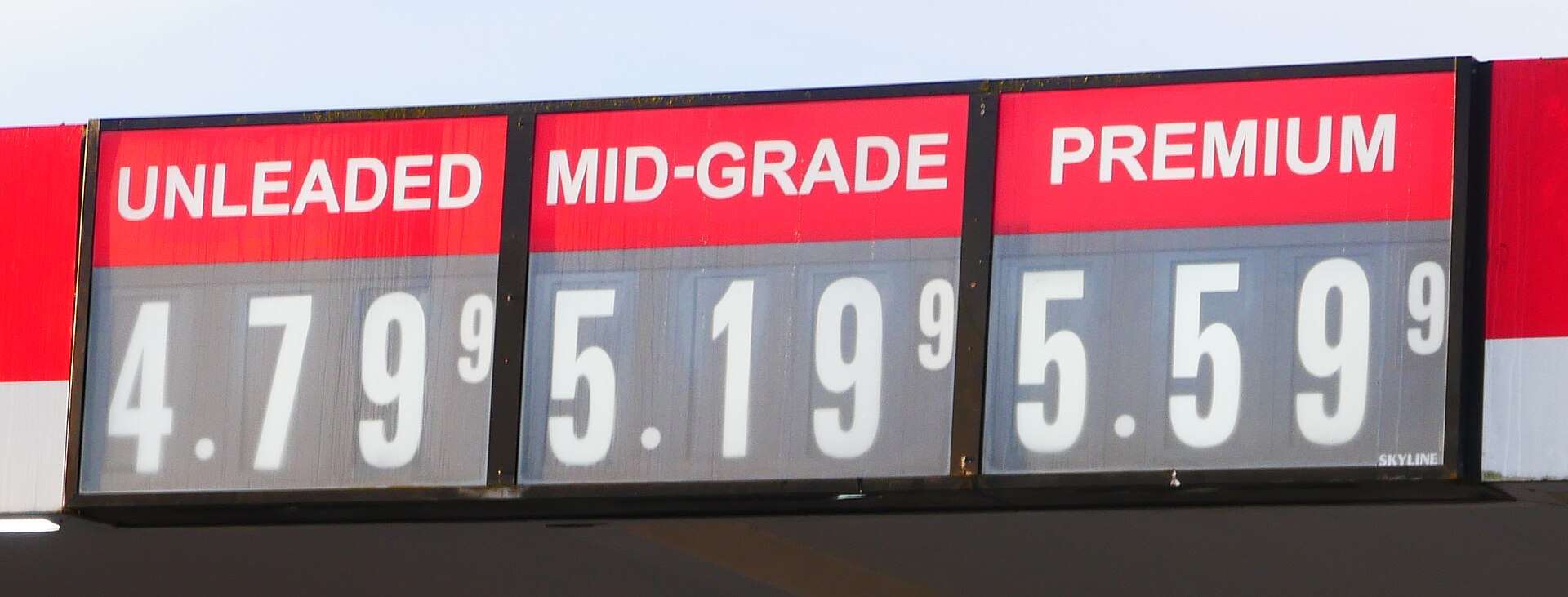
The national average price of diesel just crossed $6.29 a gallon, according to the U.S. Energy Information Administration’s weekly survey. Regular gasoline, by comparison, sits at $4.32. That gap is the tell. It says the current fuel crunch isn’t just about crude oil the world can’t pull out of the ground. It’s about capacity the world doesn’t have to turn that crude into something a truck, a tanker or a tractor can actually burn.
The trigger is real and well documented. Yemen’s Houthi movement fired missiles and drones at a Saudi air base over the weekend, days after an earlier strike knocked out Saudi Arabia’s East-West pipeline, the line that had quietly let tankers skip the Strait of Hormuz, the chokepoint that carries roughly a fifth of the world’s oil. With that detour gone, Commonwealth Bank commodities strategist Vivek Dhar told the ABC that the closure has “materially altered the state of the oil market,” pushing the share of prewar Hormuz flow the world now needs to keep inventories flat from roughly 40-45% up to 65-70%. Brent crude is trading above $107 a barrel and West Texas Intermediate above $103, both sharply higher than a month ago.
None of that fully explains why a farmer filling a diesel tank in Iowa is watching the price climb faster than the commuter next to him buying regular. For that, look at crack spreads, the gap between what a refinery pays for crude and what it can sell the finished fuel for. EIA’s own tracking shows the gasoline crack spread at New York Harbor has run about a dollar a gallon above 2025 levels since May, while the diesel and jet fuel spread has been running 74 cents higher still. Refineries that normally feed the global market with diesel and jet fuel have gone offline or scaled back across Russia and the Middle East. U.S. diesel inventories now sit 14% below their five-year average, versus 6% for gasoline, and gasoline imports have dropped 32% below normal since March. That’s the shortage actually biting drivers right now: not oil in the ground, but refined fuel that isn’t reaching the shelf.
Here’s the detail that should surprise anyone who assumes American energy independence equals cheap gas. The U.S. is on pace to pump a record 13.8 million barrels of crude a day this year, topping the record set just last year, with growth concentrated in the Permian Basin and the Gulf of America. Producers are drilling flat out because WTI averaged $84 a barrel through August, well above the roughly $63-69 breakeven that Dallas Fed surveys put on the region’s largest basins. All that added oil, and retail gas still climbed. Domestic crude output doesn’t set the price at the pump; global refined-product markets do. Record production is a win for producers and the trade balance. It is not a shield for a household fuel budget when the tight commodity is the finished fuel, not the barrel it came from.
That’s also why the pain isn’t landing evenly. Diesel and jet fuel are where the global refining loss is concentrated, so work trucks, tow rigs and farm equipment are taking a proportionally bigger hit than sedans filling up on regular. The Auto Wire has tracked this kind of asymmetry before, including how a single pipeline outage last summer hit gas prices in the Southeast harder than the rest of the country, and how a fuel spike can turn certain vehicles into outright financial liabilities. This is the same mechanism, playing out at a much larger scale.
It’s worth remembering how far this could still run, and what the alternatives look like. Analysts cited by the ABC put the current global oil and refined-product cushion at five to 11 weeks in a bear-case scenario, down from a base case of 15-20 weeks, and estimate Brent may need to approach $150 a barrel before demand destruction, prices rising until enough buyers simply stop buying, cools things off in price-sensitive economies. That would top, in nominal terms, the $147 peak Brent hit during the 2008 financial crisis. It’s also why stopgap supply arrangements, like the Venezuela crude deal floated earlier this month, get discussed at all: they trade one set of risks for another rather than solving the underlying refining bottleneck.
None of this means pumps are about to run dry. It means the cushion between enough and not enough has gotten remarkably thin, and thin cushions swing hard. A wider strike on Saudi infrastructure, another tanker fire in the strait, or simply a cold snap pulling harder on distillate demand could move these numbers again before the situation settles.
Remember the shape of this story more than the numbers in it. The U.S. can drill its way to a production record and still hand drivers a bigger bill, because gasoline and diesel are priced off global refining capacity, not off how much crude comes out of West Texas. The next time oil supply makes headlines, don’t ask how much crude is flowing. Ask how much of it the world can actually turn into fuel. That’s the number that ends up in your tank.