
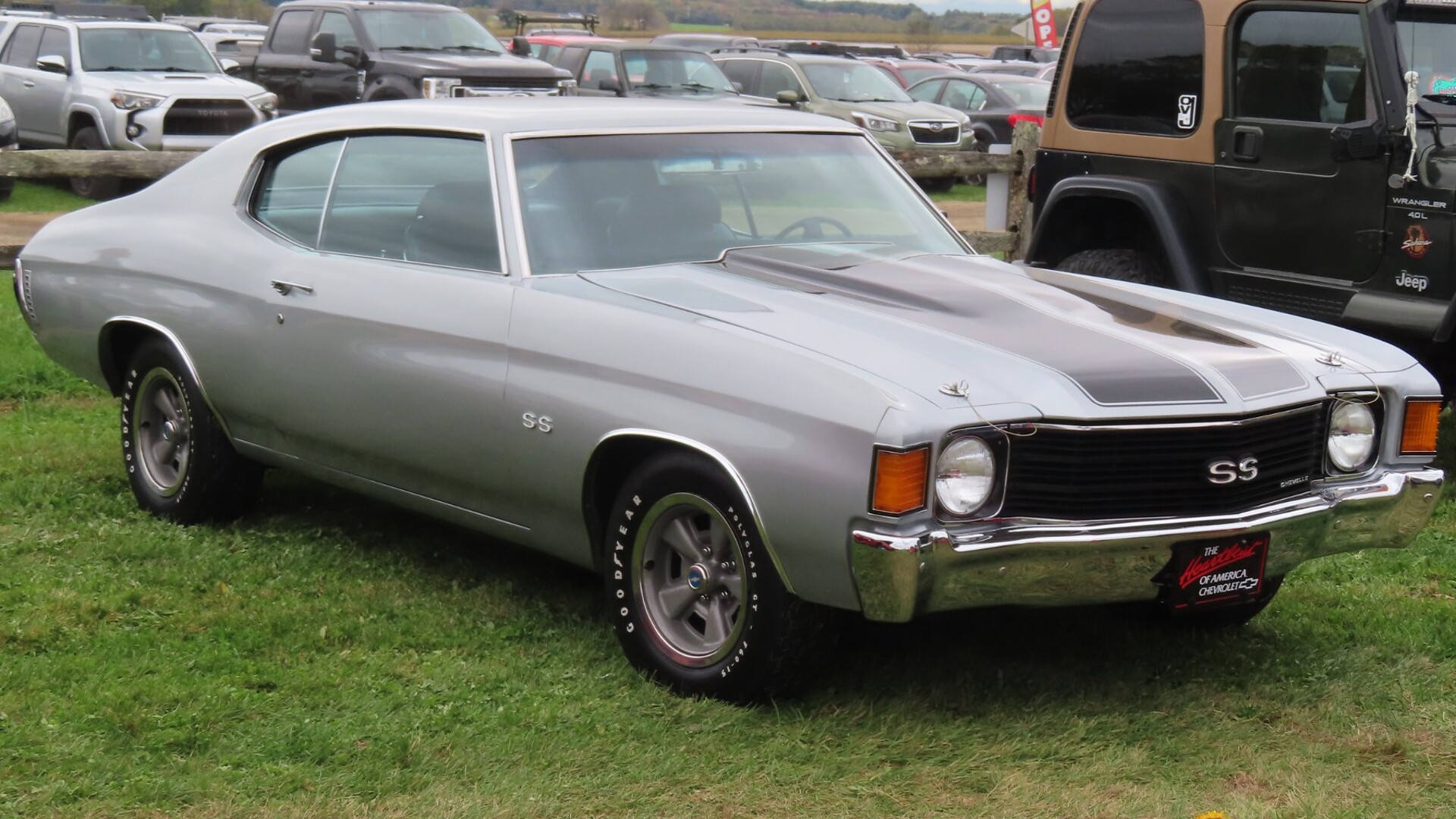
Federal prosecutors say a 1972 Chevrolet Chevelle SS left a downtown St. Louis warehouse on New Year’s Eve with its ignition broken so it would start without a key. It crossed the Mississippi into Illinois, and three of the defendants then arranged to sell it in Alton for $9,500 in cash. According to the indictment, the car was worth about $50,000, and the sellers couldn’t produce a title.
The buyer is charged too. Ethan C. Humbert, 50, of Bunker Hill, faces one count of possessing a stolen motor vehicle. The indictment doesn’t accuse him of going to the warehouse. His count covers the Chevelle after it reached Madison County, and he is one of 11 southern Illinois residents named in the case.
The case is built as much around what happened after the theft as the theft itself: who stores the vehicles, who lists them online and who hands over cash. For a car built before immobilizers and transponder keys, the title and a believable price are about the only safeguards left once someone is inside the building. Federal law can make a buyer who ignores both part of the crime, if prosecutors can prove he knew. Every charge here is an allegation, and each defendant is presumed innocent unless proven guilty.
Holiday trips with trailers, vans and a rented pickup
A federal grand jury returned the 10-page indictment, which was filed Sept. 9 as case 3:26-cr-30111 in the U.S. District Court for the Southern District of Illinois. The U.S. Attorney’s Office announced the case in a release dated Sept. 18. The press release gives only the outline. I read the indictment for the details.
Prosecutors identify the warehouse’s owner only as A.R. and describe the building as holding A.R.’s automobile and motorcycle collection. The conspiracy is alleged to have run from about Dec. 24, 2025, through April 2026. The indictment says the group first visited the warehouse to survey it, look over the collection, “claim particular vehicles” and plan how to get them out. Between Dec. 29 and Jan. 2, it says, they returned several times with pickup trucks, trailers, vans and rental trucks.
The Chevelle came out on or about Dec. 31. The indictment says two defendants moved and rearranged motorcycles inside the warehouse so the car could be removed. Other overt acts in the document describe these items:
- A 1937 Ford dirt-track race car with a flathead V-8, wearing race number 007.
- A white “Mini Indy” race car with a 500-cc Polaris engine. The indictment says it was hauled in a pickup that one defendant rented while another followed in his own car as a lookout, and that it was photographed so it could be listed for sale online.
- A 1997 John Deere 6675 skid steer.
- A brown Shriner-style parade car.
- Motorcycles including two Bultacos, a Sherco trials 2.9, a Yamaha XT600, a Harley-Davidson 883 with orange wheels, a red Cushman and an Ossa. A blue Suzuki X6 Hustler and the white Ossa were later recovered from defendant Robert L. Tidwell’s property.
The government’s release and its own indictment differ in two places. The release lists Brenda L. Donithan, 28, of Alton, among those charged with conspiracy. The conspiracy count in the indictment names nine defendants, and she isn’t one of them. Her only count, shared with Douglas F. Manns, concerns the Cushman, which the indictment says was hidden in a storage unit. The release also calls one vehicle “a white race car.” The indictment identifies it as the Mini Indy.


The bridges made it a federal case
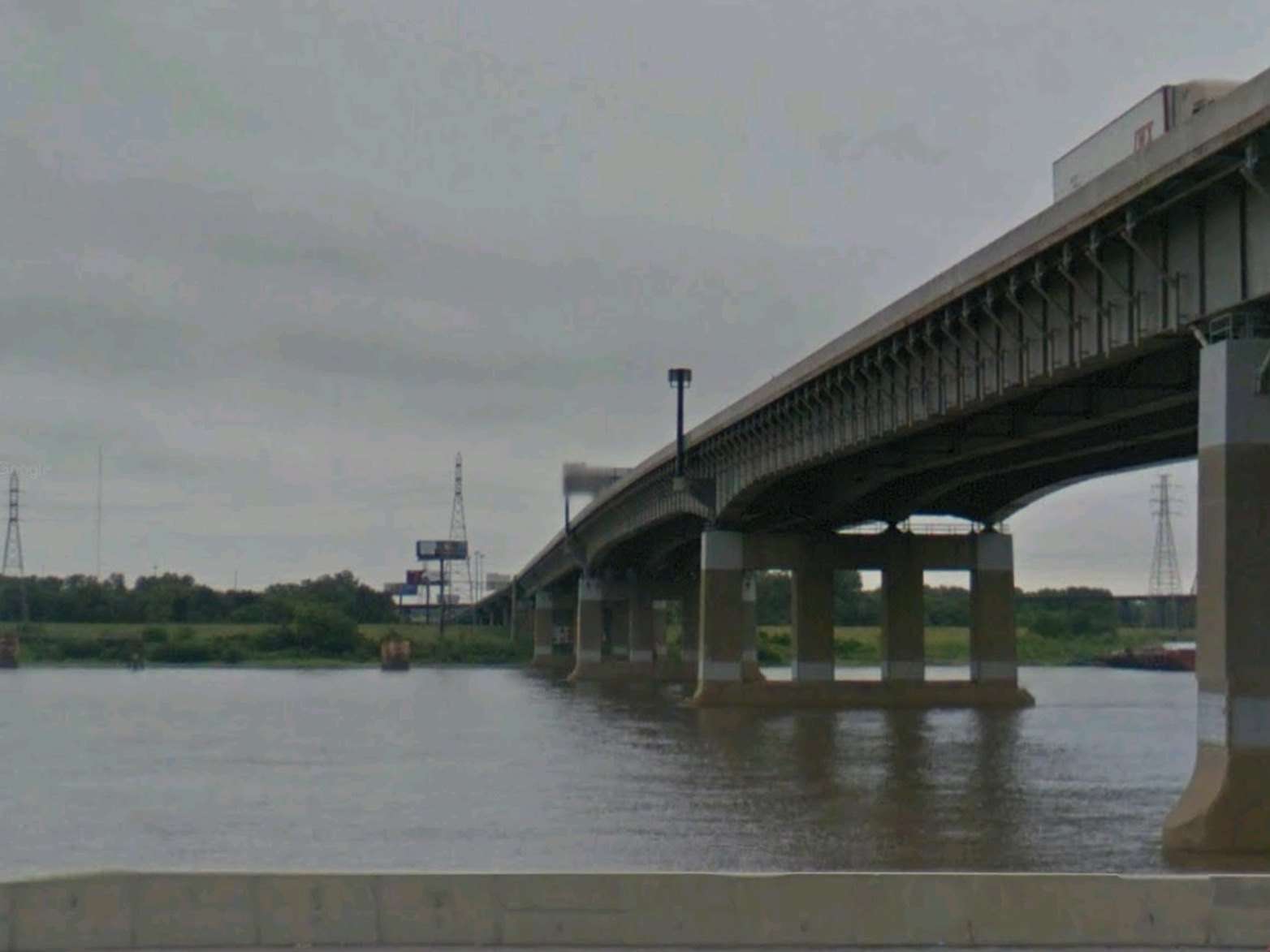
Breaking into a warehouse in St. Louis is a matter for Missouri. What brought in a federal grand jury is the route home: the indictment says the vehicles went over the Clark Bridge at Alton and the Poplar Street Bridge downtown, then through Madison and St. Clair counties.
That jurisdiction dates to the Dyer Act of 1919, which made trafficking stolen vehicles across state lines a federal crime. Its descendants are the two statutes in this case. Section 2312 covers transporting a stolen vehicle across state lines. Section 2313 covers anyone who receives, possesses, conceals, stores, barters, sells or disposes of a vehicle that has crossed a state boundary after being stolen, if the person knows it was stolen. Each carries up to 10 years in prison. The conspiracy count carries up to five.
Two features of that law shape this case. The first is the definition. Under Section 2311, a motor vehicle includes a motorcycle or “any other self-propelled vehicle designed for running on land but not on rails.” Registration and street legality don’t enter into it. A dirt-track car that has never worn a license plate counts, and so does a parade car or a 500-cc Mini Indy. The indictment charges the skid steer as a motor vehicle too.
The second is the word “knowing.” Section 2313 reaches the person at the end of the chain, but only if that person knew the vehicle was stolen. The indictment doesn’t say what Humbert knew. It lists three circumstances in the paragraph about the Chevelle sale: the price was roughly one-fifth of the stated market value, there was no title, and the ignition had been punched out. Whether those facts prove knowledge is a question for a court, but putting them in the charging document shows how the government intends to argue it.
The Auto Wire covered the same statute in July, when a crew accused of stealing two dozen muscle cars was caught by it. The geography guarantees repeats: in St. Louis, a stolen car is one bridge away from becoming a federal case.
U.S. Attorney Steven D. Weinhoeft said in the release, “This case shows what happens when federal, state, county, and local agencies on both sides of the river refuse to let a geographic boundary become an impediment to bringing offenders to justice.”

What a 1970s ignition lock was designed to stop
The Chevelle had the theft protection the government required at the time. Federal Motor Vehicle Safety Standard 114 took effect on Jan. 1, 1970. NHTSA has described its original purpose as preventing crashes caused by unauthorized use of unattended vehicles, which it did by requiring that a car not be easily driven without its key. The agency’s own history of the rule covers the later additions, including the transmission lock in park. A locked mechanical ignition stops someone trying the door handle in a parking lot. It doesn’t stop a crew that has the building to itself and brought tools. The indictment says the ignition was broken so the car could be started without a key.
Newer cars add an engine immobilizer, which keeps the engine from running without the correct coded key. The National Insurance Crime Bureau counted 659,880 vehicles stolen nationwide in 2025, down 23% from 2024 and the lowest level in several decades. The NICB credits coordinated work by police, automakers, insurers and itself, and it pointed to theft-prevention software from Hyundai and Kia, whose models were at the center of a wave of thefts and lawsuits. Illinois still recorded 28,327 thefts last year and Missouri 17,496.
A 1937 Ford race car, a Cushman and a collection of 1970s dirt bikes have none of that electronics. Motorcycles are a weak spot generally. The NICB reported 44,564 motorcycles stolen in 2025 and said 41% were eventually recovered. It also said more than half of recreational-vehicle recoveries happen within two weeks of the theft report.
For a stored collection, that two-week window can close before anyone notices. The indictment describes a group with enough time inside to rearrange motorcycles, and it says the trips stretched over several days around the holidays. It doesn’t say when the owner discovered the losses. In a warehouse that nobody visits daily, the recovery clock may start well after the vehicles are gone.
Illinois drivers help pay for the task force
Ten agencies are credited with the investigation, from the FBI’s Springfield field office to the St. Louis Metropolitan Police Department and the Bridgeton police. One of them is the Metro East Auto Theft Task Force, and Illinois policyholders help pay for it.
Under 20 ILCS 4005/8, insurers that write physical-damage coverage on private passenger vehicles in Illinois pay up to $1 per earned car year into a state trust fund. The statute says insurers “may collect and shall pay” that amount. A council overseen by the Secretary of State distributes the fund. In October 2025, Secretary of State Alexi Giannoulias announced $11,951,369 in grants. That included $2,629,299 for the Metro East task force, run through the St. Clair County Sheriff’s Department. The office said the money can pay for investigators, tracking devices and audits of scrap processors and body shops.
What collectors and buyers can take from the Fulmer indictment
Collectors who keep vehicles in a warehouse, barn or storage unit can learn from what the indictment says the thieves did first: they came to look before they came to take. An inventory with photos, VINs, frame and engine numbers, and identifying details like race numbers and paint gives police something to match against an online listing. Investigators here had descriptions as specific as “orange wheels” and “race number 95.” Checking the building on a schedule, holidays included, shortens the window before anyone starts looking.
For buyers, the case reduces to the three facts in the Chevelle paragraph. A cash deal, no title and a punched ignition each have innocent explanations on their own. Together, at a fifth of the car’s value, they are the facts the government placed beside the sale in its indictment. Titles and paperwork decide who owns a recovered vehicle long after the arrests, and a buyer who skips that step can lose the car and the cash.
The case is assigned to U.S. District Judge Stephen P. McGlynn. The indictment includes a forfeiture allegation against proceeds from the thefts. Watch whether the possession counts, especially the one against the Chevelle’s buyer, go to trial or end in plea agreements. The answer will show how far prosecutors in this district plan to follow stolen classics down the chain.
Cash, no title, punched ignition, a fifth of the value. Is the buyer a mark or a co-defendant?
Related: A 30-Mile Buick GNX Just Sold for $427,000, More Than Double What It Brought in 2024
Top photo: A 1972 Chevrolet Chevelle SS, the same model year as the car at the center of the federal case. This is not the stolen car. Photo: MercurySable99 via Wikimedia Commons, CC BY-SA 4.0.
