
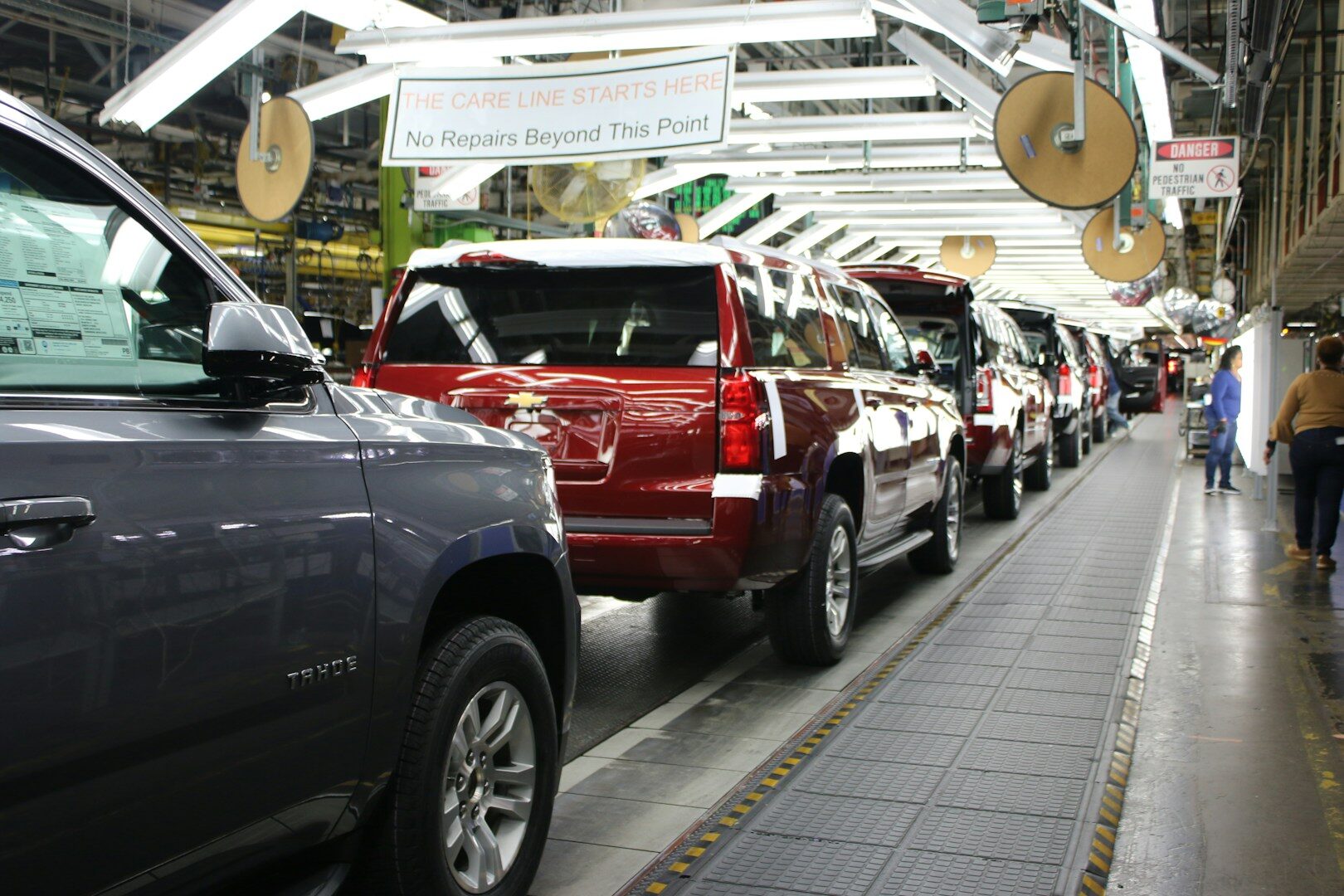
Read Donald Trump’s Monday morning tariff threat closely, and something is missing. He posted that starting January 1, 2027, tariffs on cars, trucks, automotive parts, and steel would rise to 50 percent. Every outlet that covered it called this a tariff on Canada. His own sentence never uses that word.
That gap between what everyone is calling this and what he actually wrote is the real story here. Not because it’s a drafting mistake. In a fight that started over wine, dairy quotas, and a streaming tax, cars and steel were never really the target. They’re the leverage.
The trigger is simple enough. Trade talks between Washington and Ottawa collapsed over the weekend, and early Saturday the U.S. followed through on tariffs it had briefly paused: 50 percent duties on roughly $28 billion of Canadian goods, including autos, alcohol, and dairy. Canada says its own retaliation lands September 8. Monday morning, Trump raised the stakes again, attaching a specific date four months past the November midterms, plus a warning of his own: Build in the U.S. and there are ZERO TARIFFS.
The Word That’s Missing
Read that post as written, and it isn’t a Canada-specific escalation at all. It reads like a proposed increase to the general Section 232 tariff rate that already applies to every vehicle and part entering the country, regardless of where it was built. Taken literally, a flat move from 25 to 50 percent wouldn’t stop at the Windsor-Detroit tunnel. It would raise the cost math on a German-built Volkswagen, a Japanese-built Mazda, and a South Korean-built Hyundai right alongside anything rolling out of Ontario. Nobody in the administration has clarified whether this is a country-specific maneuver aimed at Canada under a separate legal authority, or a global rate hike being announced in the middle of a fight with Ottawa. That distinction decides who actually pays for it.
That ambiguity is a big part of why Reuters found auto executives, granted anonymity to speak candidly, openly skeptical the tariff happens on schedule at all. They noted that Trump has announced tariffs this size before that quietly failed to materialize, and that a January 1, 2027 deadline lands conveniently after a midterm election that could reshape his leverage in Congress.
The Math Nobody’s Explaining
Here’s the detail almost nobody explaining this story bothered to walk through: the 50 percent figure doesn’t land on a blank slate. Automakers have already paid a 25 percent Section 232 tariff on imported vehicles since April 2025, with a wrinkle most car shoppers have never heard of. A USMCA-compliant vehicle isn’t taxed on its full price. It’s taxed only on the value of its non-U.S. content, a figure the automaker itself calculates and defends to Customs and Border Protection, line by line. USMCA-compliant parts, meanwhile, have stayed exempt entirely while the government finishes building a formal process for taxing those too. Doubling the base rate to 50 percent doesn’t double the sticker price of a Canadian-built Equinox or Civic. It doubles the tax on whichever slice of that vehicle wasn’t already American, and after six decades of cross-border assembly, that slice is often smaller than the headline number suggests.
A Fight That Isn’t About Cars
Listen to Trump’s own cabinet this week, and the auto industry barely comes up as an actual grievance. Trade Representative Jamieson Greer traced the breakdown back to Canadian provinces banning American wine and spirits. Transportation Secretary Sean Duffy spent the weekend on cable news attacking Canada’s health care system and its defense budget, not its car plants. The real list of complaints reads like a grab bag: liquor shelves, dairy quotas, French-language labeling rules, a digital tax aimed at American streaming services. Autos and steel get pulled into the middle of it because they’re the biggest number on the table, and because that number is concentrated in exactly the states that decide national elections.
That’s what makes Canada’s auto sector a useful hostage rather than an actual target. It directly employs more than 125,000 people and supports roughly 427,000 more jobs indirectly, by the Canadian government’s own count. Stellantis alone counts about 8,100 employees at its Canadian plants, more than any other automaker in the country, while GM runs assembly and engine operations across four separate Ontario facilities. None of that exists because Canada undercut American labor costs. It exists because Detroit built it that way on purpose, a decision that dates back to the 1965 Auto Pact and was locked in twice more, first by NAFTA and then by USMCA, ground covered in more detail after last week’s three-day tariff pause.
The Uncertainty Tax
Whether or not January 1 ever arrives with an actual 50 percent duty attached, the threat already carries a cost. Stellantis is still absorbing a $26 billion loss and just spent a week reassuring its Mexican suppliers it isn’t pulling out. GM and Ford are mid-stream on reshoring plans that take years to execute, not months, and none of them can retool a transmission line around a tariff that might expire before the concrete cures. Tariffs can be announced in a sentence. Factories cannot be rebuilt in one.
So set the 50 percent number aside for a moment. The number that actually matters is the one nobody in Washington has bothered to define: who this tariff is really for. Until that gets answered, every automaker building cars in North America, American, Canadian, German, Japanese, or Korean, is planning next year’s production in pencil, not ink.