
Gabriel Horcasitas will be sentenced a second time for a shooting he told the court was “the most frightening and regrettable five seconds of my life.” The first sentence fell because the judge was moved by a video of the man Horcasitas killed, speaking words that man never spoke.
On Sept. 30, a three-judge panel of the Arizona Court of Appeals upheld Horcasitas’s manslaughter conviction but vacated his 10.5-year prison term, ruling that Maricopa County Superior Court Judge Todd F. Lang should not have relied on an AI victim video played at sentencing. Presiding Judge D. Steven Williams wrote the opinion, joined by Judge Anni Hill Foster and Vice Chief Judge David D. Weinzweig. It is a published opinion, so Arizona’s trial courts are bound by it.
The case draws a line that will matter in any courtroom where a fight began on the road. Video that records what a person did is fair game at sentencing. Software that renders what a family believes that person would have said is not, even when it is labeled as AI.
A horn, a red light and two trials
The opinion lays out the shooting this way. Horcasitas was stopped behind a truck at a red light in a busy intersection and honked repeatedly. The truck’s driver got out, raised his arms and walked toward Horcasitas’s car, yelling. Within seconds, Horcasitas shot him. Horcasitas told police that day the man had charged his car, threatened to kill him and grabbed the frame of his open driver’s-side window. Several eyewitnesses said the man never got past the rear of his own truck, and none saw him touch or reach into the car.
The opinion does not name the victim. Reuters identified him as Christopher Pelkey, a 37-year-old Army veteran killed in 2021, and reported that his sister, Stacey Wales, scripted the AI message.
Getting a verdict that held took two trials. The first jury convicted Horcasitas of manslaughter and one count of endangerment, but the trial judge threw out those verdicts after finding prosecutors had failed to disclose text messages from the victim’s phone that bore on self-defense, and the appeals court affirmed that order in 2024. Before the second trial, Horcasitas pleaded guilty to endangerment, and a second jury convicted him of manslaughter as a dangerous offense. The new opinion also upholds the second judge’s decision to keep the disputed texts from that jury, which is why the conviction survives while the sentence does not.
What the video said, and what the judge said back
Friends and relatives spoke at the sentencing hearing, and the victim’s brother read a statement the victim had written himself about his faith, values and hopes. Then the video played. According to the opinion, the AI figure opened by explaining it was a version of him recreated from his picture and voice profile. It included clips of real footage of him, told the court it was “a true representation of who I was, you know, not how the courtroom portrayed me,” and addressed Horcasitas directly: “I believe in forgiveness and in God who forgives.”
The opinion also records what each side asked for. The family’s lawyer wanted the maximum the verdict allowed, which was the presumptive term of 10.5 years because the state had alleged no aggravating factors. The prosecutor, citing Horcasitas’s lack of any criminal history, asked for a slightly mitigated 9 years. The defense asked for 7.
Lang imposed 10.5. Before he did, he told the family, “I loved that AI,” said “I feel that that was genuine,” and added, “I didn’t hear him asking for the maximum sentence.” He found Horcasitas’s law-abiding life and remorse to be mitigating, then said the family’s loss reduced the weight of that mitigation. After naming the presumptive term, he said: “That’s more than the State asked for.”
.jpg)
Victim statements skip the checks witnesses face
Arizona’s constitution gives crime victims the right to be heard at sentencing, and state law shapes how. Under A.R.S. § 13-4426.01, a victim who speaks does so “not as a witness,” the statement does not have to be disclosed to the state or the defendant or submitted to the court in advance, and the victim cannot be cross-examined. The opinion adds that victims are not sworn. The same statute gives prosecutors and the defense the chance to explain, support or deny what a victim says, and the trial rules of evidence do not apply at sentencing at all.
That design lets a grieving family speak without being treated like a hostile witness. It also meant the AI video reached the judge through the entrance with the fewest checks on it. Nobody had to show it to the defense ahead of time, and the person who wrote its words could not be questioned about them. The remaining safeguard is due process: information a judge uses at sentencing must carry “minimal indicia of reliability,” the standard the Arizona Supreme Court applied in its 2006 decision in State v. McGill.
Prosecutors argued the video met that bar because it reflected what the sister believed her brother would have said, because the two were close, and because it matched his own written words read aloud by his brother. The panel measured it against a 2013 Arizona Supreme Court case, State v. Rose, which allowed photographs of a homicide victim’s young sons at his grave. Photographs like those document something that happened. The AI video, apart from its embedded real clips, “does not reflect actual events,” Williams wrote. It “erases the interpretive distance between the family’s belief about what the victim would have said and the victim’s own voice and opinions.” The court rejected the idea that the opening explanation solved the problem: “No disclaimer could cure that error.”
The defense did not object, and the sentence fell anyway
Horcasitas’s lawyer did not object to the video at the hearing. In Arizona that limits an appeal to “fundamental error,” a hard standard to meet, because the defendant has to show the problem went to the basic fairness of the proceeding. The panel found it met. “While the record does not reflect precisely how the AI video factored into the sentencing calculus, there is no question it played a role,” Williams wrote, pointing to the judge calling the video genuine and crediting the AI figure’s forgiveness as coming from the victim’s heart. The court held that the real footage of the victim inside the video was permissible and the AI portion was not.
The record supports the panel’s concern. The prosecutor asked for 9 years, the judge gave more, and the judge’s own remarks put the video near the center of his reasoning about the family and forgiveness.
Seconds at an intersection, and who records them
Road-rage cases turn on a few seconds: who got out, how far he walked, whether a hand reached a window. In this one, those seconds were rebuilt from eyewitnesses and the defendant’s own police interview; the opinion describes no recording of the shooting. A dashcam on the windshield exists to supply that missing witness, and in road-rage confrontations involving guns, a few seconds of footage can settle what a jury otherwise pieces together from bystanders.
The Arizona opinion says nothing about dashcams, and I won’t stretch it to. What it supplies is a test lawyers can use: does a video document an event, or depict what someone imagined? The family’s video built a speaking likeness of the victim from his picture and a voice profile. Any clip that has been run through generative software before it reaches a courtroom will face that test, and this panel found a clear label did not pass it.
Federal rulemakers are working on the same problem for federal courts. The Judicial Conference’s Advisory Committee on Evidence Rules has a draft Rule 901(c) for suspected deepfakes: a party challenging an item would first have to offer evidence sufficient to support a finding that it is a deepfake, and the side offering it would then have to show it is more likely than not authentic. In May, the committee held off on publishing that draft and said it would revise and further study a separate proposal, Rule 707, covering machine-generated evidence offered without an expert. Its Oct. 15 meeting in Boston includes a panel of experts on deepfakes.
Resentencing and the October deadlines
The manslaughter count goes back to Maricopa County Superior Court for a new sentence. The concurrent 2.25-year endangerment term was not vacated. The appellate docket sets Oct. 15 as the deadline for a motion for reconsideration and Oct. 30 for a petition asking the Arizona Supreme Court to take the case. The Arizona attorney general’s office and Horcasitas’s public defender declined to comment to Reuters.
At the new hearing, the family can speak again, the brother can again read the victim’s own words, and the real clips can be played. What the judge cannot weigh is a moving image of the victim saying lines his sister wrote. Families who lose someone in a road-rage shooting or a crash in Arizona now have a published ruling that tells them, before the hearing, where that line sits.
Should a clearly labeled AI recreation of a crash or road-rage victim be allowed at sentencing, or should courts limit families to real footage and the victim’s own words?
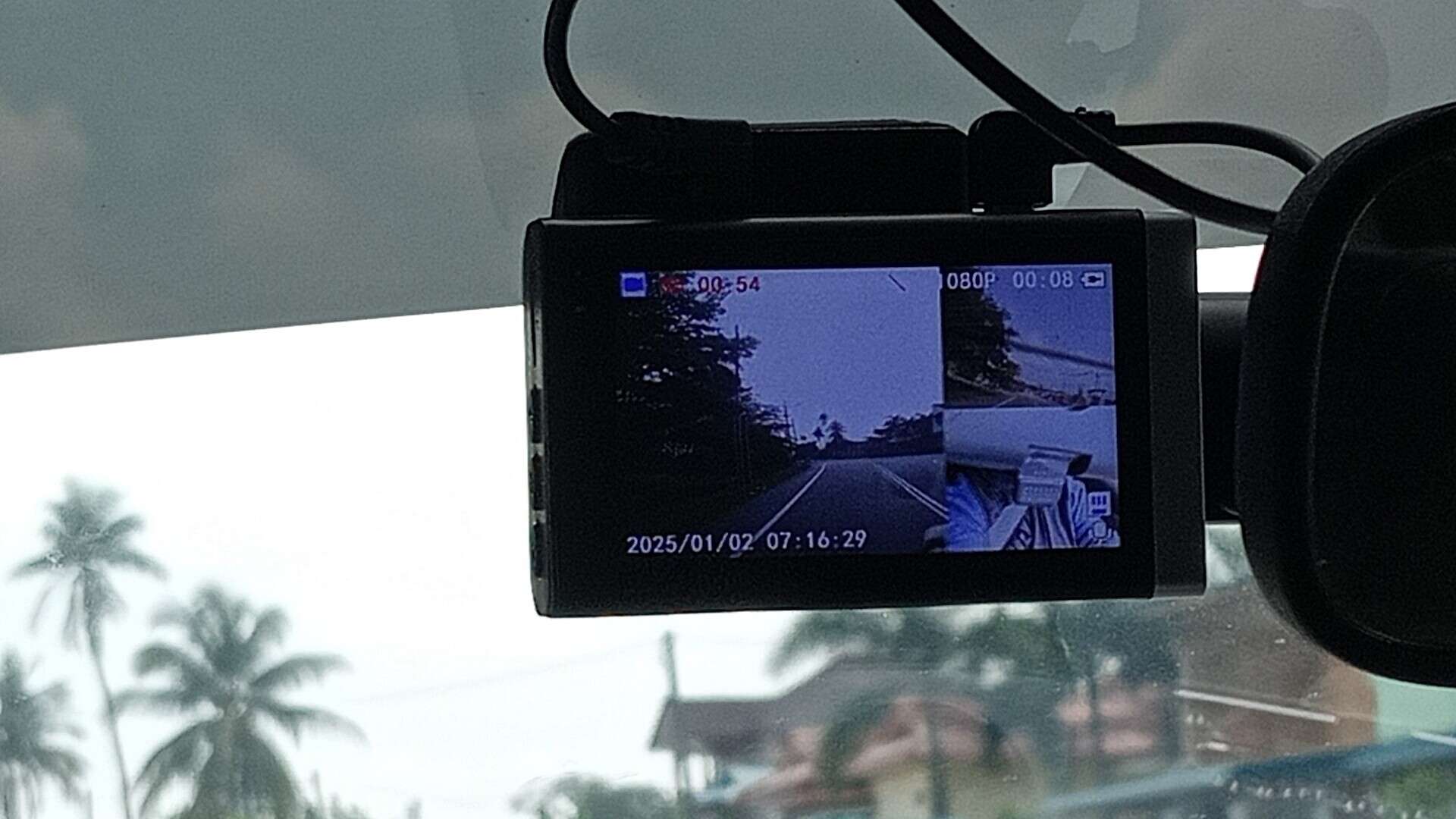
Top photo: A windshield-mounted dashcam. Photo: Danielrayyan09 via Wikimedia Commons, CC BY 4.0.
