
Ronald Clements lives in Dallas, drives a white Buick, and says he hasn’t been to Philadelphia in more than 40 years. The Philadelphia Parking Authority mailed him two speed-camera violations anyway, for a dark Mercedes. The Texas plate number on the notices had been retired in 2022, when Clements bought the Buick used and the state issued him a new plate.
Texas records said the number was dead. Philadelphia’s lookup said it was his. Under Pennsylvania’s speed-camera law, the lookup wins until the person named on the notice proves otherwise, and the city’s review process, as the Parking Authority describes it, screens out plates that look fake while having no published step for a real plate number on the wrong car. A cloned plate is built to fit through that gap.
A canceled plate, a Mercedes and a nine-day reversal
NBC10 Responds in Philadelphia reported the case in August, and NBC 5 Responds in Dallas followed on Sept. 29. Texas DMV told NBC 5 the plate number was never assigned to Clements and has not been active since 2022; it had been on the Buick before he owned it. “I certainly don’t drive a Mercedes,” Clements told NBC 5.
Clements said that when he took his Texas records to the Parking Authority, he was told the plate still came up under his name and the violations were his responsibility. NBC10 Responds then sent the authority the Texas DMV letter confirming the cancellation. Nine days later both violations were withdrawn, with the notice citing an “administrative decision,” NBC 5 reported. A Philadelphia police source told NBC10 the same plate number had turned up on 10 different cars, and the Parking Authority told the station that its searches can return canceled plates still tied to an owner on record.
Neither agency has said publicly how a number Texas says Clements never held resolved to his name. My best guess, and it is only a guess, is that the dead plate’s record still pointed to the Buick and the Buick pointed to him. If that is right, buying a used car in Texas can leave your name sitting behind the old number that came with it.
Pennsylvania’s law puts the burden on the name on the notice
The program runs under Section 3370 of Pennsylvania’s Vehicle Code. Subsection (b) makes “the owner of the motor vehicle” liable for each violation unless the owner has a defense listed in subsection (g). There are four: someone else was driving, the car had been reported stolen before the violation, the person on the notice didn’t own the vehicle at the time, or the camera wasn’t tested and calibrated as state law requires. Clements had the third defense. He still had to raise it, and the Parking Authority’s instructions give a recipient 30 days from the notice date to request a hearing; after that, the hearing right is gone and penalties are added.
Subsection (f)(1) bars the cameras from using a frontal image of the vehicle as evidence. That keeps drivers’ faces out of the city’s files, and it also means the rear plate is the whole case. I read the full section. It covers fines, warning signs, calibration, mailing deadlines and a cap on revenue. The word “plate” appears nowhere in it, and nothing in it requires anyone to confirm that the car in the photo matches the make and model on the registration.
The penalties are civil. The authority charges $100 for 11 to 19 mph over the limit, $125 for 20 to 29 and $150 for 30 or more, and the statute caps any single fine at $150. A camera violation isn’t a criminal conviction, doesn’t go on a driving record, carries no points and can’t be used to raise insurance rates. Those protections were written for the owner who got caught going 14 over on the Boulevard. They also mean the driver of a car wearing someone else’s plate risks very little from the camera, while the stranger whose name comes back from the lookup does all the paperwork.
What the Parking Authority’s review screens out
The authority’s fiscal 2026 annual report, covering April 2025 through March 2026, lays out how a violation gets made. The camera reads the plate. Authority staff review the violation package in the system of its vendor, Verra Mobility. Once a violation is approved, Verra Mobility sends the plate to a registered-owner lookup, and the notice is mailed to whoever comes back. The authority’s website adds that Philadelphia police review violations before tickets go out. The report states: “A violation cannot be issued if a responsible party is not found.” In Clements’s case, one was found.
The report also counts the plates the system throws out. In fiscal 2026, 24,421 violations were rejected for plate problems, nearly 10,000 more than the year before and 2.6% of all violators captured. By The Auto Wire’s arithmetic, that puts total violators captured at roughly 940,000. The rejection categories are fake plates, which the authority defines as plates not in a standard format, such as too many characters; no plate; temporary paper plates; tampered or altered plates; and covered plates. Each one describes something a reviewer can see in the photo. A cloned plate shows a correctly formatted number that belongs to a real registration, and none of those categories catches it.
The authority does unwind its mistakes when it finds them. After warning signs went missing near 6500 N. Broad Street southbound, the report says, 23,195 violations were issued in error. All were dismissed, and the authority is refunding $1,252,798.75 already paid on 12,214 of them. That correction began inside the agency. Clements’s began with a Texas DMV letter and two TV newsrooms.

Texas ended paper tags, and metal plates still get copied
Texas spent years fighting counterfeit paper temporary tags, and House Bill 718 ended them on July 1, 2025. Dealers now hand buyers metal plates at the time of sale, and TxDMV says the law was passed to address fraudulent use of paper tags. The Auto Wire covered the push to outlaw paper plates and, later, the counterfeit metal plates that followed.
Philadelphia’s report lists a paper temporary tag as a reason to reject a violation. A metal plate carrying a real Texas number is not on the list. Sgt. Joe Escribano of the Travis County Constable’s Office told NBC10 that people still use old plates, and that a copied plate on a car used to commit a crime is “tough to detect.” The same weakness has stuck drivers with toll bills for trips they never took, and in Melbourne, authorities shut down a factory turning out knockoff plates.
TxDMV’s rules for sellers show where Texas expects the risk to sit. Plates that aren’t transferred or kept “must be disposed of by defacing the front of the plates,” and a seller who files a vehicle transfer notification within 30 days of a sale cannot be held responsible for parking tickets and toll violations, according to the agency’s guide to buying or selling a vehicle. Those safeguards follow the vehicle and the physical plate. They do nothing about a number someone copied off a bumper.
If a camera notice arrives for a car you have never owned
Start with the photo. If the car in it isn’t yours, the notice is evidence for your defense. Escribano’s advice, as NBC 5 reported it, was to get certified title and registration records from your state DMV, report the plate to police where you live and where the violation happened, and send the documents to the agency that issued the ticket. In Philadelphia, request the hearing inside the 30-day window even while you wait on paperwork, since missing it forfeits the hearing and adds fees. If you have ever replaced a plate, keep the cancellation record with your title. A letter like that is what ended Clements’s case.
Philadelphia turns on 11 more camera sites Oct. 30
The fiscal 2026 report counted 79 cameras at 30 locations. The authority’s website now lists 11 more sites, five of them on Baltimore Avenue, scheduled for live enforcement on Oct. 30, 2026. Each new camera is another chance for a borrowed number to put a notice in the mailbox of someone in another state. The safeguard this case points to is a rejection code for a vehicle that doesn’t match its registration, applied before a notice is mailed rather than after a reporter calls. The next annual report will show whether the authority adds one.
Should a camera ticket be allowed to reach your mailbox when the car in the photo doesn’t match the one on your registration, or is a 30-day window to prove it wasn’t you a fair price for safer streets?
Related: El Paso Tax Office Deputy Accused of Cooking 380-Plus Vehicle Records So Cars Could Skip Inspection
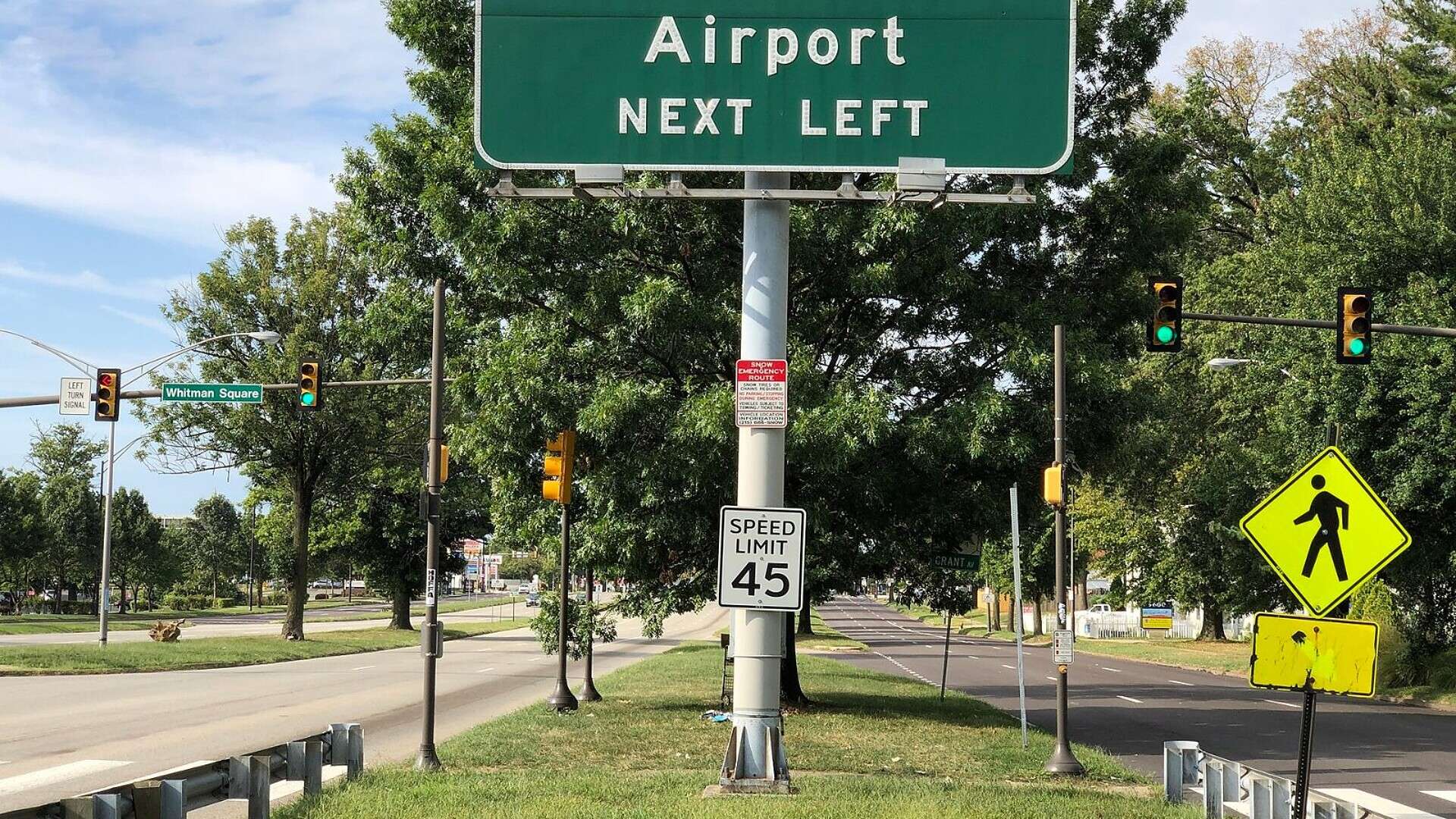
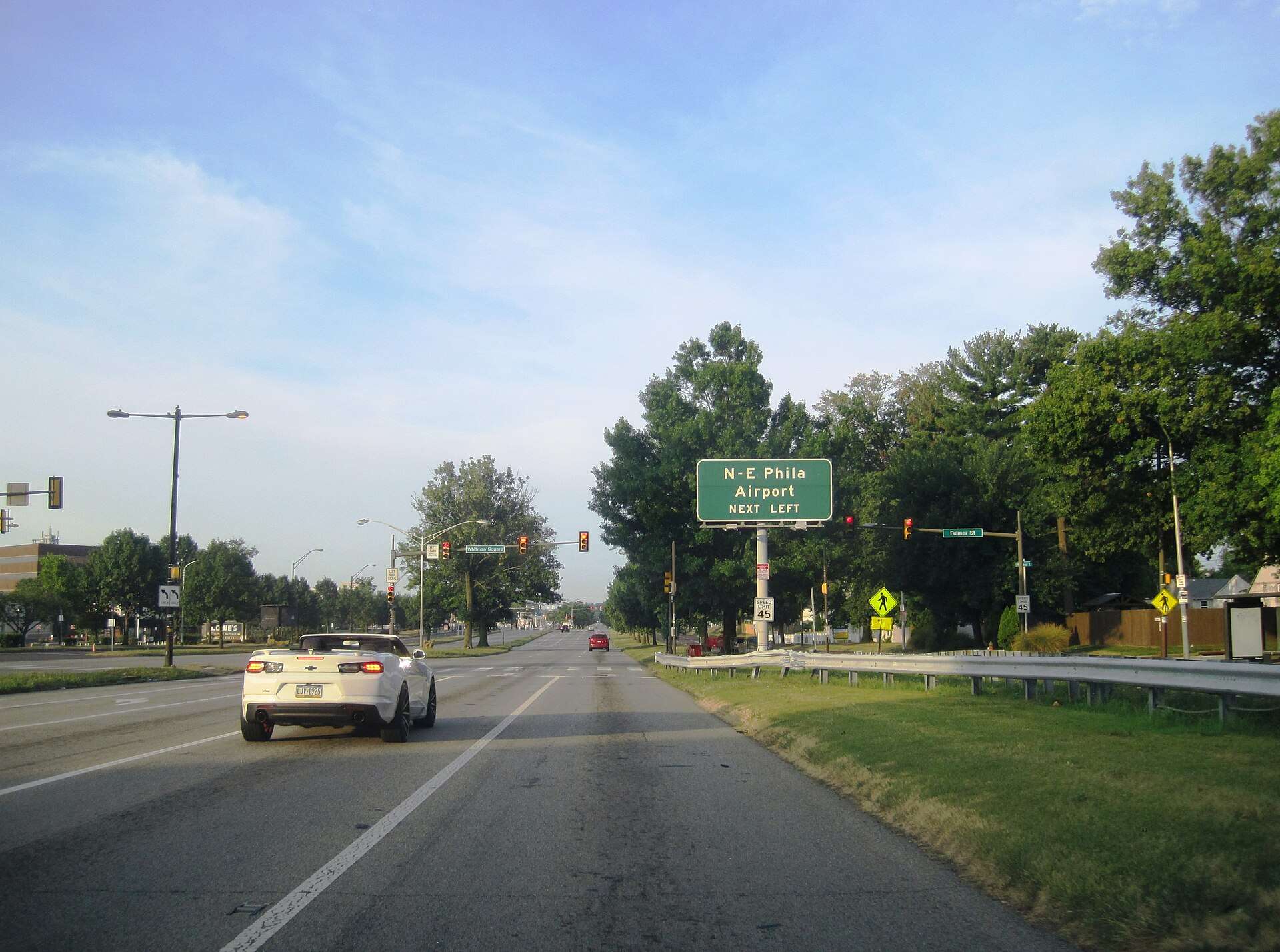
Top photo: Roosevelt Boulevard (U.S. Route 1) at Fulmer Street in Philadelphia, the corridor where the city’s speed-camera program began in 2020. Photo: Famartin via Wikimedia Commons, CC BY-SA 4.0.
_at_Fulmer_Street_in_Philadelphia,_Pennsylvania.jpg)