
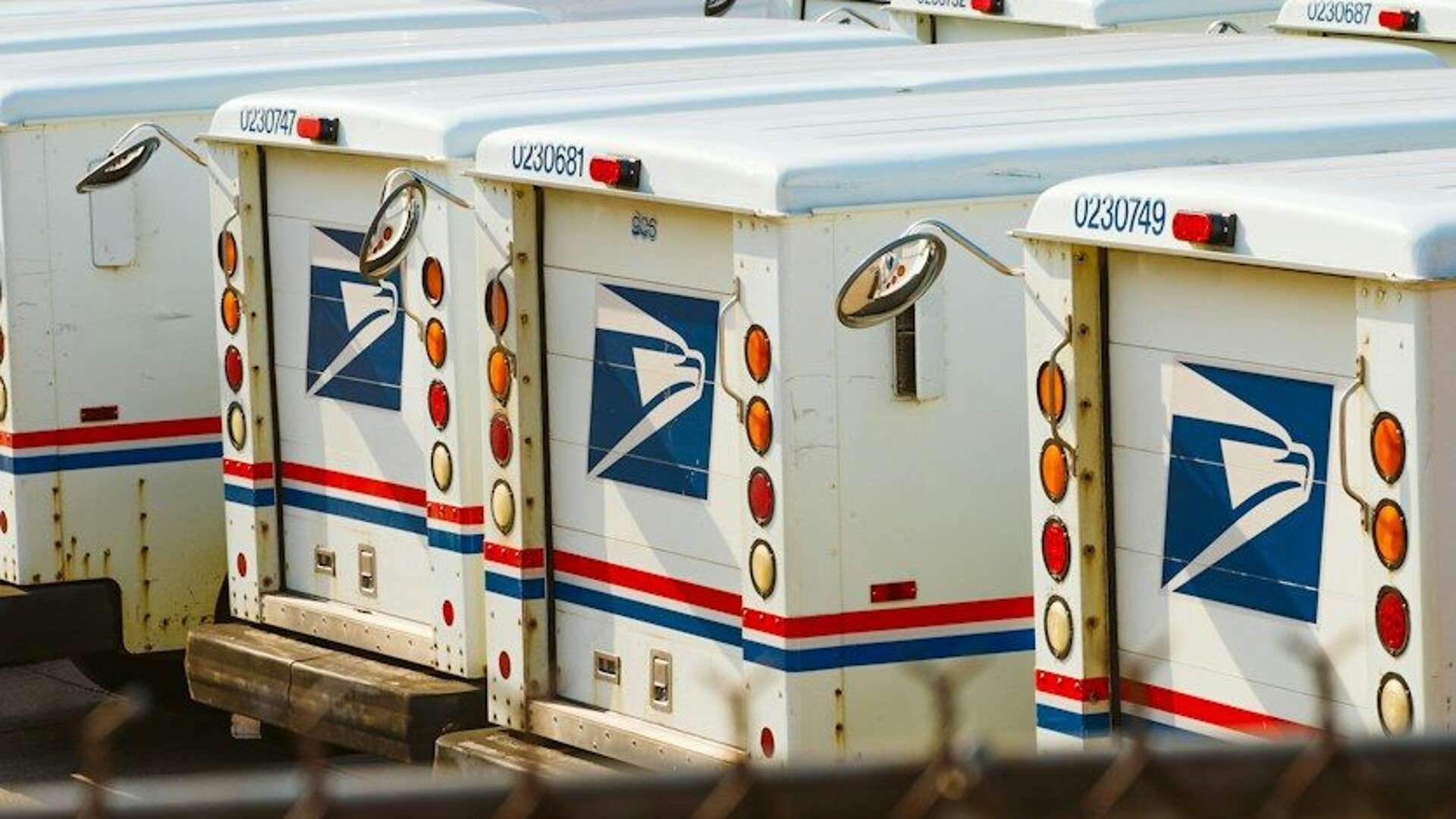
The most thorough road surveyor in America isn’t a state DOT inspection van or a mapping car. It’s the right-hand-drive box that rolls past your curb six days a week, whether your street deserves the visit or not.
The U.S. Postal Service has done the same math. A Sept. 18 letter from USPS Labor Relations to National Association of Letter Carriers president Brian Renfroe, which NALC Branch 238 posted to Facebook, describes a pilot that puts Nextbase dashboard cameras in a hundred delivery vehicles around Washington, D.C. The letter says the cameras “will scan and analyze roads, signage, maps roadways [sic] and sidewalks.” The trial was set to begin September 21 and run for several months.
The hardware
According to the letter, the cameras face forward, mount inside the cab on the dashboard, and start recording once the truck is in drive and has left the postal facility. They don’t record audio, and USPS says they won’t block the carrier’s view. They also don’t run automatic license plate reader software.
USPS’s reasoning is that its fleet has a “unique ability to collect this valuable data” because of how often its vehicles cover every community. That holds up. A mail route is the same loop driven almost every day, which is ideal for change detection. If Wednesday’s footage shows a crater that wasn’t there Tuesday, the software flags it. A dedicated survey van might cover a given road once a year. A mail truck covers it hundreds of times. The Postal Service runs more than 230,000 vehicles across every class, so scaling this up would produce a road-condition dataset no state agency could afford to collect itself.
Hawaii already ran this play
The concept isn’t new. Hawaii’s Department of Transportation runs a program called Eyes on the Road. It gives drivers free dash cams and automatically alerts maintenance crews to potholes, cracks, damaged guardrails, faded markings, debris, and overgrown vegetation. HDOT’s own presentation names the Nextbase iQ as the camera and says only front-facing imagery is used and no audio is sent.
Related Articles
- Georgia Driver Woken by a Deputy Fled at 90-Plus MPH Into a Five-Car Crash, Then Got 8 Years — and No Restitution Order
- The Company That Builds the Silverado Just Shipped Its First Patriot Missile Parts
There is one difference that matters. Hawaii’s drivers apply to participate. Letter carriers are being assigned.
Not the first camera on a mail truck
The Next Generation Delivery Vehicle already ships with 360-degree cameras alongside collision-avoidance warnings. Minutes from a 2023 Cleveland-area union meeting record that NALC’s safety director told members only the postal inspection agency would have access to those cameras, and that they were expected to help with theft. Those cameras protect the truck. The new ones collect information about everything around it, which is a different job.
The fine print that isn’t there
“No ALPR software” is not the same thing as “no license plates.” Any camera sharp enough to read a sun-faded speed limit sign will also capture the plate on the car ahead. Whether that footage is just video or a searchable database depends on software, and software can be updated. The letter, as posted, doesn’t say how long footage is kept, who owns it, whether cities or police can get it, or what happens to the bulk of the frames that contain no potholes.
Legally, this probably isn’t a hard fight for USPS on day one. Courts have generally given drivers little expectation of privacy against being photographed on public roads, so disputes tend to center on retention and aggregation instead. That’s exactly why the missing details matter more than the hardware does.
What it means if you own a car
Pothole damage is a real cost. Bent wheels, sidewall bubbles, knocked-out alignment, and worn tie rods and control arm bushings add up quickly, especially on low-profile tires. In many jurisdictions, a claim against a city for road damage depends on showing the city knew about the defect and didn’t fix it. A timestamped federal log showing when a pothole appeared could someday become useful evidence for drivers, or a liability problem for municipalities. Nobody has said whether that data will ever be available to the public.
If you’re ever in a collision with a postal vehicle, don’t assume this footage will save your claim. Retention and access rules haven’t been published, and the pilot covers only a hundred trucks. Your own dash cam is still the only footage you control.
For now, this is a small, quiet test. If it reaches the full fleet, the Postal Service would have one of the largest street-level imaging networks in the country, put together without a single new vehicle purchase.
Would you trade a federal camera rolling past your house six days a week for faster pothole repairs?
Top photo: Jason Hawke 🇨🇦 via Unsplash.