
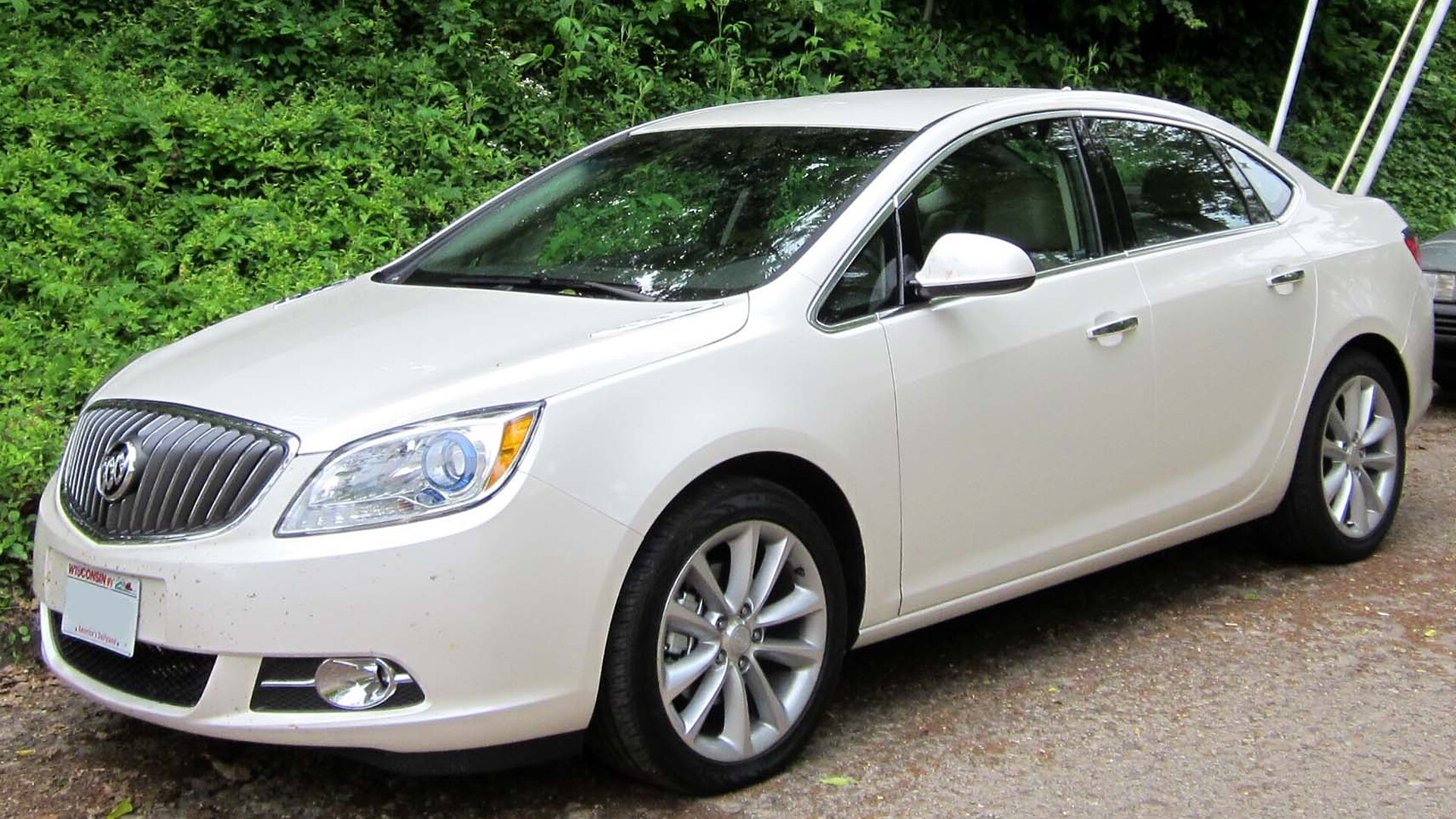
Joey Levi Ledbetter, 28, of Commerce, Georgia, was unconscious behind the wheel of a running Buick Verano outside the Chattahoochee Baptist Association building on McEver Road in Hall County a little before 6 p.m. on June 9, according to the Hall County Sheriff’s Office. The car was in drive with his foot on the brake. A deputy woke him and told him to put it in park. He drove off instead, the sheriff’s office said, at a “high rate of speed.”
Eighty-four days later, on Sept. 1, Ledbetter pleaded guilty in Hall County Superior Court. I pulled the sentence from the Hall County Clerk of Court’s online docket (case 2026CR000952). Judge Jason J. Deal gave him eight years to serve on a single count of felony fleeing, stacked probation on top of it, and signed off on $8,216 in fines, surcharges, and fees. The line on the form where a judge writes in restitution for the people he hit is blank.
Georgia’s fleeing statute did what it was written to do. It turned a few seconds behind the wheel into a prison term the judge could not probate or run alongside anything else. The same paperwork sends $8,216 to the state and, on paper, nothing to the four drivers whose cars were in the wreck.
From a parking lot on McEver Road to five wrecked vehicles
The sheriff’s office account, as released to local media, has the deputy following the Verano south on McEver Road. Ledbetter stopped in a left lane. As the deputy pulled alongside and began getting out, Ledbetter turned abruptly and struck the patrol car’s front bumper near Browns Bridge Road, then ran a red light. The deputy reported him weaving, passing improperly, and topping 90 mph.
It ended at Flat Creek Road. The Georgia State Patrol’s crash narrative says the Verano ran the red light and hit a Toyota Avalon driven by a 71-year-old Gainesville woman. The Avalon was pushed into a Tesla Model 3, and one of the Avalon’s tires came off and struck a Ford Econoline van and a Chevrolet Bolt waiting at the northbound signal. Three people, including Ledbetter, went to the hospital with minor injuries.


The sheriff’s office charged him with aggravated assault on a law enforcement officer, felony fleeing, hit and run, obstruction, driving on a suspended license, and a string of traffic counts. The State Patrol added DUI.
What he pleaded to, and the charge that dropped out
Prosecutors filed an 11-count accusation on Aug. 31. Ledbetter pleaded guilty to all 11 the next day in a negotiated plea. The counts: felony fleeing under O.C.G.A. § 40-6-395(c); felony obstruction of an officer under § 16-10-24(b), which covers resisting an officer “by offering or doing violence”; DUI of drugs, less safe; two counts of failing to stop at an accident; reckless driving; misdemeanor obstruction; driving on a suspended license; two red-light counts; and failure to maintain lane. The DUI count is drug-based, not alcohol, according to the court’s charge list.
The aggravated assault on an officer charge is not among them. That one matters. Under § 16-5-21(c), aggravated assault on a public safety officer without a gun carries five to 20 years, with a three-year mandatory minimum. The felony obstruction count he took instead carries one to five years on a first conviction. The docket does not say why the charge changed, and the plea was negotiated, so the answer sits with the prosecutor and the defense.
The sentence sheet reads this way. Count 1, felony fleeing: eight years to serve and a $5,000 base fine, consecutive. Count 2, felony obstruction: probation, consecutive to count 1. Counts 3 through 9, the DUI and six other misdemeanors, carry 12 months’ probation each, back to back; the DUI also carries a $500 fine and 24 hours to serve, already credited as time served. The last two counts run concurrent. The judge’s handwritten summary: “13 years and 84 months,” with the first eight years in confinement and the rest on probation. That is 20 years under supervision in total.
Probation comes with conditions: 40 hours of community service, a Risk Reduction program within three months of release, at least three drug and alcohol screens a month for 12 months, and one Mothers Against Drunk Driving meeting a month. The fines worksheet adds surcharges to the two base fines and lands at $8,216.
How Georgia’s fleeing law turns a misdemeanor into eight years
Two parts of § 40-6-395 did most of the work.
First, the signal to stop doesn’t require blue lights. Subsection (a) says the officer’s signal “may be by hand, voice, emergency light, or siren.” As long as the officer is in uniform with a badge showing and the car is marked, as the statute requires, an order spoken at the driver’s window counts. A first-offense fleeing charge with nothing else attached is a high and aggravated misdemeanor: $1,000 to $5,000 and 30 days to 12 months.
Second, subsection (c) lists six ways that misdemeanor becomes a felony carrying one to 10 years and a fine of $5,000 to $10,000. Going more than 20 mph over the limit counts. So does striking another vehicle, being the proximate cause of a crash, fleeing in traffic that puts the public at risk of serious injury, fleeing while committing certain offenses, including DUI and reckless driving, or leaving the state. One is enough. Ledbetter’s case checks at least three: he struck other vehicles, caused a crash, and pleaded guilty to both DUI and reckless driving.
Subsection (e) then limits what a judge can do with it. After a felony fleeing conviction, “the sentence shall not be suspended, probated, deferred, or withheld,” the charge can’t be reduced to a lesser offense, and it can’t be merged with or served concurrently with any other count. That is why “consecutive” is handwritten next to the fleeing count on Ledbetter’s sentence. The negotiated plea could set the number of years, anywhere from one to 10. The statute decided that all of them would be served.
Georgia has since gone further for one kind of pursuit. House Bill 1161, effective July 1, 2026, added a new subsection (d) that calculates the prison term at 30 days for every mile a driver flees from the Georgia State Patrol, the Capitol Police, or Commercial Vehicle Enforcement. It doesn’t reach county deputies, and it took effect three weeks after this chase, so it played no role here.
Who pays for the Avalon, the Tesla, the van, and the Bolt
Georgia’s restitution law, O.C.G.A. § 17-14-3(a), says a sentencing judge “shall” make a finding on the amount of restitution due any victim and order the offender “to make full restitution to such victim.” The statute’s definition of a victim includes businesses and government agencies, which would cover the county’s damaged patrol car too.
Ledbetter’s sentence packet includes an inventory of special conditions. Condition No. 1 is restitution, with blanks for the dollar amount and the names of victims. It is not checked, and no separate restitution order appears on the docket. The docket doesn’t explain why. Insurers may already have paid some or all of the damage, or a victim may not have asked for it, and a man serving eight years has little income to pay it from. None of those reasons appears in the file, and I think a five-vehicle crash with a damaged patrol car deserves a number on that line, even a small one, so the victims have a court order to collect on.
What’s left for the other drivers is insurance and civil court. Georgia requires only $25,000 in property damage liability per incident, according to the state Office of Commissioner of Insurance. The court records don’t show what coverage the Verano carried. If it was the state minimum, that $25,000 has to be split among a Toyota Avalon, a Tesla Model 3, a Ford Econoline, a Chevrolet Bolt, and a sheriff’s cruiser. Past that limit, drivers fall back on their own uninsured or underinsured motorist coverage, if they bought it.
They can’t count on the county. Georgia’s pursuit statute, O.C.G.A. § 40-6-6(d)(2), says an officer’s pursuit is not the proximate cause of damage a fleeing suspect does unless the officer “acted with reckless disregard for proper law enforcement procedures” in deciding to start or continue the chase. Nothing in the public record suggests anything like that here. The deputy found a driver asleep in a car in gear on a busy road, and letting him go would have been the more dangerous call. The law puts the bill on the man who drove away, and his criminal sentence doesn’t collect it.
A crash pattern Georgia already tracks
Georgia already has numbers on this: a five-year review showing more than half of Georgia State Patrol chases end in crashes, and a fatal pursuit in Tucker this month. The McEver Road wreck fits the pattern. The fleeing car usually stops by hitting someone else’s, and the cost lands on a driver who had nothing to do with the chase.
What happens next
Ledbetter was still listed in the Hall County jail roster on Sept. 28, with most of the June charges marked sentenced. Under the sentence, the state Department of Corrections decides where he serves the eight years. The sentence gives him 30 days to file an appeal, a window that runs out Oct. 1. After release, he has 72 hours to report to probation.
For anyone else in Georgia, the lessons are specific. A deputy’s spoken order at your window counts as a signal to stop, and pulling away from it is fleeing. A driver hit by someone fleeing police generally has three places to look for money: the fleeing driver’s liability insurer, their own uninsured or underinsured motorist coverage, and a restitution order in the criminal case. Restitution is set at sentencing, so the loss has to be documented to the prosecutor before the plea. Once a sentence is signed without it, what’s left is a civil suit against someone in prison.
Should Georgia judges be required to put a dollar figure for restitution on every plea involving a crash with innocent drivers, even when the defendant is headed to prison and may never pay it?
Top photo: A Buick Verano, the model the Georgia State Patrol crash report lists for the fleeing car. Photo: IFCAR / Wikimedia Commons (public domain)