
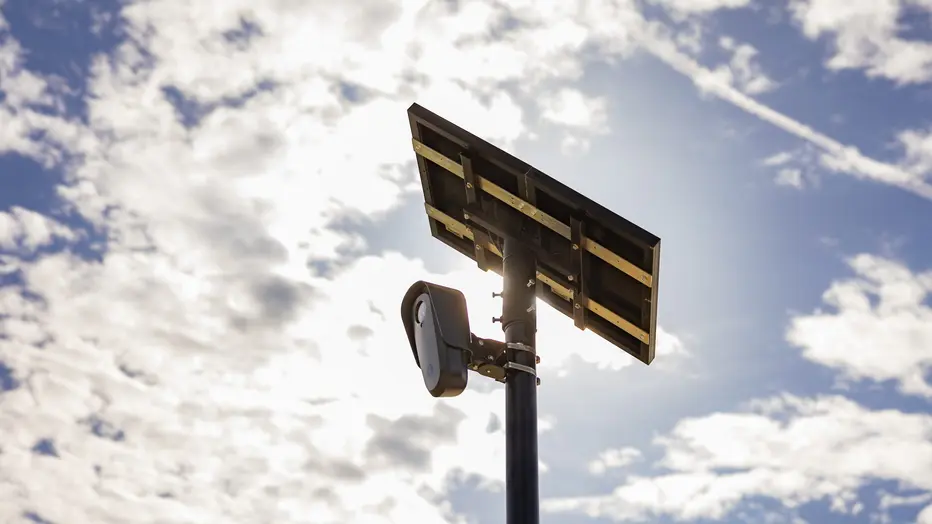
The dashcam mounted on your Uber driver’s windshield was sold as a witness. A silent, unblinking one that could settle a dispute, beat a bogus insurance claim, or clear a driver after a crash that wasn’t their fault. That was the pitch, and for years it worked exactly as advertised. Then Flock Safety looked at that same rideshare dashcam and saw something else entirely: free infrastructure.
According to a presentation obtained through a Georgia public records request and reported by 404 Media, Flock Safety, the company behind thousands of pole-mounted license plate cameras across the country, pitched a partnership with dashcam maker Nexar that would have pulled license plate data from roughly 350,000 Uber, Lyft, and delivery drivers’ vehicles. The document, written to pitch Georgia’s Attorney General’s office last August, described the arrangement in seven words: “350k Uber/Lyft and other delivery service devices.” Flock told 404 Media it never actually executed the Nexar partnership. The ambition behind the pitch is real regardless of whether the deal closed.
Here’s the part that shouldn’t surprise anyone who has read about repossession agents: mobile license-plate scanning isn’t a new idea, and it didn’t start with rideshare drivers. Digital Recognition Network and Vigilant Solutions, both now owned by Motorola, have spent more than a decade paying repo drivers to bolt plate-reading cameras to their tow trucks, quietly building a database that now holds billions of scans. A California court recently declined to treat that network as a privacy violation, a ruling The Auto Wire covered in detail. Flock’s rideshare pitch wasn’t a new frontier. It was an attempt to reach the same destination faster, using hardware Flock didn’t have to buy, install, or maintain.
Buyer’s guide: Best Dash Cams for Every Budget (2026 Buyer’s Guide)
The uncomfortable detail buried in Nexar’s own privacy policy is that a driver doesn’t need Flock’s involvement for most of this to already be true. Nexar’s cameras are built to capture license plates as a baseline feature, and the company’s privacy policy confirms it collects location data, vehicle sensor data, and images that may include plates, then shares anonymized footage with mapmaking partners and companies training driving-assistance systems. A driver who mounts a Nexar camera to catch the person who rear-ended them at a red light has, by accepting a set of terms most people never read, already agreed to a great deal more than that.
Flock’s stationary cameras have a physical limitation: they only see what drives past the pole. Growing the network by installing more poles is slow, and it invites the exact backlash the company is now fighting in Lancaster, New York, where residents have pushed back against a planned expansion into drone cameras set to start flying patrols this September. Recruiting hundreds of thousands of already-moving cameras, instead of bolting up new stationary ones, solves that problem instantly and cheaply. It also explains why the pitch targeted a state Attorney General’s office rather than a single police department: this was a sales document aimed at expanding Flock’s footprint into an entirely new category of infrastructure it doesn’t own.
Flock markets itself around local control, telling communities they get to decide how its cameras are used. The rideshare pitch skipped that entire premise. Nobody voted on it, no city council reviewed it, and the only reason the public knows about it at all is a records request, not a disclosure. Flock’s plate database has already drawn scrutiny even without rideshare drivers involved. The company had to build automated audit tools after officers across Georgia were caught running personal searches on the very same network. Feeding it hundreds of thousands of new, unregulated camera feeds would only stretch a system that already struggles to police its own users.
Nobody asked the people actually driving, either. Neither Uber nor Lyft responded to 404 Media’s questions about the plan, and it remains unclear whether either company even knew a vendor was pitching regulators on turning their drivers’ dashboards into scanning stations. A rideshare driver who bought a Nexar camera to protect themselves after a fraudulent claim would have had no practical way of knowing their hardware was being offered up as a data source to a surveillance company, let alone a way to opt out of a deal they were never told about.
None of this should feel unfamiliar. General Motors spent years quietly funneling OnStar Smart Driver data to LexisNexis and Verisk, which insurers then used to help justify higher premiums for customers who never meaningfully consented to the arrangement, a saga The Auto Wire has already traced as the likely playbook for where Toyota and Hyundai’s current driving-data investigations are headed. The pattern repeats: a feature gets sold to the owner as a convenience or a safety net, and the data it generates gets sold, separately and quietly, to whoever will pay for it.
There’s a real cost to drivers here beyond the abstract discomfort of being watched. A dashcam feed that doubles as a scanning device turns the vehicle itself into a subcontracted data collector, one whose owner receives no payment, no notice, and no say in how the resulting plate hits get used, whether that’s a stolen-vehicle alert, an immigration enforcement request, or a subpoena in a case that has nothing to do with the driver at all. Insurance dashcam programs already walk a fine line by using driving footage to influence premiums. Stacking a surveillance company’s plate-scanning ambitions on top of that same hardware turns a personal safety device into shared law enforcement infrastructure the owner never chose to provide.
Flock says the Nexar deal never happened. Maybe it didn’t. But the pitch got made, it got shown to a government office, and the public only found out because someone filed a records request. The dashcam on your windshield was built to answer to you. Companies like Flock are betting that most drivers will never notice the moment it starts answering to someone else instead.